Logo
Follow Us on FacebookFollow Us on InstagramFollow Us on YouTubeFollow Us on LinkedIn
Phone: 757-466-7555
  • HOME
  • ABOUT US
    • Our Access, Belonging, Inclusion, Diversity, and Equity (ABIDE) Statement
    • Our Board of Directors
      • Our Board of Directors 2025-2026
      • Our Board of Directors 2024-2025
      • Our Board of Directors 2023-2024
    • Our Employment Opportunities
    • Our Financials (990 and Audit)
      • 990 Form 2023-2024
      • Audit 2023-2024
    • Our Impact Report
      • Our Impact Report 2024-2025
      • Our Impact Report 2023-2024
      • Our Impact Report 2022-2023
    • Our National Network
    • Our Staff
      • Contact Us
    • Our Strategic Plan
  • PROGRAMS
    • Calendar of Events
    • Schedule a Program
    • Find A Program
    • Arts + Learning Snacks
    • Coastal Virginia Wolf Trap
  • SUPPORT
    • Our Supporters
      • Our Community of Supporters 2024 – 2025
      • Our Supporters 2023 – 2024
      • Our Supporters 2022 – 2023
      • Our Supporters 2021 – 2022
    • Individual Giving
    • Give Back Through Rewards
  • GET INVOLVED
    • Become an A4L Artist
    • Become a Board Member
    • Internships
    • Program Observer
    • Volunteer
  • Our Stories
    • Our History
  • Virtual Arts

My Teaching Artist Journey with Arts for Learning Virginia

July 29, 2025 By Jackie Adonis

My name is Jackie Adonis, and I’ve been a Teaching Artist with Arts for Learning Virginia for the past three years, sharing my passion for Filipino dance and theater throughout Virginia. Whether my time with my students is brief, such as for a workshop, or longer, such as for a residency, I see the impact we have on future generations in real time, and that’s both meaningful and humbling.

It all started with an audition I wasn’t even supposed to do. For two years, I’d worked as a House Manager for the Zeiders American Dream Theater. During the first year of the Z’s Common Casting Call, performing artists auditioned for various arts organizations in the area, including the Virginia Stage Company, Virginia Musical Theatre, Virginia Beach Cultural Affairs, and Arts for Learning Virginia. As House Manager, I welcomed each auditionee as they arrived.

The day began swiftly and smoothly…and then, there was a lull. I tried to mask my ADHD and sit still. Then, I noticed members of the different organizations walking around, also restless as they waited for the next wave of auditionees. Finally, as I was about to burst, I asked the Z’s Executive Director, Terry Flint, if I could audition while we were waiting. Conveniently, I had my headshot, resume, and sheet music in my bag and a monologue in my metaphorical back pocket. Terry said yes.

It wasn’t the ideal audition situation. I was dehydrated, I hadn’t warmed up my voice, and I hadn’t brought a change of clothes, so I was wearing my House Manager uniform and a sweaty ponytail. All I had to show the most prestigious performing arts organizations in Hampton Roads was myself.

At that point in my life, I was unsure of what I was doing. The global pandemic deferred my dreams of going to New York City after graduating from acting school. The way that COVID-19 pulled the rug from underneath all of us had me questioning what my purpose in life was—or if there was a purpose at all. I had no idea that day at the Z would change my life.

I sang “Days” from Fun Home. I performed a monologue from Goodbye, Charles. I did some cold reads and improv. Then, I thanked everyone for giving me a break from work and returned to my welcome table at the front entrance.

The end of my shift involved tidying up the restrooms—glamorous, I know. I wiped the sweat off my forehead, and when I got out of the final bathroom, Arts for Learning’s Programs and Community Engagement Manager, Aisha Noel, was waiting for me with her business card. “I want to build a program with you,” she said. “We need more artists like you.” I knew nothing about teaching or building a program. I didn’t even know this person. However, I did know how I felt, and I felt seen.

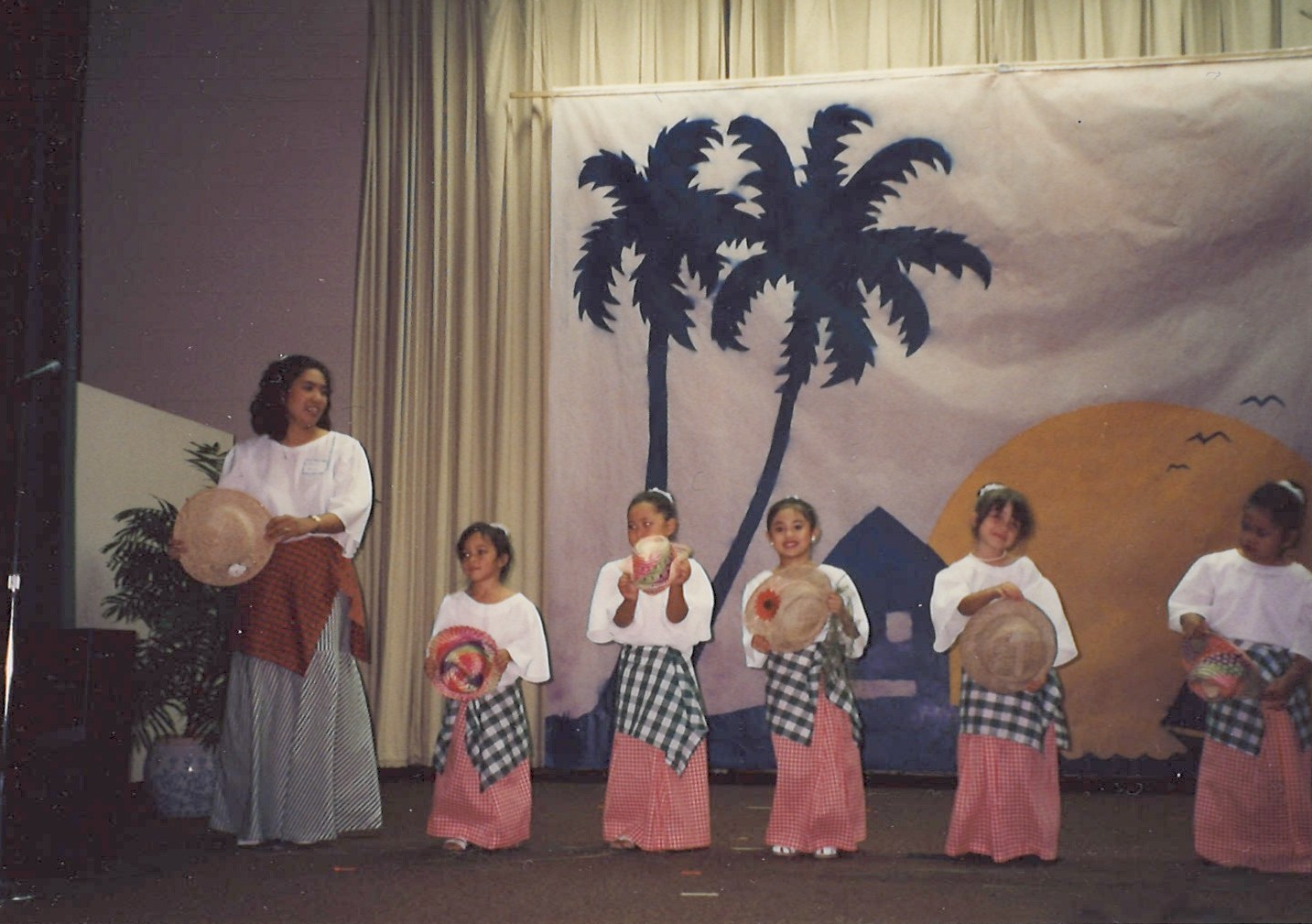
I called Aisha later, on a weekday. She set me up with Drew Lusher, A4L-VA’s former Artist and Programming Manager, who helped me build my first Arts for Learning program, which centered on a dance I’d done since I was a child: the Itik Itik (loosely translated, the Dance of the Duck).

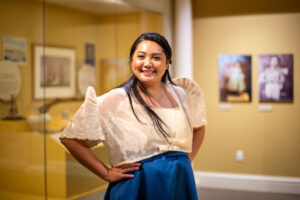
Jackie performing the Itik Itik.

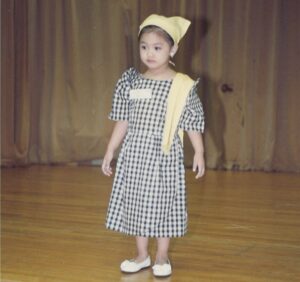
I learned the Itik Itik at age two when I lived in Roanoke. My parents and their friends were part of the Philippine-American Association there. This group put together programs to showcase the songs and dances of our culture, and members and their families were invited to perform in these showcases. Even though I was “voluntold” to be on stage, I was delighted to do so because I already felt I belonged there.

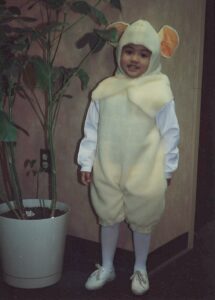
Jackie as a sheep.

I had no idea that decades later I’d be asked to share this dance with hundreds of kids all over Virginia. After speaking with Aisha and Drew, I cried happy tears at the prospect of sharing my culture, something that was difficult growing up in Roanoke. My classmates made fun of me for bringing food from home, saying it smelled bad. In kindergarten, I was put in timeout for not speaking English in class. I could speak English well—it was just that no one told me that I had to speak English outside the home. I was only five years old. How was I supposed to know? I thought everyone could speak Tagalog, so when I asked for tubig (water), my teacher called my mom and said I was saying “bad words in class.” My mom definitely shared some words with her.

After that incident, my parents only spoke to me in English to prevent me from getting confused. Over time, I forgot how to speak my language. I felt only the remnants of rolled r’s on the tip of my tongue. I stopped bringing food to school and started eating the terrible cafeteria food. I learned how to be less of my culture, less of myself.

  • "Planting rice" program.
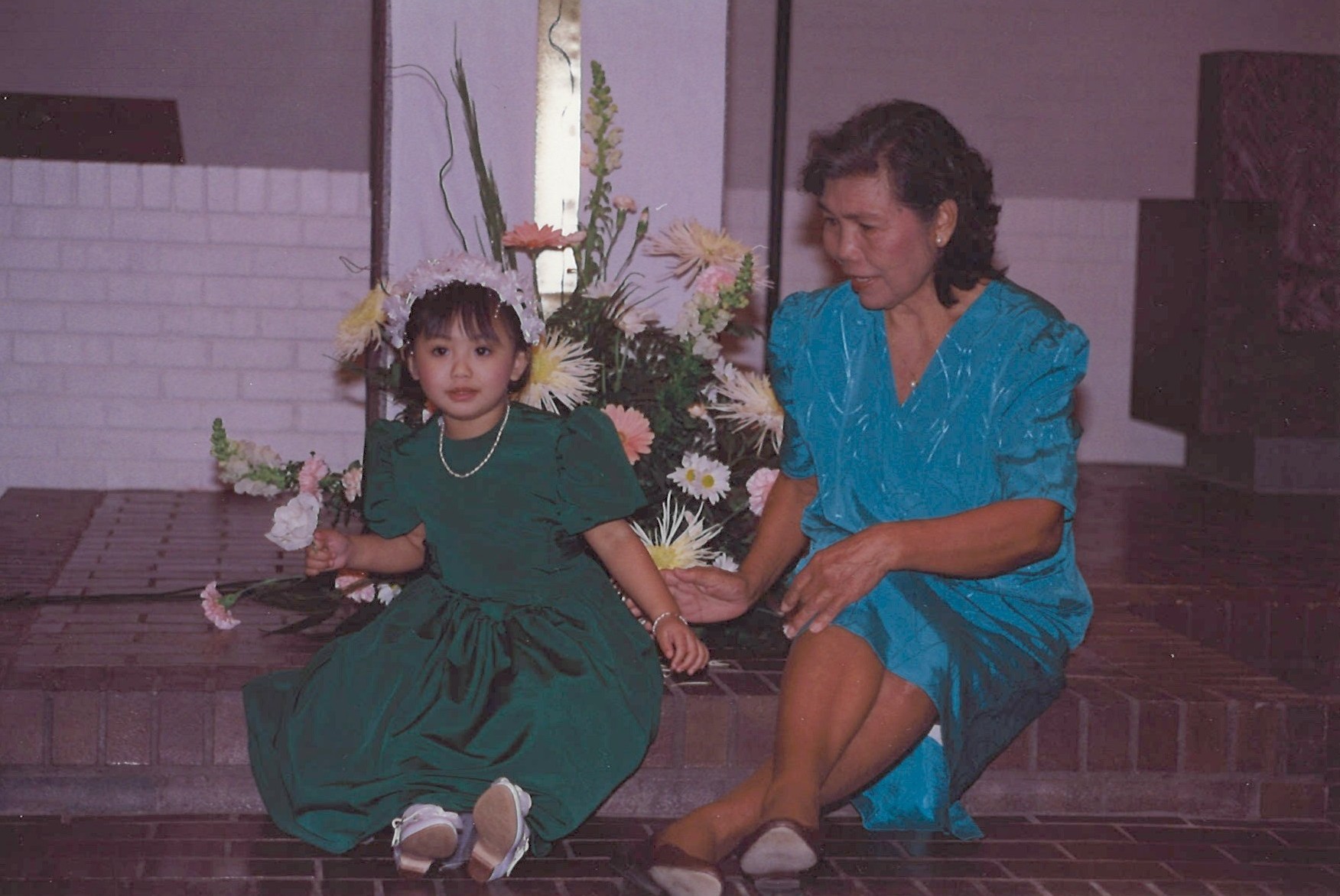
  • Jackie and "Lola," the Filipino word for grandmother, in 1993. Lola taught Jackie to play the piano and sing when she was two.
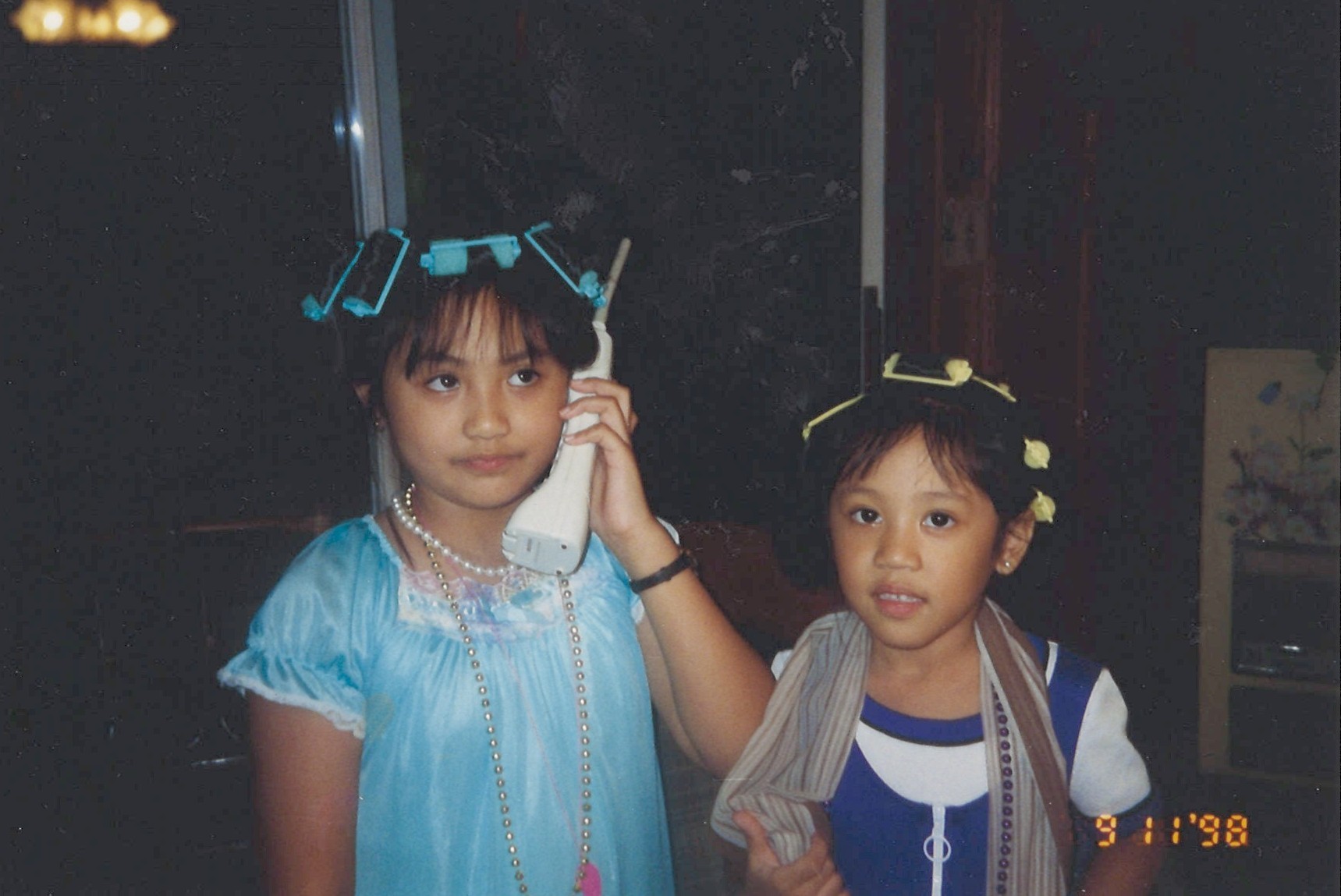
  • Jackie and her cousin, 1998.
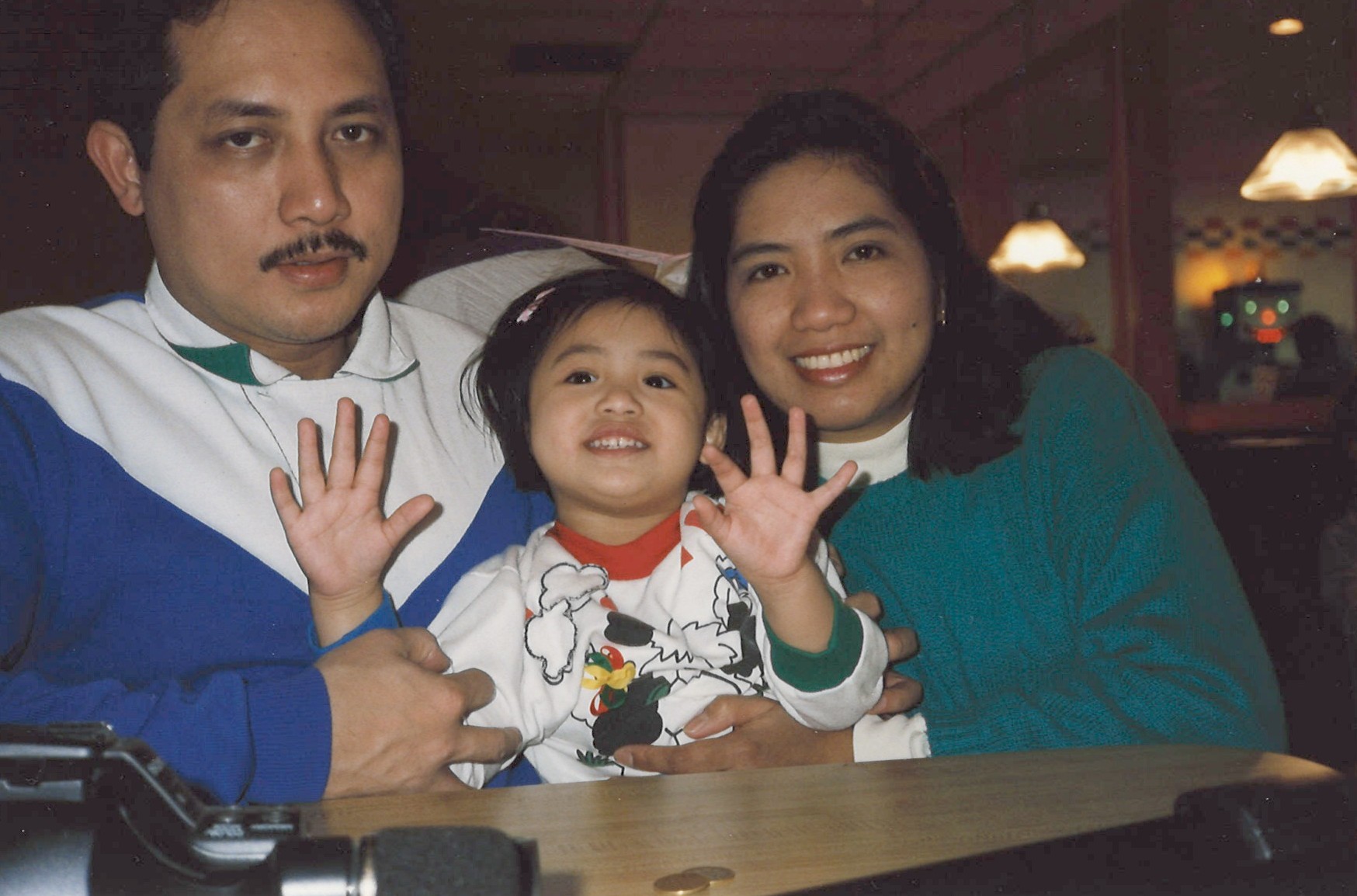
  • Jackie with her parents at a Chuck E. Cheese birthday, 1993

Fast forward decades later, and Arts for Learning was asking me to share my culture. I was reassured that being myself—fully myself—was welcome. This reignited a flame within me, and with each workshop I did, that flame spread. Whenever children told me they were Filipino too, I was happy that they felt seen and represented in a way I wasn’t when I was their age. It was also heartwarming to see my non-Filipino students embrace a culture that was different from their own. It meant so much to see them bright-eyed with curiosity to learn more.

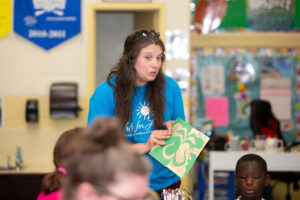
I was already content to serve our communities in this way, but then Arts for Learning gave me another opportunity: the IDEAL program. IDEAL stands for Intentional Designs of Expression in Artistic Languages. Our goal was to help fourth to sixth grade students prepare for middle school by using various art forms to explore questions such as, “Who am I?” and “How am I a part of my community?” This residency lasted for three years, with each year concluding at the Chrysler Museum of Art, where students’ art pieces were professionally exhibited.

Jackie with IDEAL students at College Park Elementary.

I served for three years at three different schools. Each year, the students developed a different “theme” that defined their class. During my first year at College Park Elementary School in Virginia Beach, the arts were an anchor amidst my students’ chaotic home lives. The arts became a stabilizing force for them, a way for them to express their feelings in a healthy way.

Jackie and fellow teaching artist Dai Poole with IDEAL students from Southside STEM Academy at Campostella.

The following year at Norfolk’s Southside STEM Academy at Campostella, the arts became a tool for students’ personal growth. It challenged them to go outside their comfort zones and discover they were capable of more than they thought.

Jackie and Dai with IDEAL students from Lake Taylor School.

During this past spring at Norfolk’s Lake Taylor School, the arts served as a tool for building community. Each student had a distinct personality, and the act of exploring creativity was the thread that knitted this class closer together.

During all three years, I witnessed my students seeing their art displayed in the Chrysler Museum—and those moments were truly life-changing. This year, I said to a student’s mom, “I can only imagine how you must feel knowing that your son is an exhibited artist.” Overcome with joy, she embraced me.
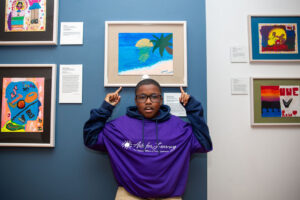
Every student walked out of the Chrysler Museum a changed person, as they realized, “If I just did that, I can do anything.” I felt myself change as well. Each year, I asked myself, “Did that really just happen? Did I really get to witness all these transformations?” The parents of my students told me, “You didn’t just witness it; you were a part of it.” I’m floored every time I hear that. I credit my students who worked so hard, and I thank them for allowing me to be part of their journeys.

As if Arts for Learning didn’t provide me with enough opportunities, they also invited me to participate in the RAISE residency. RAISE stands for Responsive Arts in School Education. For two years, I trained with other Young Audiences’ Teaching Artists over Zoom to learn how to integrate the arts into school curriculum, as well as how to enter classrooms with a trauma-informed, healing-centered approach. This involves supporting students as they discover who they are, honoring their agency and fostering a sense of community and belonging. During the winter and spring, I served as the Resident Teaching Artist on Tuesdays and Thursdays in Ms. Nancy Eason’s second-grade class at Armstrong School for the Arts in Hampton.

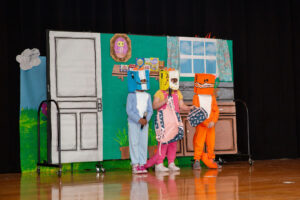
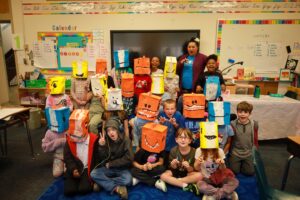
Ms. Eason and I collaborated on curriculum focused on literacy, using the art form of theater to engage students. Lessons featured story sequencing and story recall, with students to create a show based on a book they selected. The class voted for We Don’t Eat Our Classmates by Ryan T. Higgins, a story about a T-Rex named Penelope who learns the dos and don’ts of making friends at school. I then adapted the book into a short play. Over the course of the residency, Ms. Eason noticed that her students who had difficulties with reading at the beginning of the school year gained newfound confidence from their improved skills. In fact, one of these students auditioned for Penelope the T-Rex and got the role!
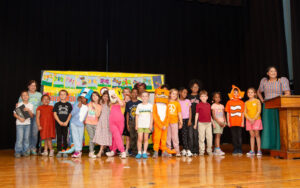
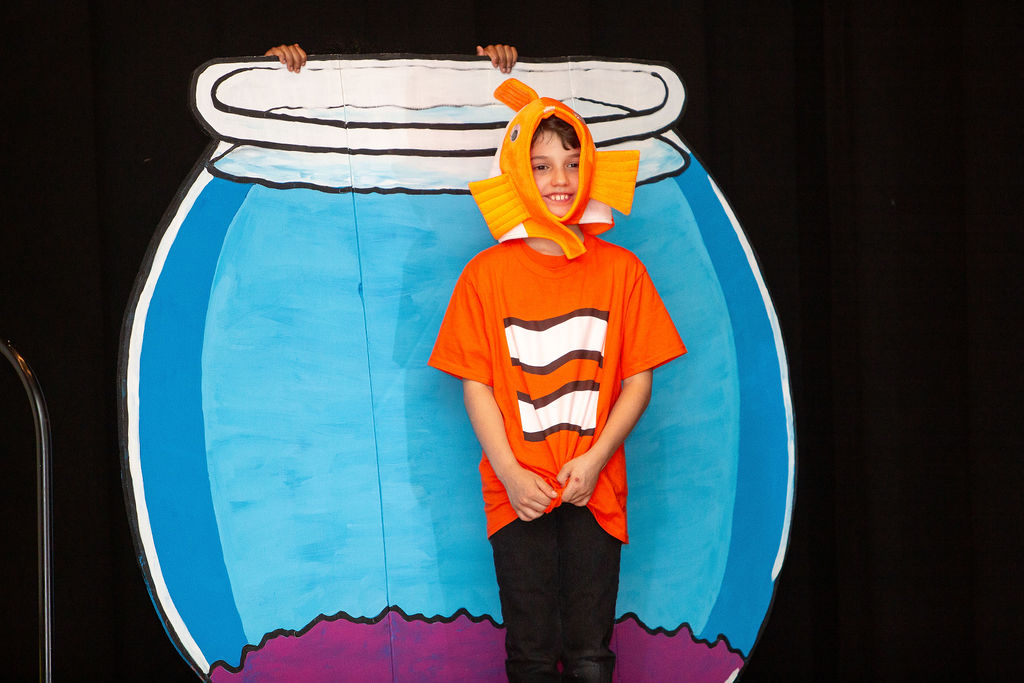
Ms. Eason told me she was amazed that some of her shyer students came out of their shells to perform willingly and with enthusiasm. For the students who didn’t feel comfortable on stage, we ensured they still felt part of the community as members of the stage crew, moving set pieces whenever the scenery needed to change. Another student created music for the slow-motion sequence in the play. All students had a huge hand in designing and decorating the set pieces. (The only exception—for obvious reasons—was Ms. Eason using a jigsaw to carve a giant “fishbowl” out of foam.) The rest of the show was entirely their work, including the costumes. One student hand-sewed the dinosaur tails herself.
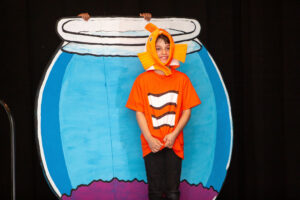
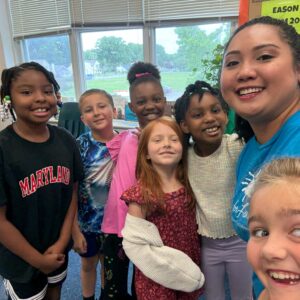
It was wonderful to see that everything I had learned via Zoom years prior was coming to fruition, as students discovered new aspects of themselves while putting together a show. We honored each kid’s agency—they chose which story we’d turn into a play, they chose which parts to audition for, they chose whether to audition at all, and they chose how to contribute if they didn’t audition. Ultimately, it was remarkable how each student’s individual skills created a sense of community in the class. Everyone was doing their part to contribute to something bigger than themselves: our cast, our crew, our creative team—our show. Due to the kids’ hard work, the show was a huge success!

In a full-circle moment for a residency focused on literacy, Ms. Eason’s class invited me back in June for their Author’s Tea. Each student put their own spin on a classic fairytale, such as the Three Little Pigs or Goldilocks, and then created their own books. Once again, students made their books by hand—the storyline, the illustrations, everything. The only thing Ms. Eason did was bind the books. It was the end of the school year, and I could see that students had gone above and beyond in developing their skills of story recall and story sequencing. I felt so proud of them and so happy I could celebrate their accomplishments with them.
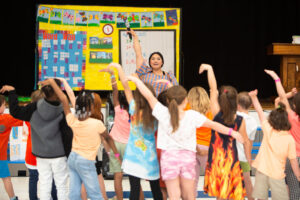
Whether we met once through a workshop or collaborated over a more extended period through a residency, I hope my students know how grateful I am to have shared that time with them. I hope they know how much they’ve changed me. I’m different from the person I was before Arts for Learning discovered me years ago. Back then, freshly post-pandemic, the present and future looked bleak. I felt trapped and stuck, questioning my purpose. Through my students’ eyes, I see hope and optimism. They’ve reminded me that amazing things can and do happen. They’ve shown me that my purpose is right here, with them.

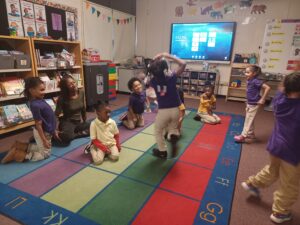
In addition to her work as a Teaching Artist, Jackie now works for A4L-VA as a Program Assistant. She is also one of our Coastal Virginia Wolf Trap teaching artists. We appreciate her contributions to our organization every day.


Filed Under: Artist Spotlight, Program Spotlight, Staff Spotlight, Wolf Trap Teaching Artists Tagged With: 757 arts, 757 nonprofit, Armstrong School for the Arts, Arts Ed, arts education, Arts for Learning, Arts for Learning Virginia, arts-in-education, Coastal Virginia Wolf Trap, dance, Hampton City Schools, Jackie Adonis, Norfolk Public Schools, RAISE, residency, teaching artist, Virginia Beach City Public Schools, Wolf Trap, Wolf Trap teaching artist

New Artists: Adding Depth, Passion, and Talent to our Roster

June 24, 2025 By Cindy Sherwood

We’ve welcomed a number of new teaching and performing artists to our professional roster in recent months—and we wanted to share a brief introduction to each. For more information, click on the artist’s name.

Amanda Wallace is a visual artist whose specialty is encaustic painting. She’s taught art throughout Hampton Roads, Washington DC, and Northern Virginia.

Amina Bryant is a violinist and music educator with a deep passion for working with young students. This spring, she was the teaching artist for one of our Strings Impact residencies in Portsmouth, where students learn the basics of the violin.

Ashlee Rey is an actor who has performed in numerous productions in Hampton Roads. With a background in STEM that included a stint as a supervisory nuclear engineer at Norfolk Naval Shipyard, she has now decided her “heart is with the arts.”

Ashley Ault is a visual artist educator who has worked with students in public schools in North Carolina and Virginia for more than a decade.


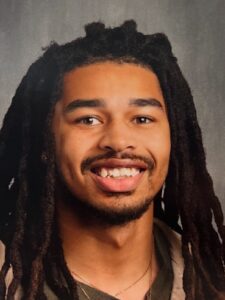
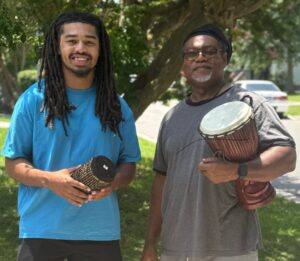
Gary “G” Garlic Jr. is a singer and musician who plays piano, drums, bass, and guitar. He’s joining his father, longtime A4L percussionist JuJu Drum, as a performing artist in a new ensemble called One World Beats.

Janae Thompson is a theatrical performer with numerous acting credits in Hampton Roads and beyond.

Kiara Noble is a dancer, musician, and theater artist whose experience ranges from musical theater to ballet, jazz, and lyrical dance.

Nin-Eanna Bryant is a visual artist who has exhibited her work in juried exhibitions and art shows across Hampton Roads.

Sequoia Rodwell-Lacewell is a visual artist in Hampton Roads who paints abstract acrylic paintings and custom watercolors.

Both Nin-Eanna and Sequoia served as teaching artists for our IDEAL residencies this spring.

We’re pleased to report that we’re also on-boarding some additional new artists. By doing so, we expand the breadth and depth of our programming, providing students with an even greater diversity of art forms, artistic expertise, cultural and historical perspectives, and teaching styles. We’ll look forward to sharing more about our other new artists soon!

If you’re an artist who’s passionate about arts education and its potential to touch students’ lives by sparking creativity and a love of learning, we’d like to hear from you. Read more about how to become an Arts for Learning Virginia artist here.

If you’re an educator who wants to get a jump on the school year, contact us! You can book any of the artists we’ve shown here or others on our roster.  Here’s the full list.

You may also search by program, breaking it down by grade level, art form, content, theme, and more: https://arts4learningva.org/program/

Better yet, talk with our expert, School and Community Relationships Coordinator Katie Driskill. She’ll help you explore options that are just right for your students. Reach her at 757-961-3737 or Scheduling@Arts4LearningVA.org.

Filed Under: Artist Spotlight, News, Uncategorized Tagged With: 757 arts, 757 nonprofit, Arts for Learning, Arts for Learning Virginia, arts-in-education, new artists, performing artists, residency, teaching artists, Young Audiences

RAISE Up in Hampton City Schools

May 21, 2025 By Cindy Sherwood

“As a teaching artist, when we meet a kid, they’re a whole entire person. They have experiences and not all those experiences are pleasant, so coming to the classroom with that mindset and knowing that they carry baggage with them as do we… it’s about approaching them with compassion but also recognizing that they’re more than just their trauma.” Jackie Adonis, Arts for Learning Virginia Teaching Artist

Nancy Eason’s second grade class at Armstrong School for the Arts, where Jackie Adonis worked as a RAISE resident teaching artist.

When Jackie and A4L’s Valerie Davis worked in Hampton City Schools’ classrooms this spring, they came equipped with two years of intensive training focused on student well-being and trauma-conscious, healing-informed teaching. Their residencies were part of a five-year, multi-state initiative developed by Young Audiences/Arts for Learning (National) called Responsive Arts in Education (RAISE). The program takes teaching artists and puts them in the classroom with educators to help integrate the arts into the curriculum.

“Young people are hardwired for the arts. Arts integration training and these strategies align perfectly with learning goals for all subjects. We appreciate the efforts of Heather Goode, principal of Moton Early Childhood Center, and Dr. Tiffany Geddie-Suggs, principal of Armstrong School for the Arts, for providing unique opportunities like this in HCS,” said Kelly Dee, HCS visual and performing arts curriculum leader.

In twice-weekly sessions, Jackie Adonis worked side-by-side with Armstrong’s Nancy Eason, a second-grade teacher. The two developed lesson plans together, and Jackie established relationships with children in the class.

“The best part was watching each student’s character development over time,” Jackie said. “Seeing their progress was absolutely breathtaking. I saw shy students get out of their shell.”

Jackie demonstrated ways to integrate different aspects of theater in the classroom. Kids voted and chose a book to make into a play, which Jackie adapted and students performed in front of a large audience at an A4L community engagement night.

“We Don’t Eat Our Classmates” featured T-Rex characters and a theme of friendship. Children created the sets and costumes, with one student sewing the dinosaur tails and another student composing music for two sections of the play. Students who chose to be on stage memorized their lines, with only the narrator using a printed script.

The RAISE experience for Jackie was “more than just a play or playing some theater games with them when I was in the classroom. We were reinforcing literacy. We want to build strong learners,” she said. “We were also helping the kids explore. They get to try something new; they get to challenge themselves to go out of their comfort zones. How do they know what they’re good at unless they try something different?”

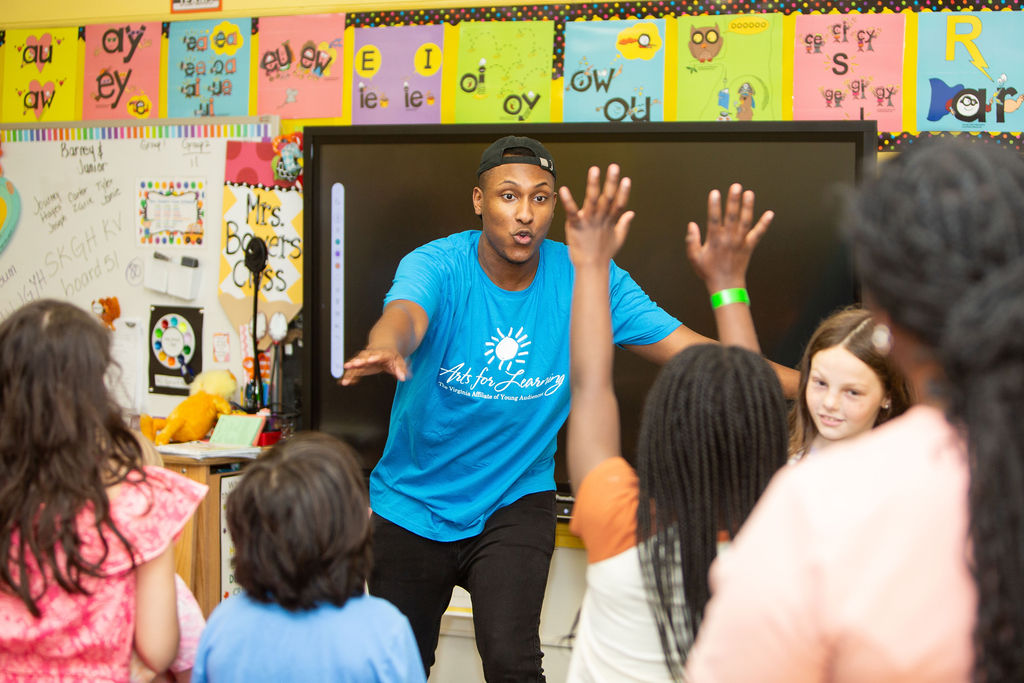
The community engagement night also highlighted Jackie in a different role, sharing her Filipino culture by teaching kids and family members Itik Itik, Dance of the Duck. Three other A4L artists— Ashley Ault, Dai Poole, and Gary Garlic—also presented rotating workshops for an estimated 250 in attendance. Click here to view pictures of the evening by J.B. Digital Photography that are free to download: https://bit.ly/RAISEArmstrongphotos

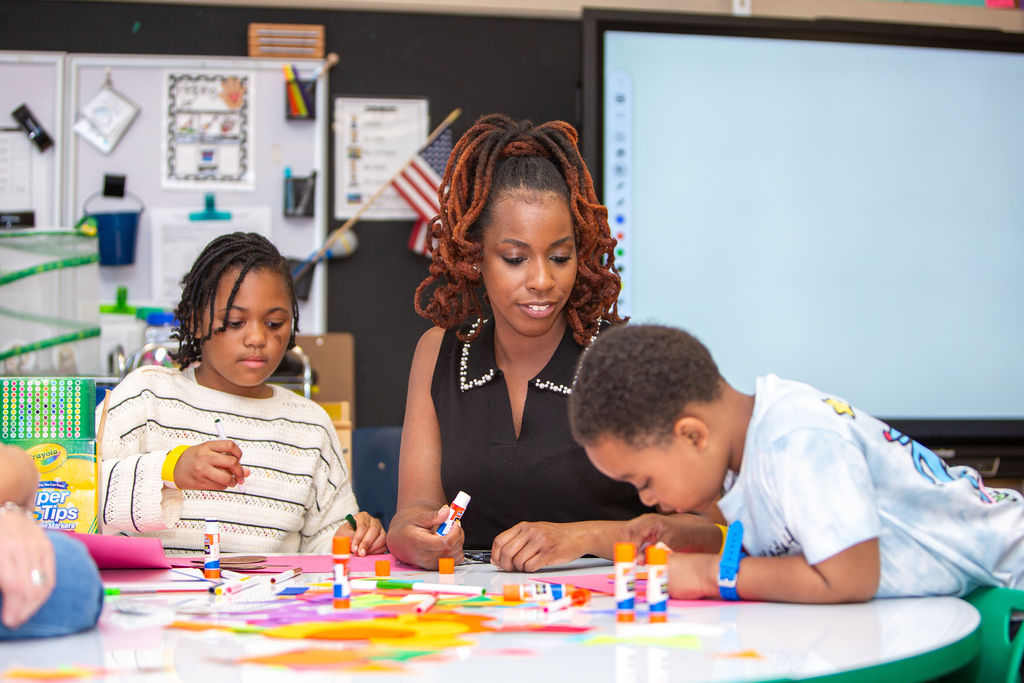
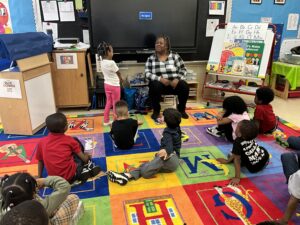
At Moton Early Childhood Center, A4L’s Valerie Davis worked twice-weekly this spring with a group of 20 four- and five-year-old children.

“I love working with the little ones,” Valerie said. “They’re like sponges and they absorb so much. I got to teach them some songs and some different ways of saying hello and goodbye in a different language. And they loved that. They eat that up. So, to see them absorb the story and then be able to give it back to me the same way I gave it to them is incredible.”

She said she always brought her drum to class, calling music the “catalyst” for engagement with these early learners.
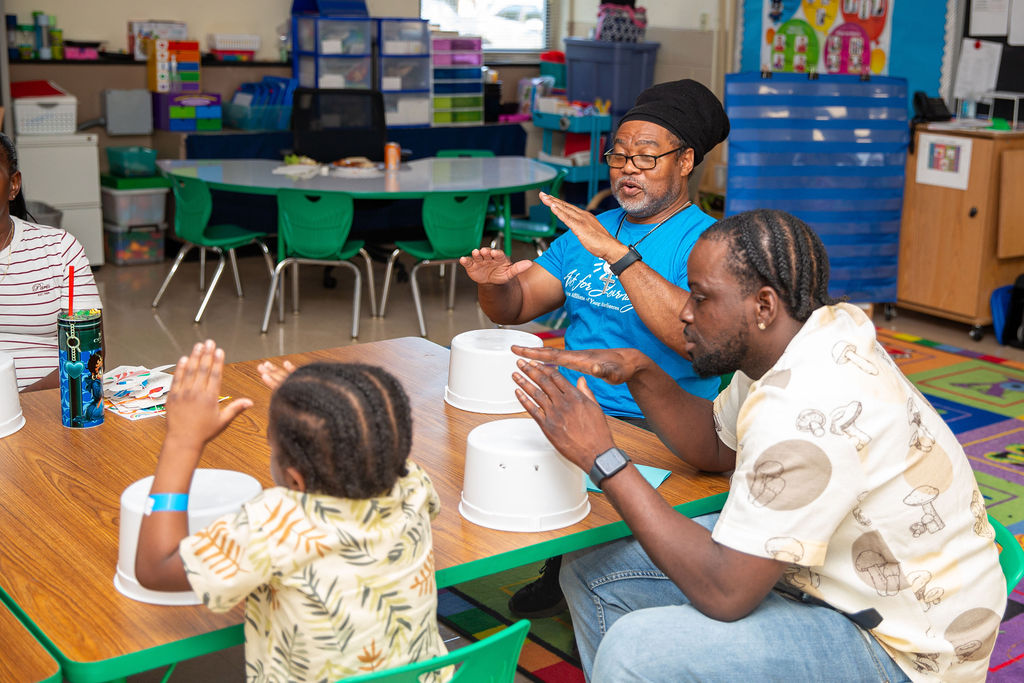
“I’ve had students where the teacher has said the student doesn’t really participate in different activities, but when I come in, by that second day, the student who was very quiet, very shy is eager to tap that drum and to do the songs.”

Arts for Learning also hosted a community engagement night for Moton Early Childhood Center, with rotating A4L workshops by Jackie, Gary Garlic, Dai Poole, and Amanda Wallace. Click here to view and download free photos: https://bit.ly/RAISEMotonPhotos

For Valerie, implementing RAISE techniques in the classroom is more difficult when she’s there for a single session, as opposed to the longer-term residency at Moton. For Jackie, a Virginia Beach resident, the biggest challenge of her RAISE residency was a more pragmatic one that many of us can relate to: “The traffic driving to and from the Peninsula. But honestly, once I was in the classroom, everything was smooth sailing.”

Many thanks to our RAISE partner, Hampton City Schools, for their tremendous support. Plans are still being formulated for Arts for Learning’s final year of RAISE, which is described as “a five-year, multi-state project designed to address the current, urgent needs of young learners through forging a new model of development and partnership for teaching artists and school support teams, who work together on in-depth, customized, trauma-informed and culturally responsive-sustaining arts in education residencies. The project is funded by the U.S. Department of Education.”

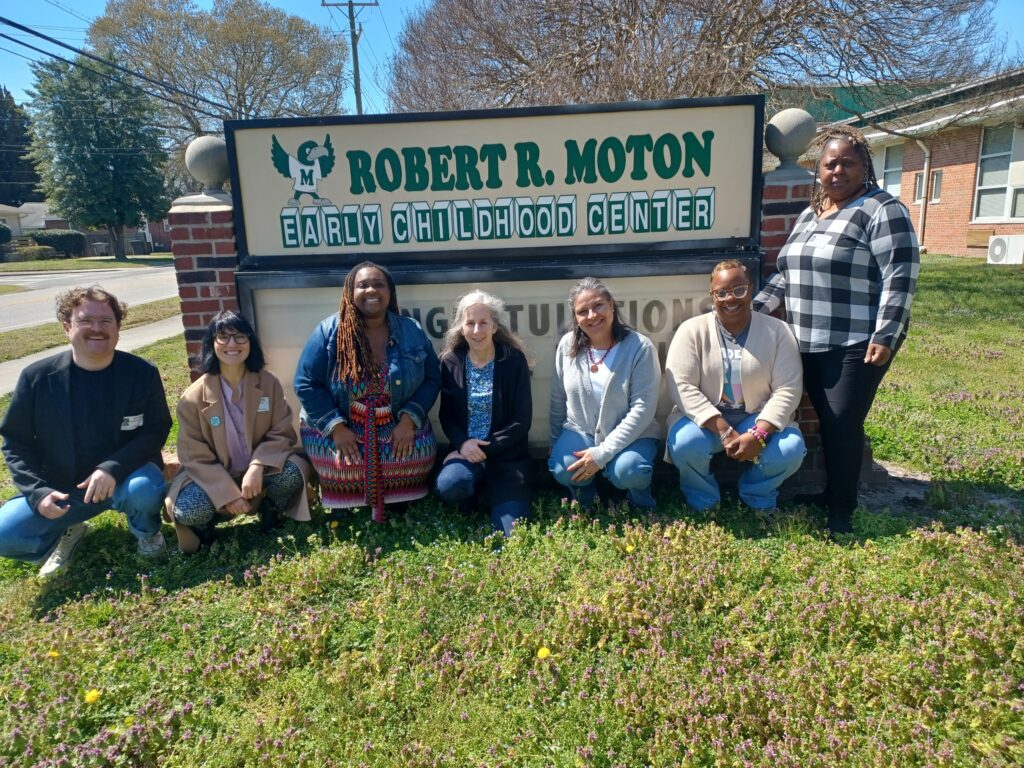
Young Audiences’ Melissa Gawlowski Pratt, YA’s Director of Strategic Partnerships & Network Relations, developed the RAISE initiative (pictured second from left). She met with A4L’s Aisha Noel (third from left), Valerie Davis (far right), and Moton educators to observe the program in action this spring.

We appreciate Young Audiences/Arts for Learning’s support and guidance throughout RAISE, which has included site visits for selected staff members to New Orleans and Denver, lesson plan swapping, and discussions of implementation related to evaluation and best practices.

A4L’s Anna Heywood Green and Aisha Noel (second and third from left) meet with teaching artists and educators during a site visit in October 2024 to view Young Audiences of Louisiana’s RAISE program.

Filed Under: Artist Spotlight, Arts Integration, News, Residency Tagged With: 757 arts, 757 nonprofit, Armstrong School for the Arts, Arts Ed, arts education, Arts for Learning, Arts for Learning Virginia, arts integration, arts-in-education, Hampton City Schools, Moton Early Childhood Center, Moton Elementary School, professional learning, RAISE, residency, Responsive Arts in Education, student well-being, trauma-informed education, Young Audiences

Program Spotlight: “The Crack in Everything”

November 15, 2024 By Cindy Sherwood


Arts for Learning storyteller Robin Vivian says she was skimming her daughter’s PTA newsletter recently when her jaw dropped.

“If I were in a car, it’d be like the brakes going [SCREECH]!  I thought, that’s incredible because I have literally spent the last year creating this show that’s about accepting imperfection and the concept of looking at it in a different way.”

Robin was reacting to this year’s theme for Reflections, “Accepting Imperfection.”  Reflections is a National PTA-sponsored program. Each year more than 300,000 pre-K through 12th grade students make original works of art in response to a student-created theme.

Robin’s program for Arts for Learning Virginia is called The Crack in Everything. The title comes from a line in a Leonard Cohen song: “There’s a crack in everything. That’s how the light gets in.”

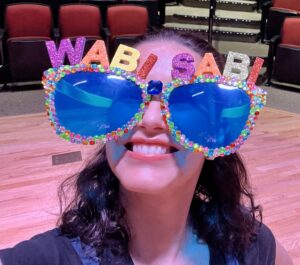
“[Hearing that line] immediately reminded me of one of the first stories I ever learned called The Cracked Pot,” Robin says. The story, which Robin tells in her program, illustrates the beauty that can be found in imperfection, a Japanese concept called “wabi-sabi.” Sharing three multicultural tales and one personal one, Robin uses the wabi-sabi elements of imperfection, impermanence, and incomplete to help students reframe themselves and their experiences.

Robin’s role as the mom to a daughter in elementary school influenced how she developed her program—from her daughter’s distress about needing a tutor to the amount of time that age group spends on social media, including watching YouTube videos where they see others with seemingly perfect lives.
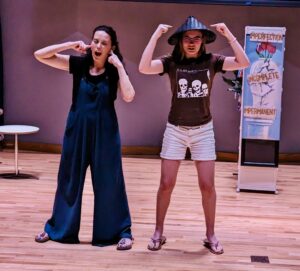
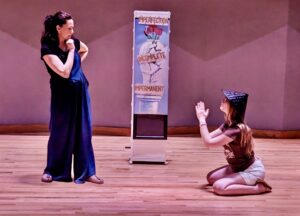
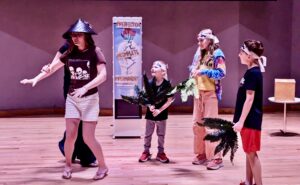
“I imagine that it would be very easy to watch that and say, ‘Hmm, my life doesn’t look like that, my photos don’t look like that. There must be something wrong with me,’” Robin says. “If they don’t have an outlet to talk to someone about it then they start to make their own narrative and that narrative can very easily go to ‘I’m not enough’ or self-blame or ‘my family’s not enough’ or ‘I’m different,’ which can equal ‘I’m bad’ or ‘I’m not enough.’”

Robin uses the story of The Stonecutter to address that negative narrative. By the end of the story, the stonecutter realizes he had everything he needed, from the very beginning, to be content.

Whatever you have right now, you focus on what you have instead of what you don’t. That’s happiness. You don’t need anything else. So that’s the part of wabi-sabi that’s incomplete.”

The Crack in Everything is highly interactive.  In one portion, for example, students come onto stage to act out a scene and in another they call out guesses related to a “mystery box” Robin brings out—what do its contents of a chocolate chip cookie, Popsicle, Slinky, and Silly Putty have in
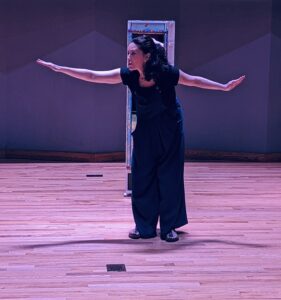
common?  (Think about it and find out if your guess is correct at the end of this story!)

Along with some humorous moments, the program has a part that’s both difficult to hear and that almost everyone can relate to. It’s Robin’s own story from fourth grade when she desperately wanted a best friend—plus a 90’s-era “best friend charm” to display to her peers—and wound up being rejected in a cruel way.  But in the program, Robin shows that the story doesn’t end there. Although she never did become friends with that particular girl, years later in college she met a young woman, Fayth, similar to herself (“very goofy and a lot, just like me.”) Robin had told Fayth her painful story from fourth grade. And on Robin’s 20th birthday, Fayth surprised her with a best friend charm. They remain best friends today, along with A4L teaching artist April Uhrin.

It’s a lovely twist to the story, demonstrating the ever-changing aspect of life, or the wabi-sabi idea of impermanence.

But the story doesn’t end there either.

“When my daughter was in first grade, kids came to her and said she shouldn’t talk to this other little girl because that little girl was weird. And she was struggling with that,” Robin says. “So I told her the story that I just told you. And I watched it transform her. She realized that if she would do that, it would be very similar to what those girls did to me. And that’s hurtful. And I watched her become a kid who cares about other people and she learned compassion. And so that story went on. And she was nice to that little girl.”

That right there is part of the story. The story is the wabi-sabi. That’s the beauty. We all experience things that are painful. We all go through things. Everything ends from time to time. But when we share that experience of someone else hurting, magic happens because we realize that we’re not alone. We have each other. And there’s nothing actually wrong with us. It’s just part of life.”

Robin is a professional storyteller, actor, and educator who’s based in Northern Virginia. If you’d like to book Robin for your school, library, theater, or community center, contact Katie Driskill, School and Community Relationships Coordinator, at 757-961-3737 or scheduling@Arts4LearningVA.org.

The answer to what a chocolate chip cookie, Popsicle, Slinky, and Silly Putty have in common is that they were all created by mistake—from imperfection comes beauty! As Robin puts it, who wants to live in a world without chocolate chip cookies?

Filed Under: Artist Spotlight, Program Spotlight Tagged With: impermanence, PTA, Reflections, Robin Vivian, storyteller, storytelling, teaching artist, wabi-sabi

Teaching Artist Profile: Dino O’Dell

October 14, 2024 By Cindy Sherwood

(Many thanks to Arts for Learning Maryland for this terrific article and interview with Dino O’Dell. Below is a lightly edited version.)

Music moves us. Its rhythm, melody, harmony, and lyricism catches our ears, inspires us, stirs our imaginations, and sticks in our heads. If you ask us, that sounds a lot like great teaching!

Dino O’Dell uses the power of music to teach and engage students of all ages. A teaching artist, award-winning musician, and former elementary school music educator, Dino has been writing and performing for young audiences for 20 years. Today, he travels across Virginia (and the country!) to perform participatory assemblies that transform traditional academic lessons into joyful, fun, and creative experiences.

“My background is in children’s theater,” Dino says. “It’s shaped my teaching philosophy. The goal is to create ways for students to engage with the performance—whether it’s through clapping, singing, or movement. We simply tap into what already resonates with students—such as music and stories.”

Dino’s programs cover topics like science, outer space, geography, history, and animals. And by bringing young viewers into the performance, he’s creating memorable learning experiences for kids and their teachers.

For example, in Imagine Your Journey, Dino teaches students about the continents, using catchy tunes that encourage students to sing along and make corresponding dance moves. For North America, students mimic a basketball shot, nodding to the popular sport in the region; for South America, they swim in the Amazon; and for Europe, they eat an imaginary Italian pizza!

Movement and lyrics contain information. Rhythm and melody make it easier to recall,” Dino explains. “Music is the key that opens the door to the room of knowledge. And the knowledge contains the content derived from the lyrics and dance moves.”

Dino incorporates many styles of music into his work, including blues, folk, reggae, ska, funk, and classical. “Exposing kids to a variety of styles and structures is so powerful,” he says. “They may not recognize that they’re hearing a jazz tune, but they feel a different kind of groove, they experience syncopation, and in the process, their awareness of what’s out there and what’s possible expands.” Here’s an example!

At Arts for Learning Virginia, we see a truth illustrated in all of Dino’s programs and those of our other teaching artists: creativity uniquely resonates with young people. “Kids are naturally creative,” Dino says. “In many cases, they aren’t self-conscious yet, and convincing them that what they’re learning is also fun and interesting is easy. It’s a beautiful thing to be a part of.”

Dino will be on tour in Virginia the week of February 24th, 2025. We’re booking visits to schools, libraries, and community centers now!

To learn more about Dino and explore his programs available for your school or classroom, visit his artist profile on our website or contact Katie Driskill, School and Community Relationships Coordinator, at 757-961-3737 or  scheduling@Arts4LearningVA.org.

Filed Under: Artist Spotlight, ArtsEd Tagged With: 757 arts, 757 nonprofit, Arts Ed, arts education, Arts for Learning Virginia, arts-in-education, Dino O'Dell, music education, teaching artist

  • 1
  • 2
  • 3
  • …
  • 5
  • Next Page »
Follow Us on FacebookFollow Us on InstagramFollow Us on YouTubeFollow Us on LinkedIn
Phone: 757-466-7555

Join the A4L Mailing List!

Sign up to receive the latest news on arts integration from Arts for Learning! Thank you for supporting arts-in-education.

Select list(s) to subscribe to

Main Office
Arts for Learning
420 North Center Drive
Suite 239
Norfolk, Virginia 23502

Phone: 757-466-7555

Main Office

Arts for Learning
420 North Center Drive
Suite 239
Norfolk, Virginia 23502
Phone:
757-466-7555

A Force for the Arts: Honoring Minette Cooper

In Hampton Roads, the arts are a living, breathing presence—heard in the rhythm of a drum circle, seen in a dancer’s arc across a school gym, felt in the hush that follows a poem. Few people did more to ensure those moments could happen than Minette Cooper. Her leadership, vision, and relentless belief in the […]

Join the A4L Mailing List!

Sign up to receive the latest news on arts integration from Arts for Learning! Thank you for supporting arts-in-education.

Select list(s) to subscribe to

At Arts for Learning Virginia, we’re proud to be part of the Virginia Commission for the Arts’ Passport Program. While Passport holders typically receive free admission and 50% off classes at participating organizations, all our programming is always free—no discount needed. To learn more about our public events, check out our calendar of events page here.

Copyright © 2026 · Young Audiences | Arts For Learning | Virginia

Website Maintained By TechArk

×