Logo
Follow Us on FacebookFollow Us on InstagramFollow Us on YouTubeFollow Us on LinkedIn
Phone: 757-466-7555
  • HOME
  • ABOUT US
    • Our Access, Belonging, Inclusion, Diversity, and Equity (ABIDE) Statement
    • Our Board of Directors
      • Our Board of Directors 2025-2026
      • Our Board of Directors 2024-2025
      • Our Board of Directors 2023-2024
    • Our Employment Opportunities
    • Our Financials (990 and Audit)
      • 990 Form 2023-2024
      • Audit 2023-2024
    • Our Impact Report
      • Our Impact Report 2024-2025
      • Our Impact Report 2023-2024
      • Our Impact Report 2022-2023
    • Our National Network
    • Our Staff
      • Contact Us
    • Our Strategic Plan
  • PROGRAMS
    • Calendar of Events
    • Schedule a Program
    • Find A Program
    • Arts + Learning Snacks
    • Coastal Virginia Wolf Trap
  • SUPPORT
    • Our Supporters
      • Our Community of Supporters 2024 – 2025
      • Our Supporters 2023 – 2024
      • Our Supporters 2022 – 2023
      • Our Supporters 2021 – 2022
    • Individual Giving
    • Give Back Through Rewards
  • GET INVOLVED
    • Become an A4L Artist
    • Become a Board Member
    • Internships
    • Program Observer
    • Volunteer
  • Our Stories
    • Our History
  • Virtual Arts

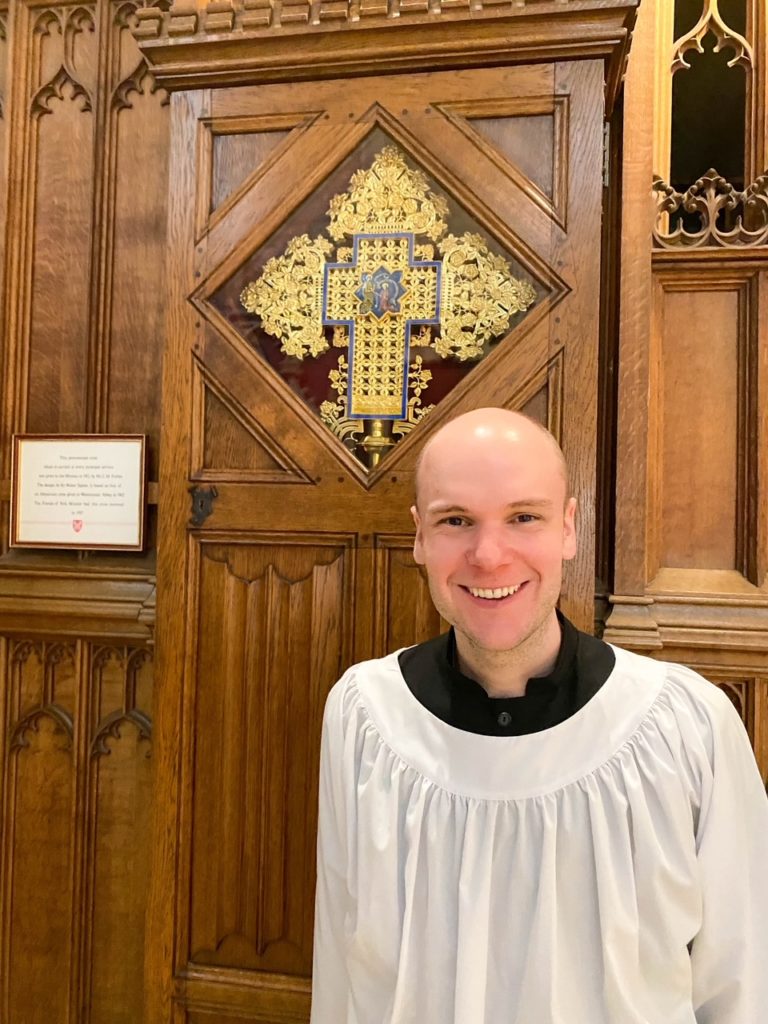
The Arts, Education, and Society: An Interview with Drew Lusher, A4L’s New Artist and Programming Manager

November 2, 2022 By Cindy Sherwood

You have a music background, right? When did your engagement with music begin?
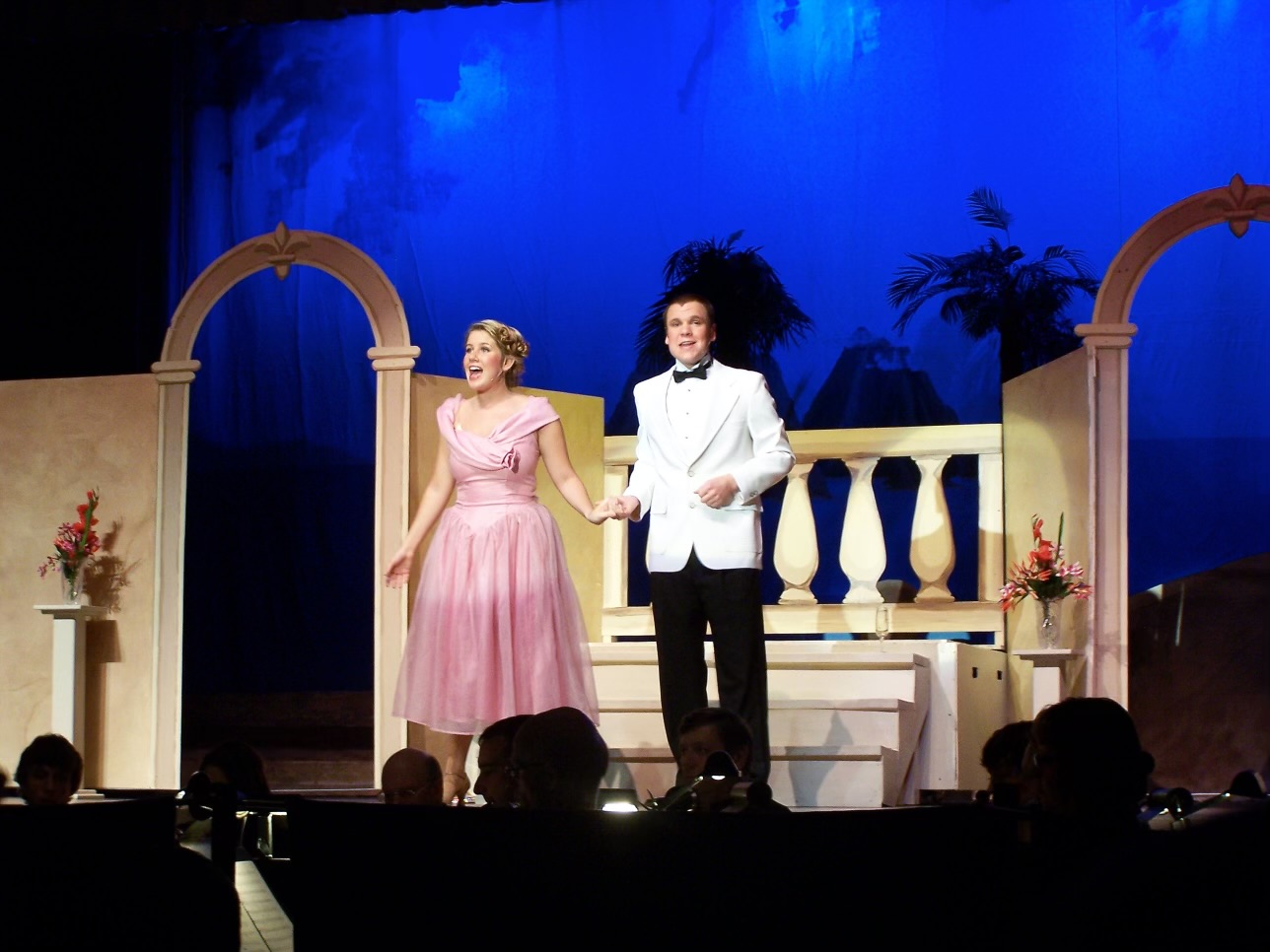
In high school, Drew played the lead in the school’s production of South Pacific.

I was fortunate to grow up in an environment surrounded by music. My mother had a vast record collection, my favorite of which was an album of Bach’s Brandenburg Concertos – I loved the blasting of the baroque horns through the stereo.

But in terms of making music, that really began in the fourth grade – the year I started playing trombone and singing in the school chorus and the year my grandparents first brought me to a concert by our local symphony orchestra (The Syracuse Symphony). I was immediately enamored with the soundscape of the live orchestra and the energy of the conductor. From then I was asking for CDs of Beethoven and Mahler (while my friends wanted CDs of Eminem and Britney Spears).

Of course, I was also fortunate to have amazing music educators who fostered my relationship with the arts.
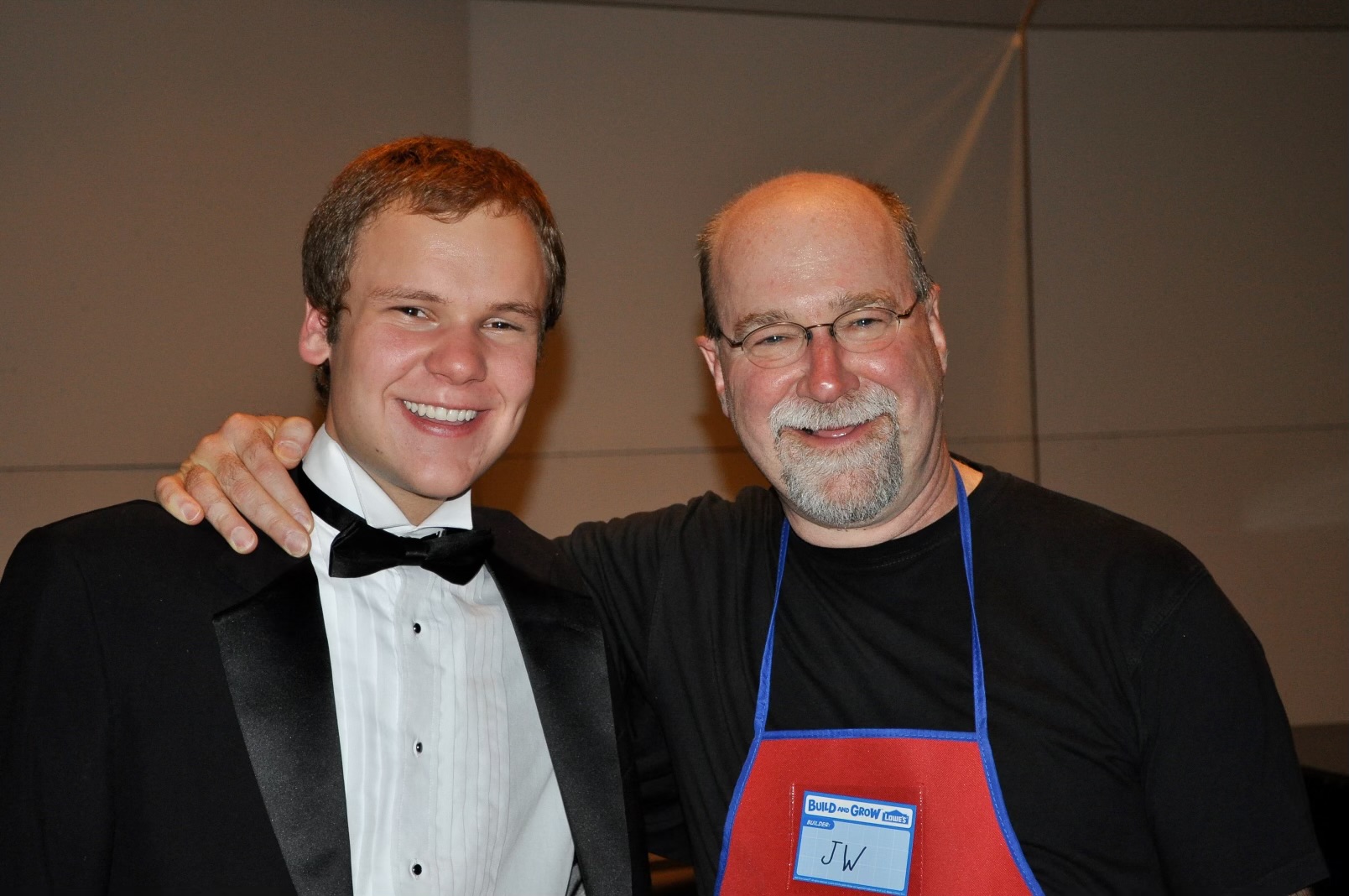
Drew with his high school chorus teacher, who remains an important mentor.

So there really wasn’t a singular experience that sparked my relationship with music, I was blessed with an environment that fostered those early experiences.

You grew up surrounded by opportunities to study and perform. How did that connect to your later experiences?

By the time I graduated high school, I understood that participation in the arts was a collective activity. I was fully aware of the ability for these opportunities to bring people together. I realized that shared experiences build community. That was powerful for a young person, shifting my understanding of that cliché on how music transforms the world.  Well, the pitches and rhythm don’t actually change the world, it’s the ability of music and musical experiences to bring people together, unifying diverse individuals and perspectives into a single experience that helps change the world. That’s powerful and that’s what’s driven me since.

Singing with the Westminster Choir at the Spoleto Festival in Charleston, South Carolina.

After high school you then went to college – how did those experiences change your understanding of the ability of music to bring people together?

My time at Westminster Choir College provided me with the framework for better understanding the ways that music brings people together. While there I had amazing opportunities – recording Grammy nominated albums, performing in the Spoleto Festival every May, singing with Celine Dion and Andrea Bocelli in Central Park, and performing with the world’s greatest orchestras and conductors at Carnegie Hall, Lincoln Center, and Philadelphia’s Kimmel Center.

But it was the work with my education professors – one, in particular – that gave me the language and a critical understanding of society, economic and symbolic capital, and education. I specifically remember sitting on stage at Carnegie Hall during a performance with Gustavo Dudamel and I stared out at the audience, who were all dressed in tuxedos and had probably gone to fancy dinners before paying several hundred dollars per ticket. It occurred to me that there’s more to music than this elite, gilded hall. That’s when I really became animated about teaching.

After graduating from college, you taught for two years as the choir director at Grafton High School in York County. How was that experience for you?
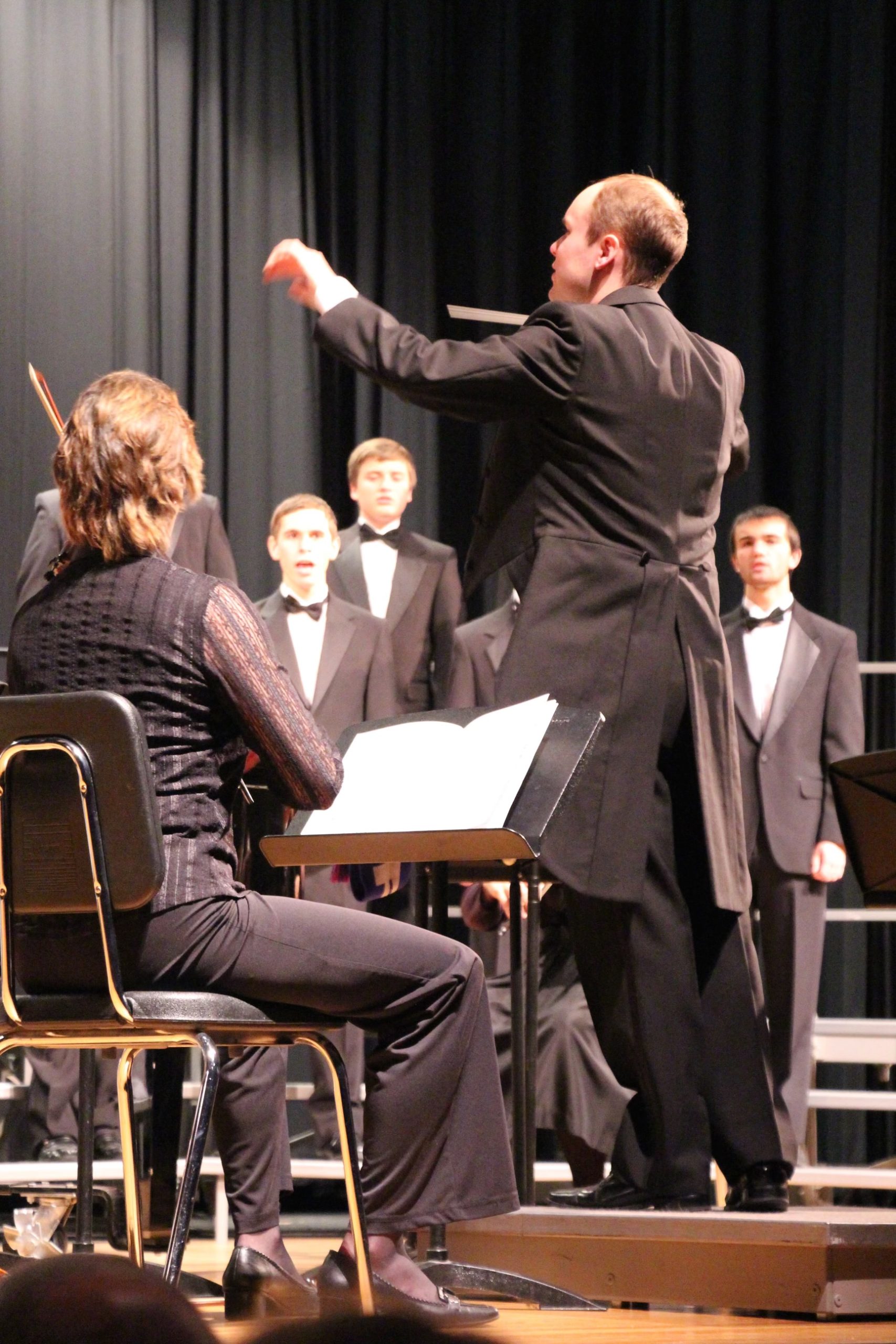
Conducting his advanced choir class at Grafton High School.

When I began teaching it was important to me to not only emphasize the technical aspects of music-making, but also the emotional, the ways in which making music together could transform perspectives and inform experiences. That transformation goes both ways – for the teacher, as well. I was fortunate to have a group of African American male students who transformed my views of the social role of education.

They’re the ones who really got me looking at the connection between education and society. They were the ones who opened my eyes about the systemic disadvantages that come with being a member of a marginalized community.

I’m forever grateful to them for being open and honest with me about their experiences because it really solidified the importance of education in society. So, it’s kind of been like a triangle for me, trying to incorporate the arts, education, society and how those pieces fit together and the power therein of when they do fit together.

You say that your “whole focus changed” after you left York County and went to Germany to further your studies and see more of the world. Why is that? (Drew received a master’s degree in conducting from the Hanns Eisler Hochschule für Musik in Berlin.)

In Germany, they emphasize music as something very sacred; it’s quasi-religious. So, the expectation is that we are there to serve the music as though it were a deity itself, and I fundamentally disagree with that. I think that music and the arts are there to serve us and they’re a means of connecting with real living human beings today, and so my time in Germany was a transitional period. I came back to the United States with this renewed purpose but also wanting to ask more questions and deeper questions.

Conducting for a German Radio national broadcast in 2018.

I can pinpoint the exact weekend when I decided to give up any dream of being a conductor or a fully devoted professional musician. I was invited to conduct in the south of Germany, in a town called Marktoberdorf – famous for its choir competition. I was staying in this old monastery that has been converted to a music center and there was this choir from Argentina that I was conducting. It was a great experience, but I brought with me a book by the philosopher Isaiah Berlin, and I was just so enraptured by his ideas on knowledge and society that I realized, as I was sitting in this modernized monastic cell, that my heart was in a different place.

I just wanted to sit and read and enjoy the sunshine coming into my window. It was springtime and I could smell the freshness of the earth outside and I was more focused on that and the ideas of the book than on actually conducting the ensemble.

I just knew that I was closing a door and I was doing that intentionally, shifting to something else.

Is that when you returned to Virginia?

Yes, I finished my master’s degree and the work that I was involved with in Germany before returning to Virginia. I became the vocal music teacher at Old Donation School in Virginia Beach and enrolled in a master’s degree program at UVA, studying Educational Psychology. The work I was doing in the classroom reflected the themes I was exploring in my studies.
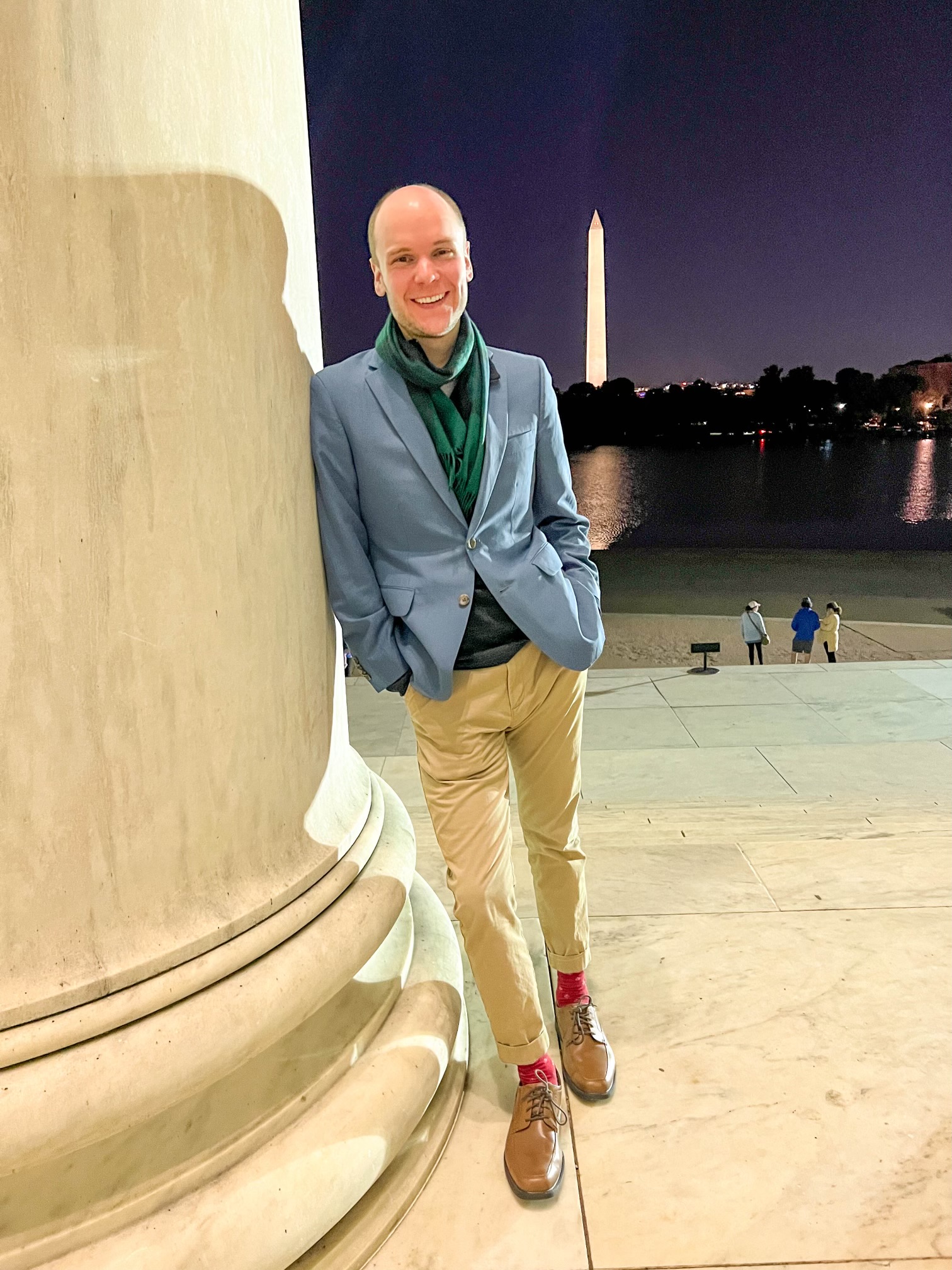
At the Jefferson Memorial.

At this time I also became a researcher for the university’s Institute of Democracy, tasked with compiling data on the national landscape of democracy centers at institutions of higher education. I began to reflect on the idea of democracy, particularly what democracy means for different people and how communities of different experiences and perspectives engage with democracy. This matched exactly what I did every day as a chorus teacher – it was my responsibility to facilitate dialogue and engagement among all of the students, ensuring that each student contributed their voice to our collective mission.

When conducting an ensemble, there are layers of interpretation – there’s the interpretation I create myself, the interpretation the collective ensemble creates, and the interpretation that individuals bring based on their own life. The beauty of the music experience comes from negotiating those interpretations so that our performance represents what we want to communicate both as individuals and as a collective. That is what democracy is, the negotiating between individual and collective identities to ensure authentic representation.

So what prompted you to leave teaching and join Arts for Learning?

I’ve begun to think more broadly about arts engagement. While I loved teaching and loved the students, I would like to utilize my ideas and my experiences to help foster collaboration between organizations and communities to ensure that everyone has an opportunity to contribute their voice and reflect on their perspectives and the perspectives of others through high-quality arts engagement.

As I’ve been investigating the social sphere and the social role of the arts, it’s clear that students are sometimes not presented opportunities in an equal way. And so, it’s up to organizations – like Arts for Learning – to fill those gaps for disadvantaged and marginalized communities where the arts are a powerful means of helping students achieve but also to feel represented and to represent themselves.

What are your goals with Arts for Learning?

In working with the existing artists on our roster, in recruiting new artists, and in developing programming, I want to make sure Arts for Learning is engaging students in ways that are appropriate for 21st century learners. The experiences we offer students should be 21st century experiences—so thinking about what is relevant to our students today, what is relevant about technology in terms of the way we consume the arts, and what are the relevant values we-as-a-society want to promote.

If you’re thinking about only using music and musical experiences to prepare kids to sit quietly at the symphony, that’s doing a disservice to the power of the arts today and the ways that the arts can connect, educate, and inspire today’s young students. Students are willing to be engaged and willing to create, but they want experiences that authentically engage and authentically reflect them.
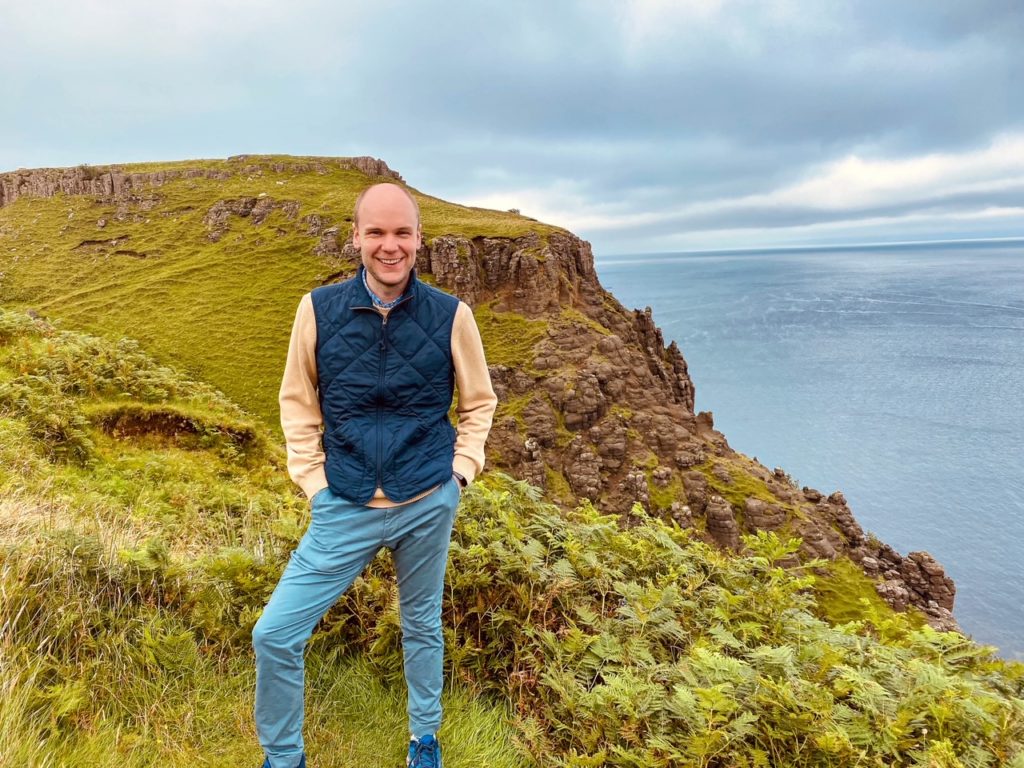
Visiting Scotland this summer.
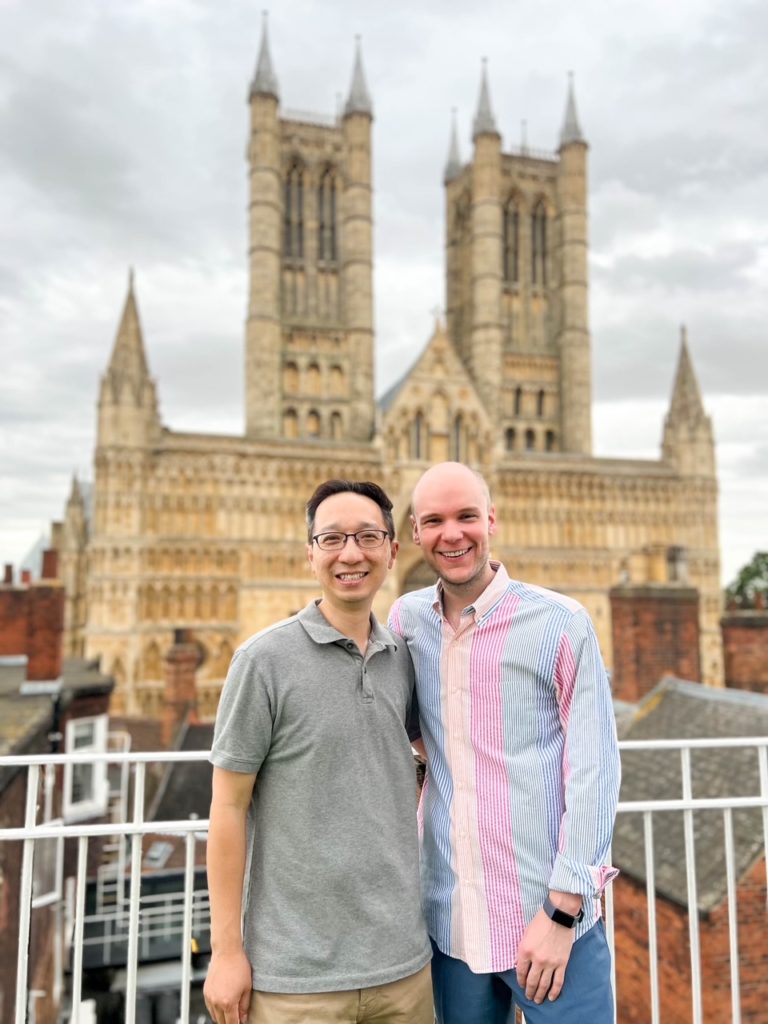
Drew and his partner, Kevin, in England this summer.
Singing at York Cathedral.

(An active member of the community, Drew sings in the Virginia Chorale and works as the staff bass at St. Paul’s Episcopal Church and at Ohef Sholom Temple. Drew lives with his partner, Kevin, in Norfolk.)
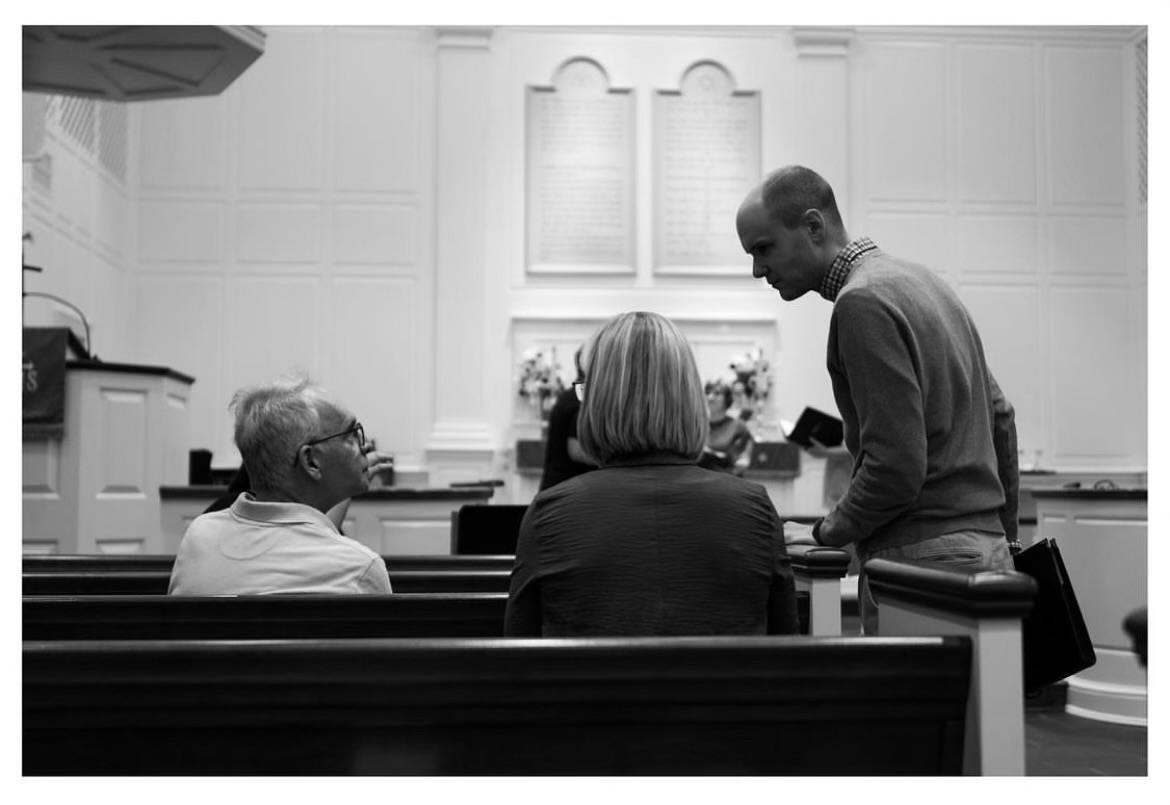
Discussing music with the conductor of the Virginia Chorale, Chuck Woodward.

I’ve got to ask – you grew up in Syracuse, went to college in New Jersey, and then lived in Germany – why settle in Virginia?

Well, in the fifth grade I had to do a presentation on Thomas Jefferson. Through my research for that project, I developed this idyllic, picturesque idea of Virginia, this view of rolling hills and Colonial Williamsburg and Monticello, and so I’ve just had this fascination since then. I feel a lot of pride when I tell people I live in Virginia. It feels like an accomplishment of mine, which seems kind of silly, but I love it. In three hours, I can be in D.C., in two hours I can be at Jefferson’s Monticello, in twenty minutes I can be at the beach, and every day I hear the fighter jets and see the aircraft carriers – what’s not love? I feel like I’ve come home.
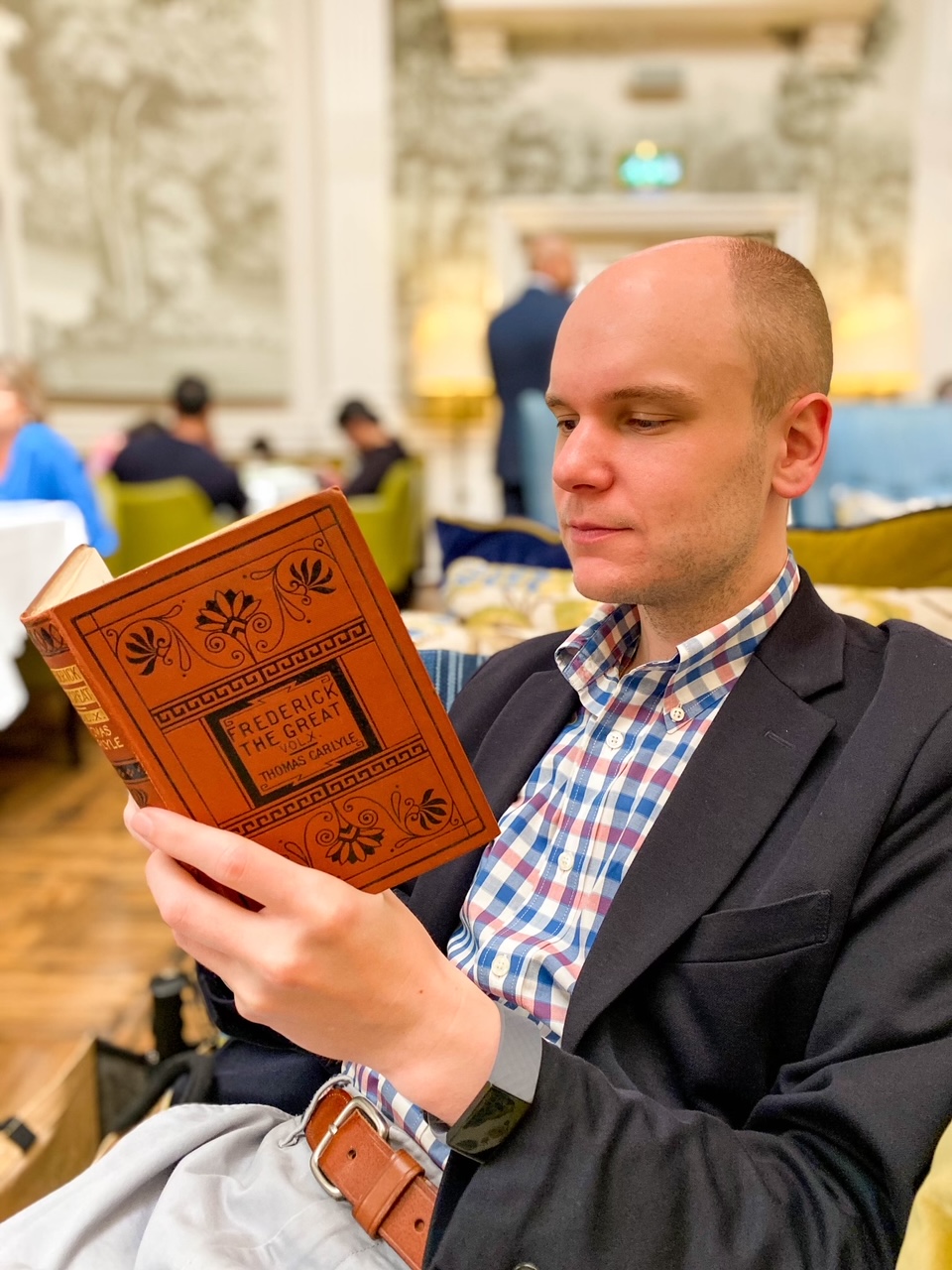
A hobby of Drew’s is collecting and reading biographies of complex historical characters. Last year he started reading a biography of every U.S. president chronologically and is currently up to Jimmy Carter. Sourcing books is part of the fun–Drew had to look all over stores in Washington, D.C. just to find a biography of Rutherford B. Hayes!

Filed Under: Arts Integration, ArtsEd, News, Staff Spotlight Tagged With: Arts Ed, arts education, Drew Lusher, music education

Arts for Learning Awarded Major Grant To Use Art to Build Community Among Students Affected by the Pandemic

July 11, 2022 By Cindy Sherwood

Arts for Learning (A4L) is pleased to announce it has received the largest grant in its organization’s 68-year history. Over the next three years, the $97,500 Cultural Vitality grant from the Hampton Roads Community Foundation will fund a series of arts-integrated afterschool programs at high-need schools in south Hampton Roads, guided by Arts for Learning’s professional teaching artists.

The project is named IDEAL, Intentional Designs of Expression in Artistic Languages, and will target fifth-grade students in the critical year before they transition to middle school. During the course of each ten-week residency, students will create multiple mixed media works of art as they explore various aspects of self-identity through dance, written and spoken poetry, and visual art. Approximately 270 students from nine different elementary schools are expected to participate, drawn from the Norfolk, Portsmouth, and Suffolk Public School divisions, with one school per division taking part each year. Students will have the opportunity to collaborate with students from outside of their own schools and see how they and others impact and fit into the wider Hampton Roads’ community.

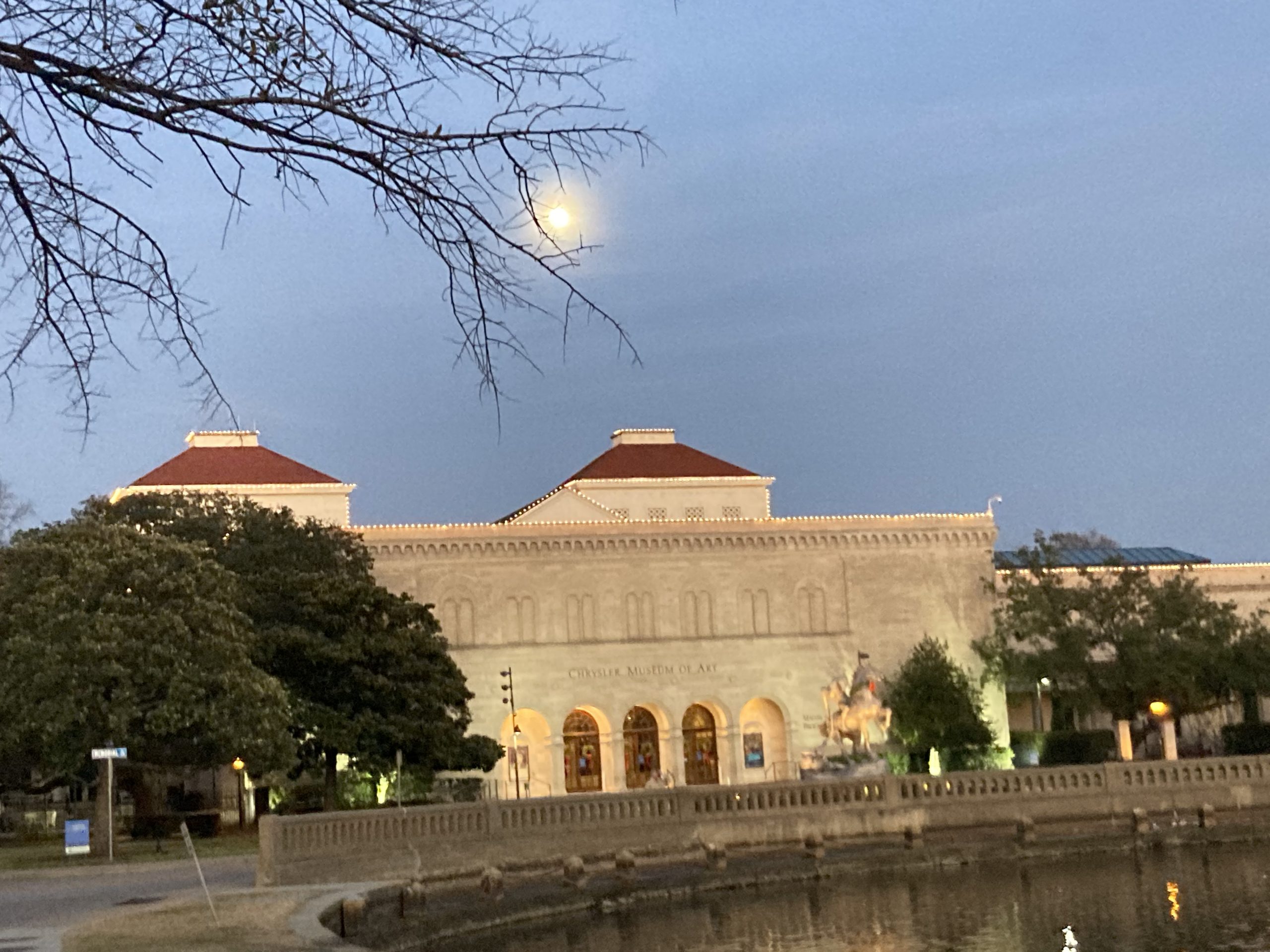
Meeting twice a week in 90-minute sessions, the students in each school’s residency will be led by Arts for Learning’s teaching artists who are experts in their particular art forms. A4L’s education and program team developed the curriculum, which is tied to various Virginia Standards of Learning, including visual arts, dance, English, and social-emotional learning. The program’s highlight each year will be a collaborative art exhibit of student work from all three schools, hosted by the Chrysler Museum. 

“To bring students to the museum and show them it’s their place to have a voice is just an amazing opportunity,” said Anna Green, chief operations officer for Arts for Learning. “It may inspire them to go on and create art or find their voice in writing or in other ways, and they’ll also learn how to build pieces of community within where they live, outside of where they live, and then bring it all together into one. There will be 270 students that will see their work professionally hung in a professional museum. I can’t even bring words to how important that is, to make the museum accessible and for students to feel like they’re a part of a larger community.”

In addition to helping students develop creative and artistic talents, the IDEAL project is designed to increase students’ self-worth, while improving their academic performance and decreasing absenteeism and problem behaviors. For students entering adolescence, the year before middle school is a crossroads, as they are faced with choices that impact their future selves academically, socially, and physically. Decades of research connects positive self-worth with a reduction in risky behaviors. With studies showing the pandemic’s devastating toll on students—along with a disturbing rise in crime—the need is great to provide effective interventions that boost the self-worth of at-risk students at a critical life stage.

“We’re looking to reach the students who are struggling, to give them that hands-on opportunity to discover their voice through the arts and to broaden their view of community,” Green said. She pointed out that the fifth-graders who will participate in the first year of the project entered the pandemic as second-graders, missing out on the key socialization and building of community that typically happens during third and fourth grades.

Collaboration is a central feature of the IDEAL project: among student peers within the same school and other schools, and among Arts for Learning and its community partners—the Norfolk, Portsmouth, and Suffolk school divisions, the Chrysler Museum, and the Richmond Ballet. Partnering with the Richmond Ballet and the Chrysler will deepen each student’s artistic experience.

The Richmond Ballet will present a series of in-school performances for third to fifth graders enrolled at each school, reaching a larger community of students beyond those participating in the residencies.

The Chrysler will present a virtual gallery talk on art works that exemplify human expression, examining elements such as color, line, shape, and composition that students can use to inspire their own sketches. In addition, by hosting exhibits each year of student artwork created during the project, the Chrysler will bring together students from all of the schools, along with their families. Students will be transported to and from the event by bus at no cost, so that each has the opportunity to attend.

The IDEAL project is the largest and most ambitious in Arts for Learning’s history,” said Christine Everly, A4L’s chief executive officer. “We’re excited to partner with two other respected arts organizations and three of our school divisions in Hampton Roads.  And we’re proud and humbled that the Hampton Roads Community Foundation has placed its trust in us by funding this project.”

No student will be charged a fee to participate in the IDEAL program. The first three residencies are expected to launch in the spring of 2023.

Filed Under: COVID-19, Grants, News, Press Releases, Program Spotlight, Uncategorized Tagged With: afterschool programs, Arts Ed, arts education, dance, grant, pandemic

Rhythm and Me: An Adaptive Dance Residency

December 19, 2021 By Cindy Sherwood

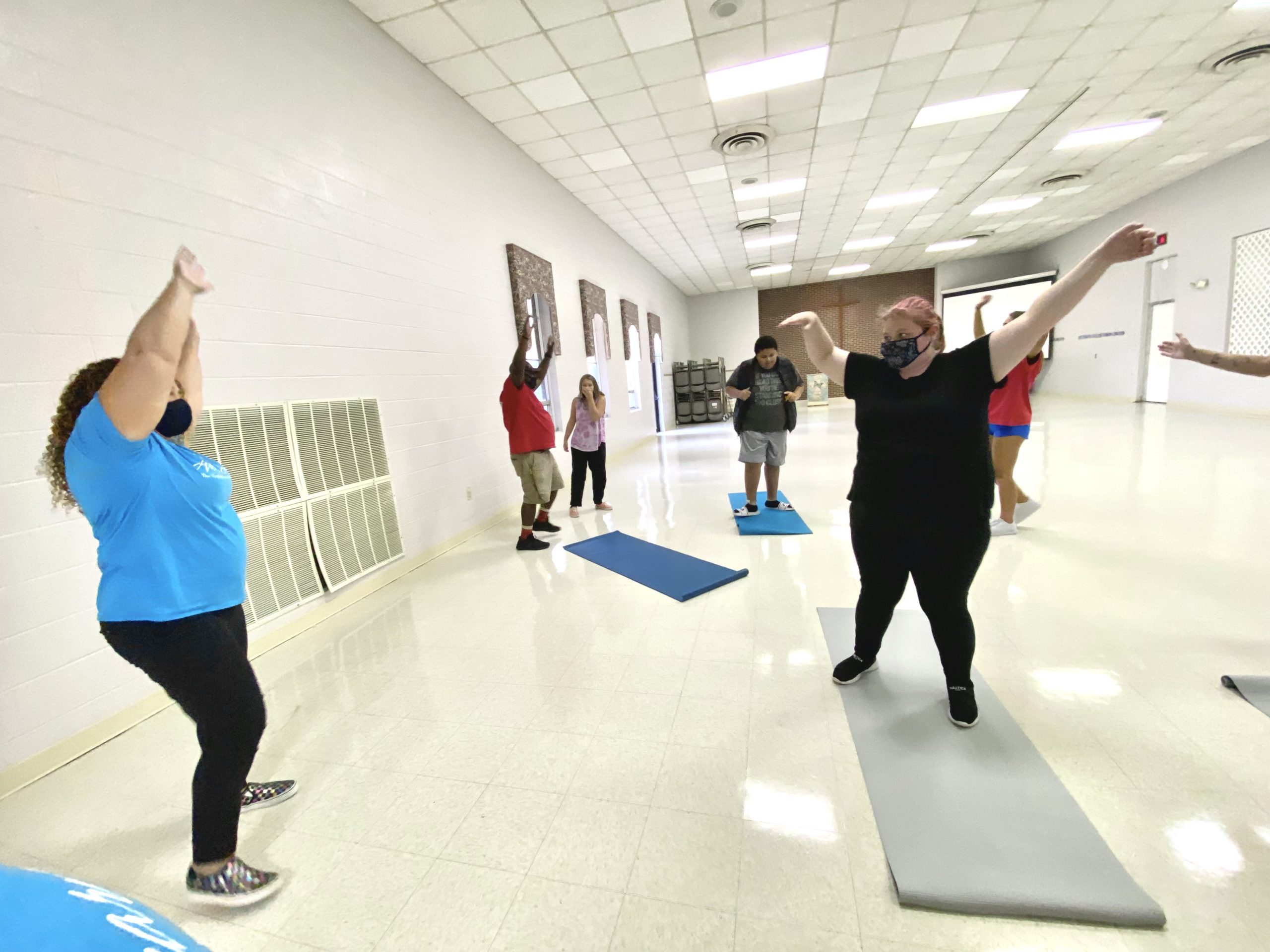
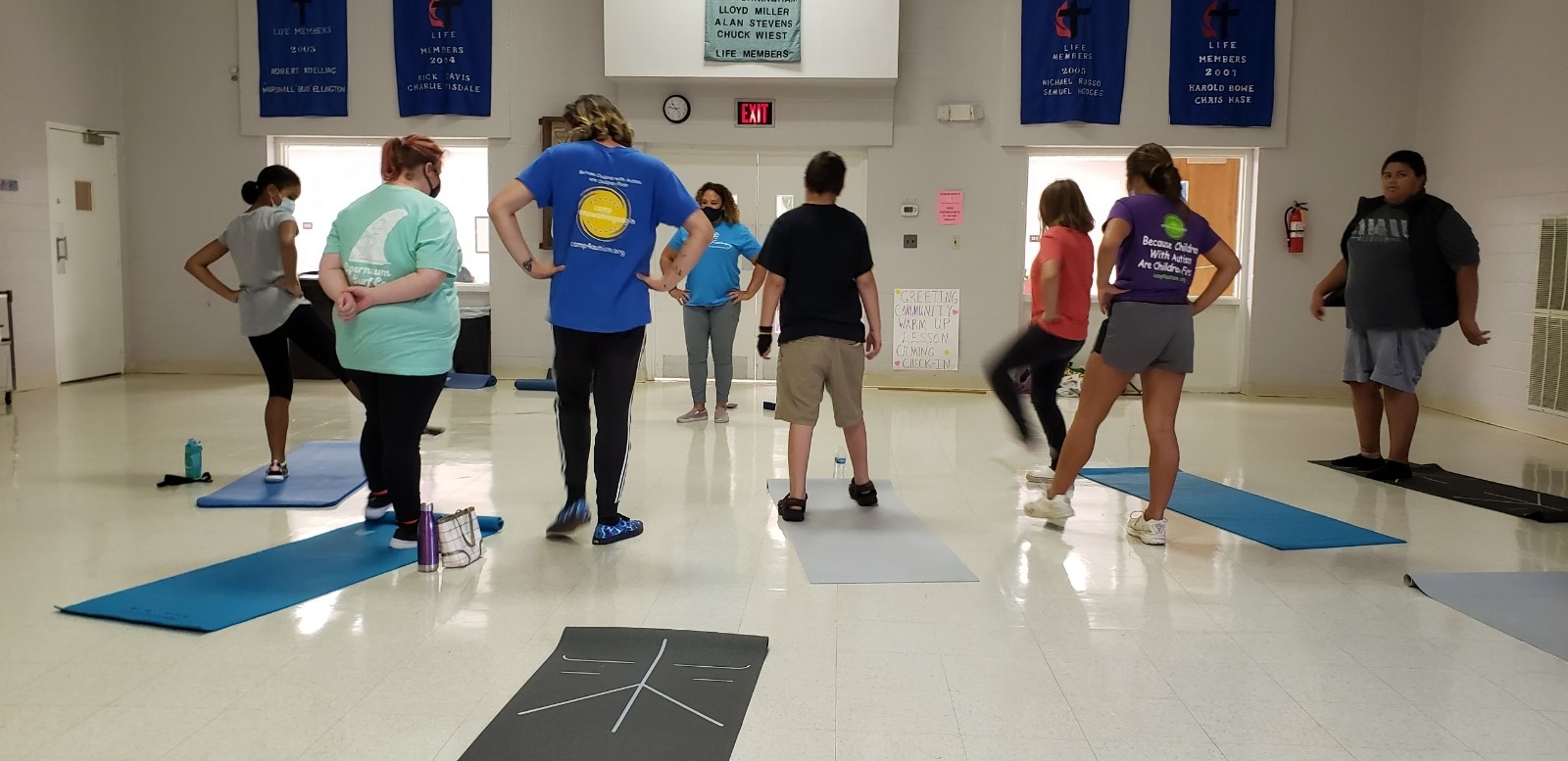
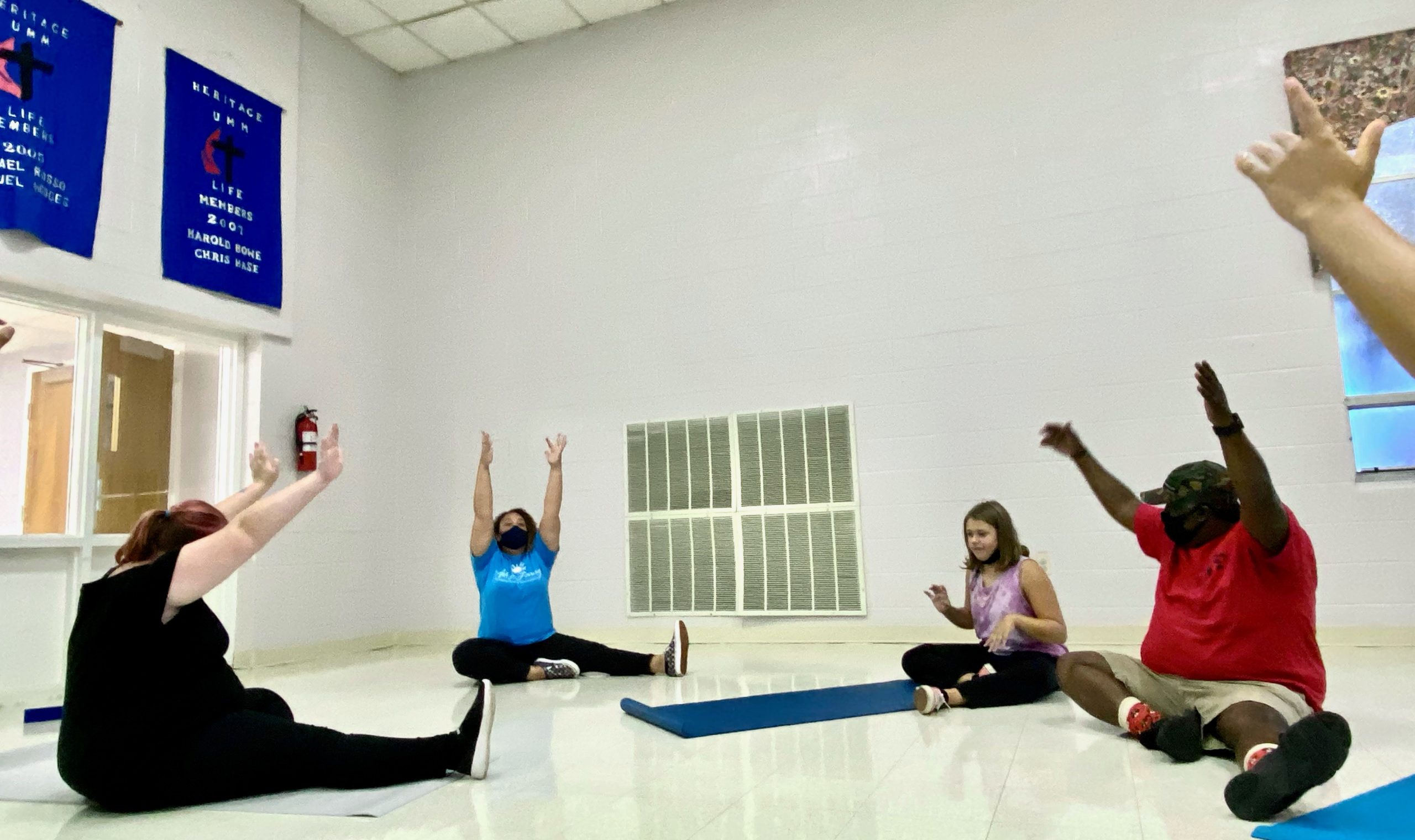
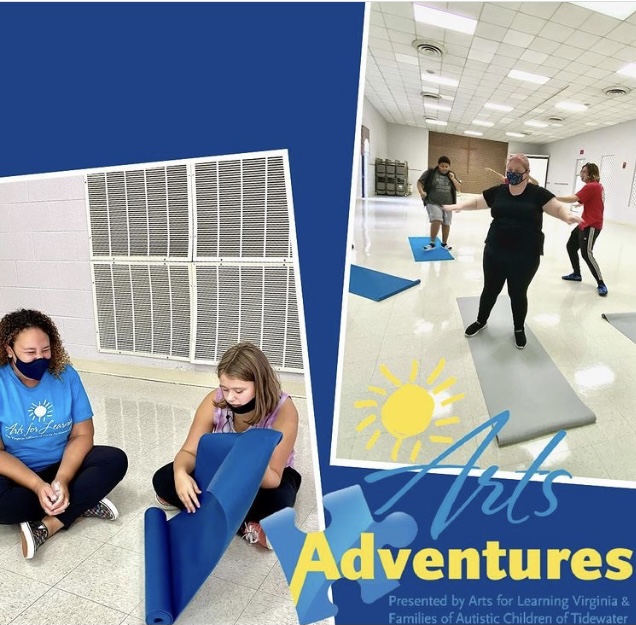
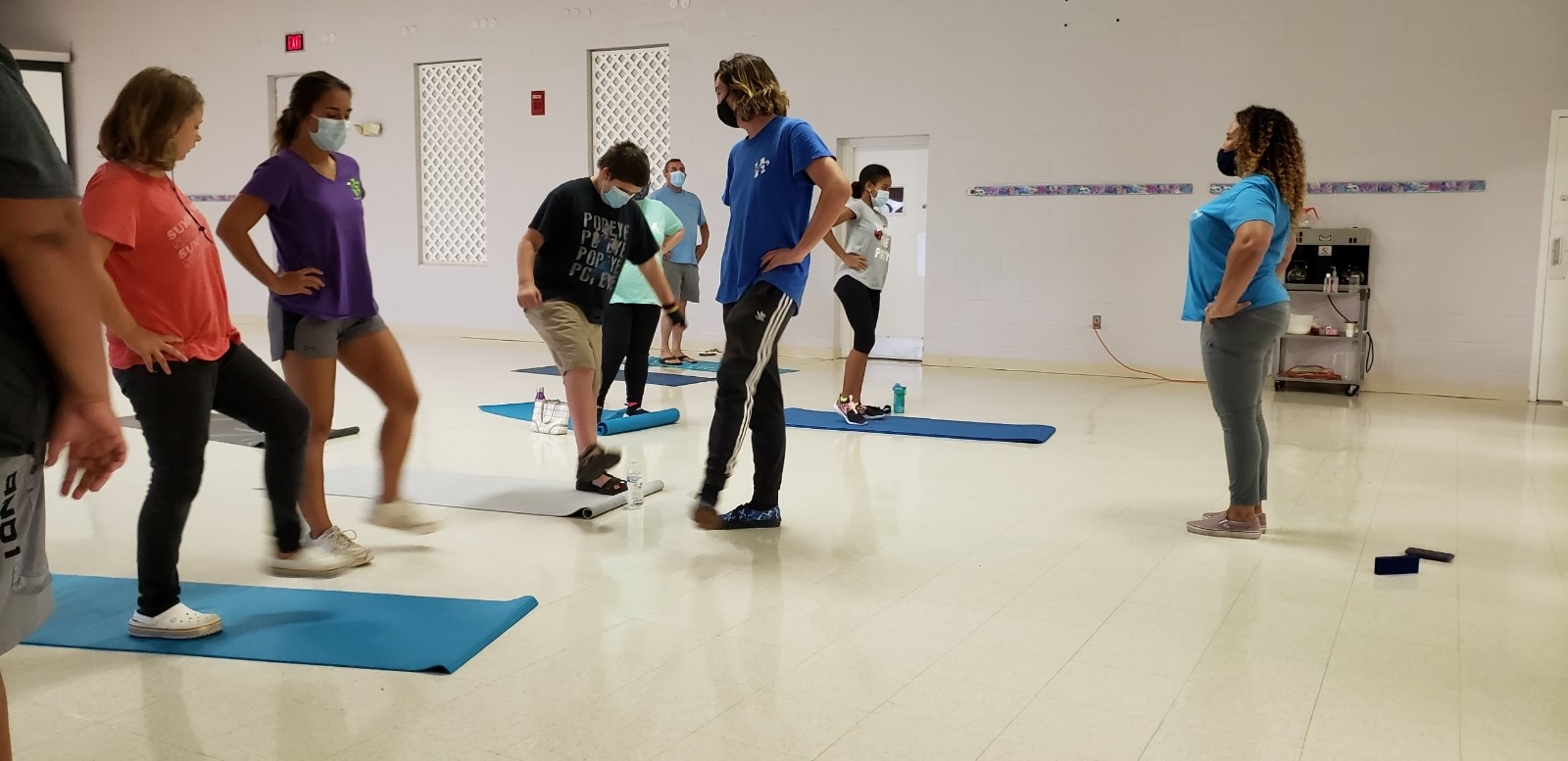
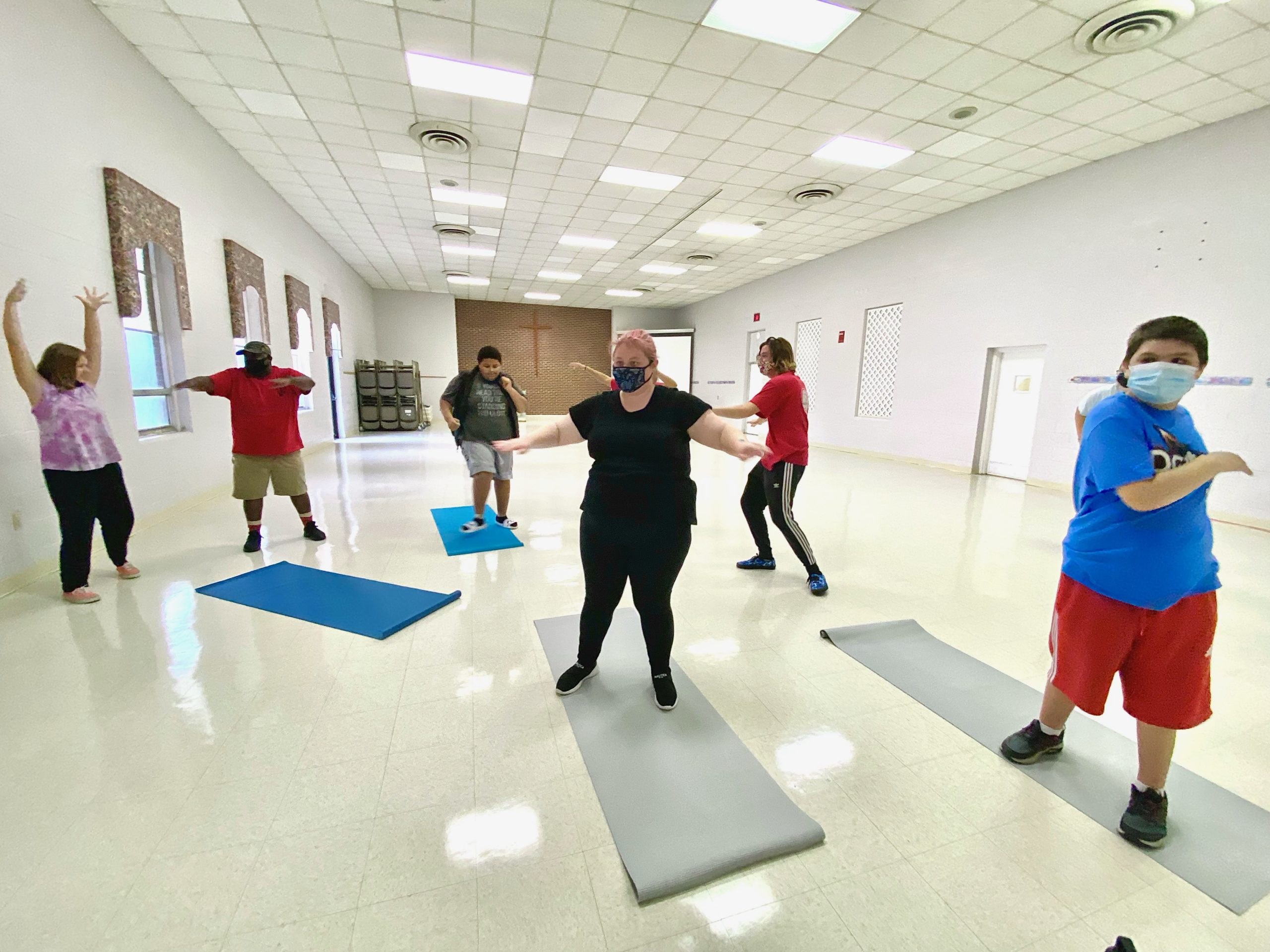
After twelve weeks filled with growth and exploration, students in a Rhythm and Me residency in Virginia Beach shared what they learned in a special performance for family and friends, choreographing the presentation by themselves. The adaptive dance program is a partnership between Arts for Learning and Families of Autistic Children in Tidewater (FACT). The residency was designed for students to join with their peers and learn new skills in a supportive environment.

https://arts4learningva.org/wp-content/uploads/2021/12/FACT_CE_2.mp4

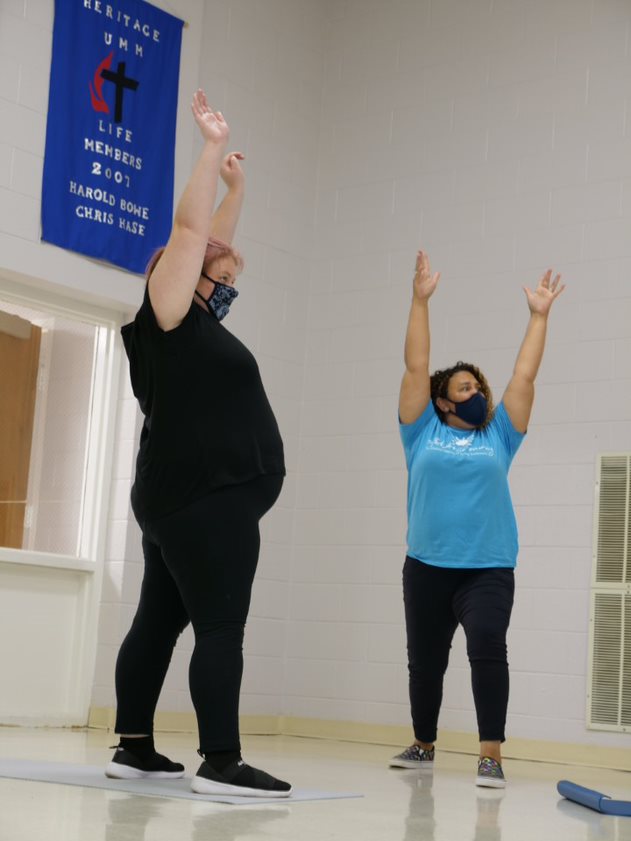
Starting in September, the students met twice a week with A4L teaching artist Angela Taylor, a certified yoga instructor. In each class, she led students in a particular dance style—ballet, hip hop, jazz, party dances and more—with each dance paired with discussion about a different life skill. The curriculum was specially formulated for middle and high school students with autism.

“We were looking at the social emotional aspects of learning, of togetherness, community, social justice, understanding each other, and being okay with who we are in our bodies,” Angela says. As the program progressed, she witnessed growth in students from week to week. One student, for example, had difficulty speaking and let her aide speak for her, but by week three, Angela saw that the girl had become confident enough to communicate by herself. “That was truly amazing to watch her grow.”

“Overall, I think that a lot of them came out of their shells and they’re just free with their dancing, free with their movements. Even some of the parents would say, ‘Oh, my child can’t do ballet.’ And I’ve always said that it’s not about the dancing. It’s about coming together and creating a community and enjoying life and having a great time. I don’t mind if the moves aren’t perfect because I’m not perfect. I just want everybody to have a good time and have a positive experience in the class, and I feel like we accomplished that.”

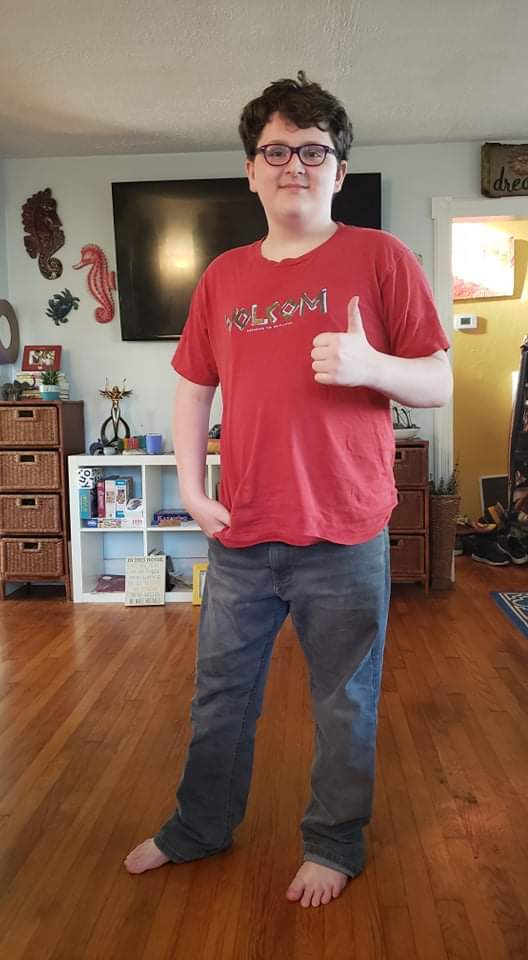
Parents provided overwhelmingly positive feedback about the residency. But Kara Rothman, mother to 13-year-old Jesse Elia, says she didn’t initially have high hopes for the program.

“We’ve signed up  and paid for so many things that I’ve had to drag him to, but he wants to go to [Rhythm and Me], which is the first time ever. For me, it was huge because I’ve taken him to so many different places where I have to preface who we are and his quirks, and [at Rhythm and Me] he’s allowed to be quirky. It’s okay. In other places he has to be quiet or follow directions—it’s very structured—and he was always getting kicked out of stuff. Nothing ever worked, ever. Every time I’m just so grateful that he wants to be there.”

Jesse calls the program “fun, interactive, and entertaining,” and says he especially likes being with other students on the spectrum. He also says he finds the yoga portion “calming,” and the program less stressful than others.

“If I say I don’t want to do something, it’s not like I have to do it,” he says. “But I usually like doing the stuff, and it’s fun.”

Angela says her approach as a teaching artist is to “honor each person for who they are and where they stand in this world. And I think so many people pressure children like, you have to do it, you have to do it. With Jesse, I always gave him the option. I would say, ‘Would you like to join in?’ And if he said no, we just kind of moved on because I think it’s so important to be honored by your choices.”

Jesse is an only child who is homeschooled. His mother says the socialization portion of Arts Adventures was “huge.” After his first time going to the program, Jesse told his mom he had “gone in expecting the worst, but I ended up getting the best.” As for Kara’s reaction when Jesse said that:

I cannot tell you what those simple words meant to me. Well, yes, I can. It meant the world!”

https://arts4learningva.org/wp-content/uploads/2021/12/FACT-clapping-girl-hat-MP4.mp4

Another parent, Lori Beatty, says her 13-year-old daughter, Calli Laundre, always became excited when she heard she was going to dance class.

“When I pick her up, she’s full of energy. If we get there early, she grabs her mat and she’s just ready to go. I think the whole program is great. It’s been really good for her.”

Rhythm and Me class

The Rhythm and Me residency was the first year of a three-year Arts Adventures partnership between FACT and Arts for Learning, with funding provided by the Hampton Roads Community Foundation.  The focus of the second year will be music and the third year will be visual art.

“We’re delighted to partner with FACT because the population they serve overlaps with a group of students that we prioritize reaching with our programming,” says Chris Everly, CEO of Arts for Learning. “We’re excited to be planning future collaborations.”

https://arts4learningva.org/wp-content/uploads/2021/12/FACT-kids-hats-MP4.mp4

Filed Under: Artist Spotlight, ArtsEd, ArtsED for Exceptional Students, Program Spotlight Tagged With: adaptive dance, Arts Adventure, Arts Ed, arts education, autism, ballet, residency, Rhythm and Me, teaching artist

Behind the Scenes of the A4L Cultural Enrichment Project

December 3, 2021 By Cindy Sherwood

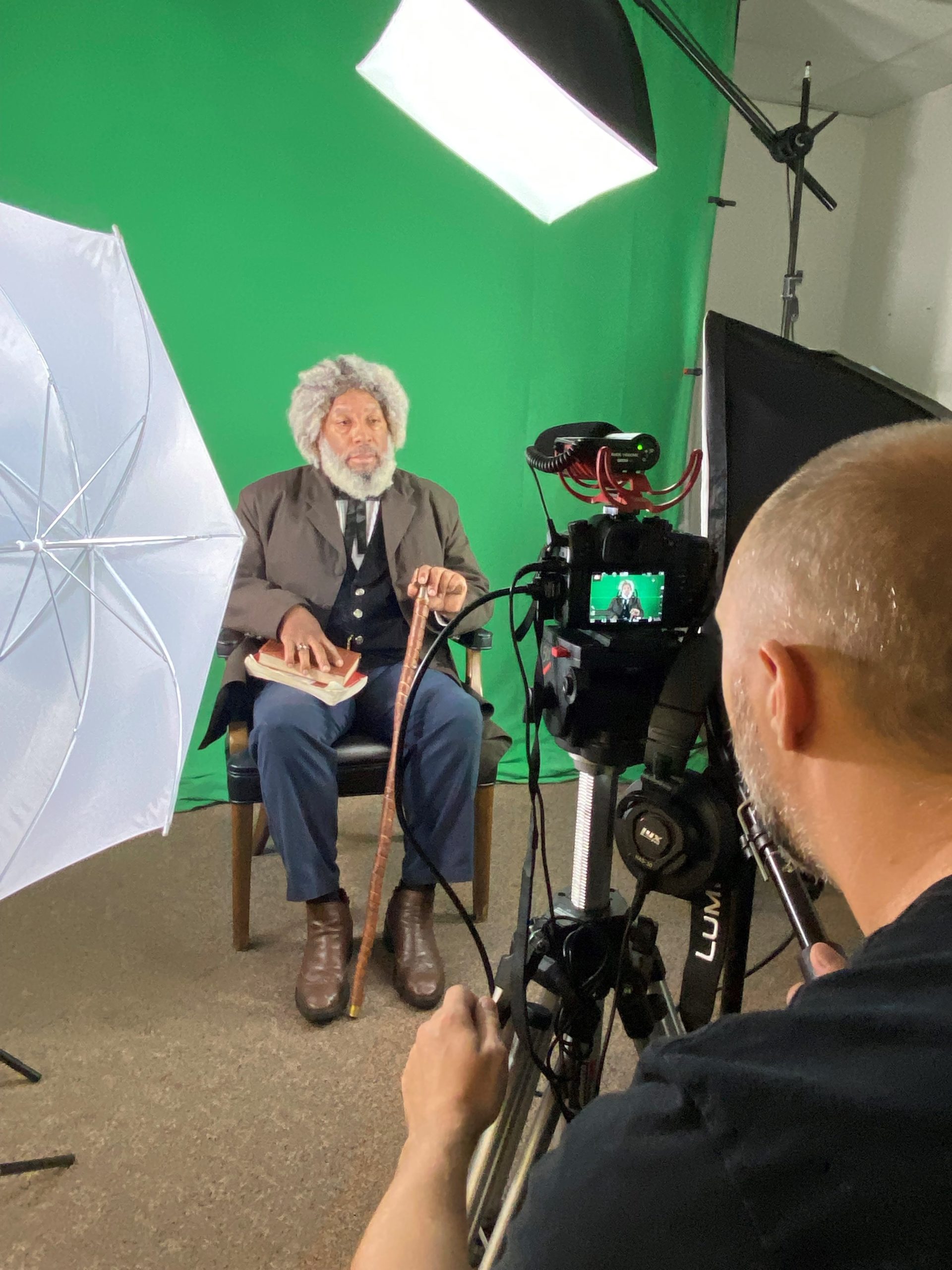
Nathan Richardson as the real Frederick Douglass
Nathan Richardson portrays abolitionist Frederick Douglass in our Norfolk studio.
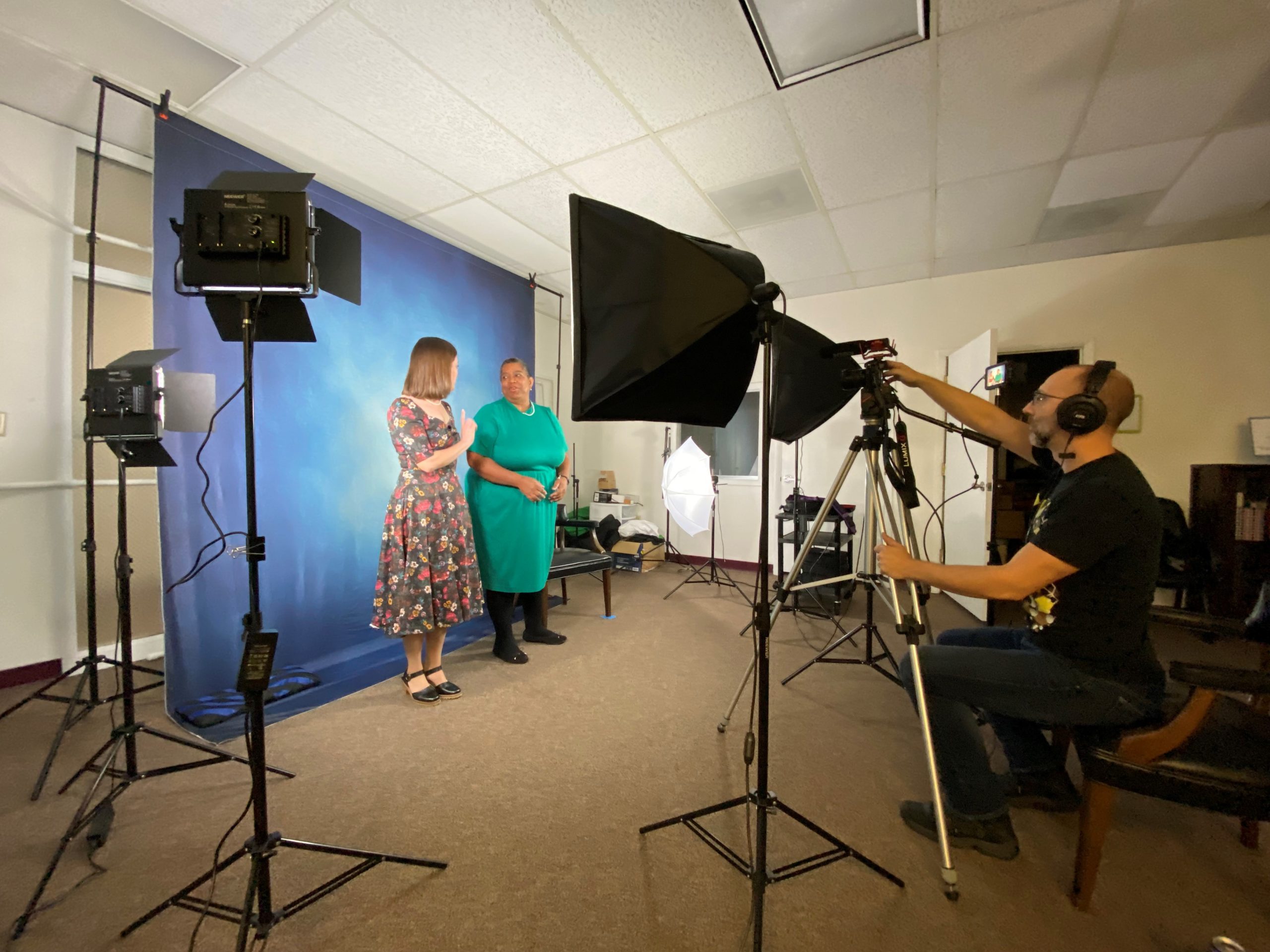
Sarah Osburn Brady and Sheila Arnold record their civil rights program.

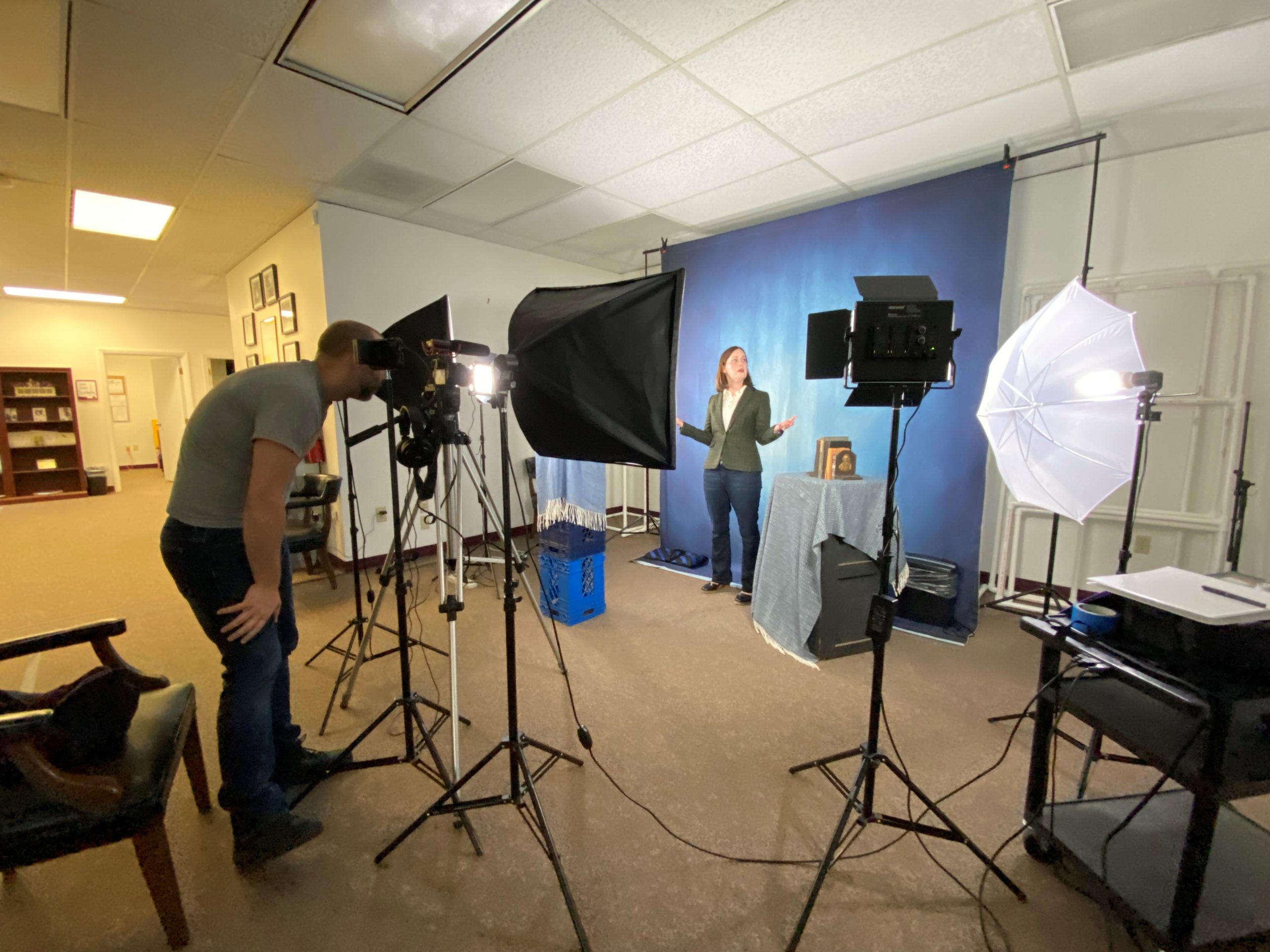
There’s been lots of activity in our Norfolk office lately—which doubles as a production studio—as artists record special programs for our new cultural enrichment project funded by a new SHARP grant.

It’s an exciting project for a couple of reasons—it will bring quality, humanities-based arts-in-education programming to disadvantaged students in Virginia at no cost to them or their schools. And the project will provide income to artists on our roster during a time when opportunities to practice their art forms remain limited.

Sarah Osburn Brady and Sheila Arnold record their program on civil rights.

Molly Stanley, A4L’s Learning and Community Engagement Manager, says the programs have significant educational value, with topics that include the civil rights movement, slavery, and the Holocaust.

“Students learn about these historical events through core classes such as social studies and language arts. Through the videos we’re producing, students can deepen their learning and make connections with these topics that are relevant to their lives.”

Participating schools can choose from these videotaped programs:

  • Frederick Douglass “On Slavery and Emancipation” by Nathan Richardson: A performance that brings the true tales of Frederick Douglass to life, from his time as a slave and his escape to freedom to his rise as a great writer, orator, and abolitionist.
  • Conscience, Stories, and Hope: Hans and Sophie Scholl’s White Rose by Sarah Osburn Brady: The story of German siblings who dared to become part of the World War II resistance, no matter what the consequences.
  • Coretta: A Legacy of Love by Valerie Davis: Hailed as the “First Lady of the Civil Rights Movement,” Coretta Scott King comes to life through music and stories revealing the triumphs and tribulations of an American legend.
  • Arabiqa by Karim Nagi: An exploration of Arab culture through language, folk music, dance, and costume that bridges the east-west cultural gap.
  • Civil Rights: Finding Your Voice by Sheila Arnold and Sarah Osburn Brady: An interactive exploration of voices from the Civil Rights movement whose lessons in speaking up show us the way to effect social change today.

The programs are designed for either elementary or middle school students and include age-appropriate teacher guides for easy and effective classroom implementation. The videos are set to debut in February. Photography and editing is provided by Rob Holmes.

Photographer Rob Holmes videotapes Sarah Osburn Brady's program.
Photographer Rob Holmes shoots Sarah Osburn Brady’s program.

Thanks to our participating artists and to the funders of this grant–Virginia Humanities and the National Endowment for the Humanities (NEH). The funding is part of the American Rescue Plan (ARP) and the NEH Sustaining the Humanities through the American Rescue Plan (SHARP) initiative.

Filed Under: Artist Spotlight, Grants, Program Spotlight, Virtual Learning, Virtual programming Tagged With: American Rescue Plan, Arabiqa, Arts Ed, arts education, civil rights, Coretta Scott King, Frederick Douglass, grant, humanities, National Endowment for the Arts, SHARP grant, Virginia Humanities, virtual learning, virtual programming

Rhythm and Me: Teaching with an Open Heart

November 8, 2021 By Cindy Sherwood

In guiding the Rhythm and Me adaptive dance residency for students with autism, teaching artist Angela Taylor leads with an open heart and many years of specialized training.

In the program, Angela helps middle and high school students explore themes that include communication, teamwork, and self-worth through a variety of dance and body movements—all in an environment where they’re learning alongside their peers. Rhythm and Me is the first residency under the three-year Arts Adventures program, an A4L partnership with Families of Autistic Children of Tidewater (FACT) that is underwritten by a grant from the Hampton Roads Community Foundation. During the twelve-week residency, students meet for classes two evenings a week in Virginia Beach.

Angela has been an Arts for Learning teaching artist since 2015. She’s a certified yoga teacher, with hundreds of hours of formal instruction who uses a trauma-informed approach in all of her classes. Angela has special training in working with children who have physical, mental, and emotional disabilities.

One mom shared that her 13-year-old son, Jesse, had been incredibly anxious going to the program for the first time, saying she can’t even remember how many events, clubs, camps, and workshops he’s signed up for have “backfired on us” in the past. But that’s not what happened this time:

“When we came to pick him up, I was preparing myself for what has become the norm for us. Some type of issue – either from him or from the program. But the first thing we noticed is that he was still participating – like really participating. That alone made my heart smile – though I knew better to ask him how things went and the zillion other questions I always want to know. So, here is the most amazing part of all. I didn’t even need to ask because this is what my son told me as soon as we were in the car”:

I liked it. It was fun. Honestly, I went in expecting the worst, but I got the best.” Jesse, age 13

As for Angela, she says that she’s “so grateful for the opportunity to share, learn, and grow with these amazing young artists.”

The residency concludes in mid-December with a special “perform and inform” event for friends and family.

Read more about Angela here. To inquire about booking her to come to your school or community center, please call School and Community Relationships Coordinator Aisha Noel at 757-961-3737 or email Programs@Arts4LearningVA.org. The Rhythm and Me dance residency can be adapted to all abilities and ages of children and teens, from kindergarten through twelfth grade.

Filed Under: Artist Spotlight, ArtsED for Exceptional Students Tagged With: adaptive dance, Arts Ed, arts education, autism, dance, special need students, teaching artist

  • « Previous Page
  • 1
  • 2
  • 3
  • 4
  • 5
  • 6
  • Next Page »
Phone: 757-466-7555
Follow Us on FacebookFollow Us on InstagramFollow Us on YouTubeFollow Us on LinkedIn

Join the Mailing List

Want to stay inspired? Join our mailing list and get the latest updates on Arts for Learning Virginia’s programs, performances, community partnerships, and arts‑in‑education opportunities. Connect with our mission, celebrate our artists, and never miss an event!

Select list(s) to subscribe to


By submitting this form, you are consenting to receive marketing emails from: Arts for Learning Virginia, 420 N. Center Dr., Ste 239, Norfolk, VA, 23502, http://www.Arts4LearningVA.org. You can revoke your consent to receive emails at any time by using the SafeUnsubscribe® link, found at the bottom of every email. Emails are serviced by Constant Contact

Main Office
Arts for Learning
420 North Center Drive
Suite 239
Norfolk, Virginia 23502

Phone: 757-466-7555

Main Office

Arts for Learning Virginia
420 North Center Drive
Suite 239
Norfolk, Virginia 23502
Phone:
757-466-7555

A Journey of Presence, Creativity, and Heart-Centered Teaching

“Every young learner I work with walks away knowing they have personal power to choose and be the editor in chief of their own life story.”

At Arts for Learning Virginia, we’re proud to be part of the Virginia Commission for the Arts’ Passport Program. While Passport holders typically receive free admission and 50% off classes at participating organizations, all our programming is always free—no discount needed. To learn more about our public events, check out our calendar of events page here.

Copyright © 2026 · Young Audiences | Arts For Learning | Virginia

Website Maintained By TechArk

×