Logo
Follow Us on FacebookFollow Us on InstagramFollow Us on YouTubeFollow Us on LinkedIn
Phone: 757-466-7555
  • HOME
  • ABOUT US
    • Our Access, Belonging, Inclusion, Diversity, and Equity (ABIDE) Statement
    • Our Board of Directors
      • Our Board of Directors 2025-2026
      • Our Board of Directors 2024-2025
      • Our Board of Directors 2023-2024
    • Our Employment Opportunities
    • Our Financials (990 and Audit)
      • 990 Form 2024-2025
      • Audit 2024-2025
      • 990 Form 2023-2024
      • Audit 2023-2024
    • Our Impact Report
      • Our Impact Report 2024-2025
      • Our Impact Report 2023-2024
      • Our Impact Report 2022-2023
    • Our National Network
    • Our Staff
      • Contact Us
    • Our Strategic Plan
  • PROGRAMS
    • Schedule a Program
    • Find A Program
    • Find An Artist
    • Arts + Learning Snacks
    • Coastal Virginia Wolf Trap
    • Virtual Arts
  • SUPPORT
    • Become an A4L Artist
    • Become a Board Member
    • Give Back Through Rewards
    • Individual Giving
    • Internships
    • Our Supporters
      • Our Community of Supporters 2024 – 2025
      • Our Supporters 2023 – 2024
      • Our Supporters 2022 – 2023
      • Our Supporters 2021 – 2022
    • Program Observer
    • Volunteer
  • Our Stories
    • Our History
  • Calendar of Events
  • Heart of the Arts Award
    • About Heart of the Arts
    • 2026 Heart of the Arts Nomination Form

In Their Own Words: IDEAL Residency Students

June 6, 2023 By Cindy Sherwood

Sometimes we can learn the most about the impact of a program that we offer directly from the students we serve.

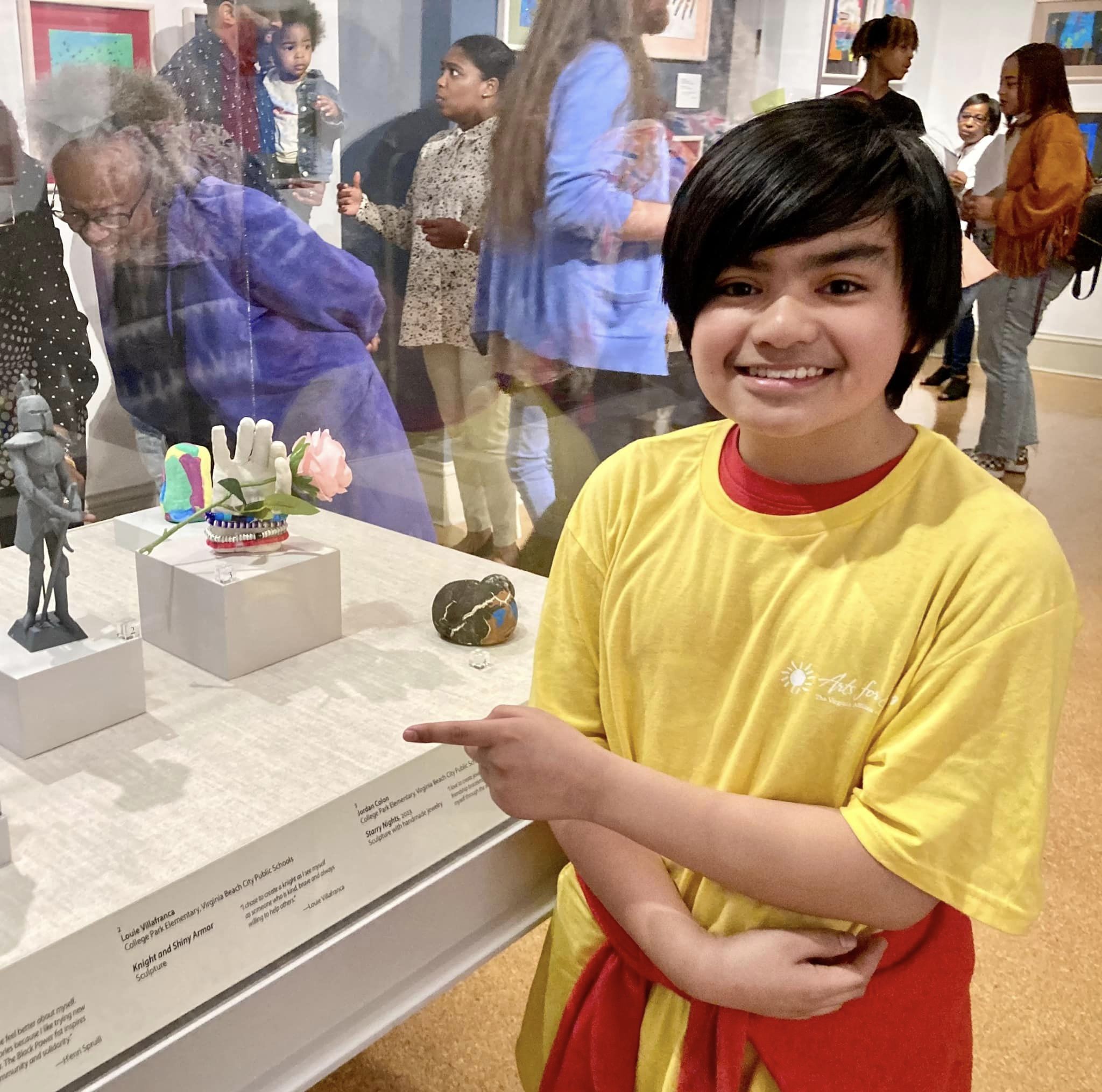
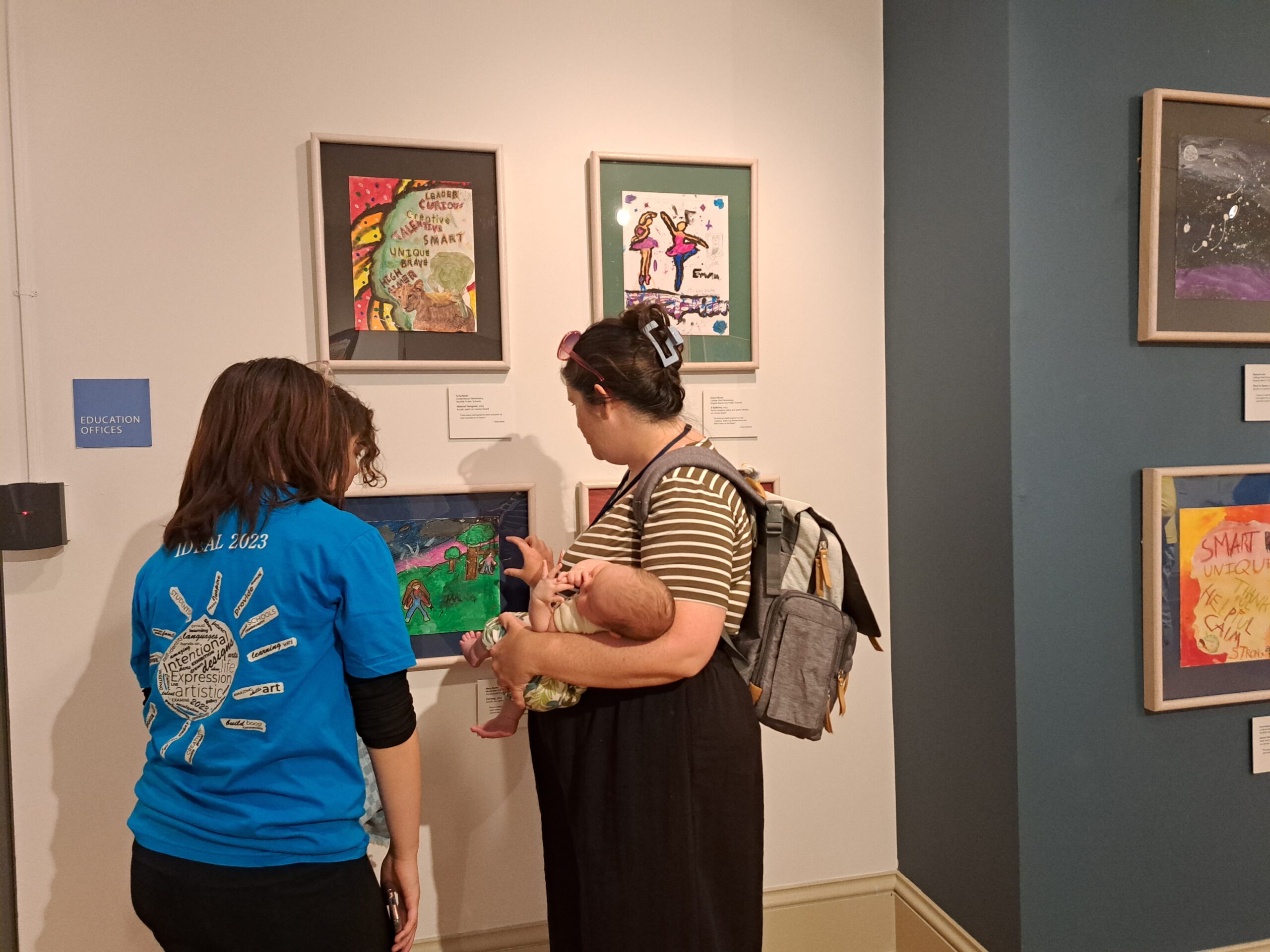
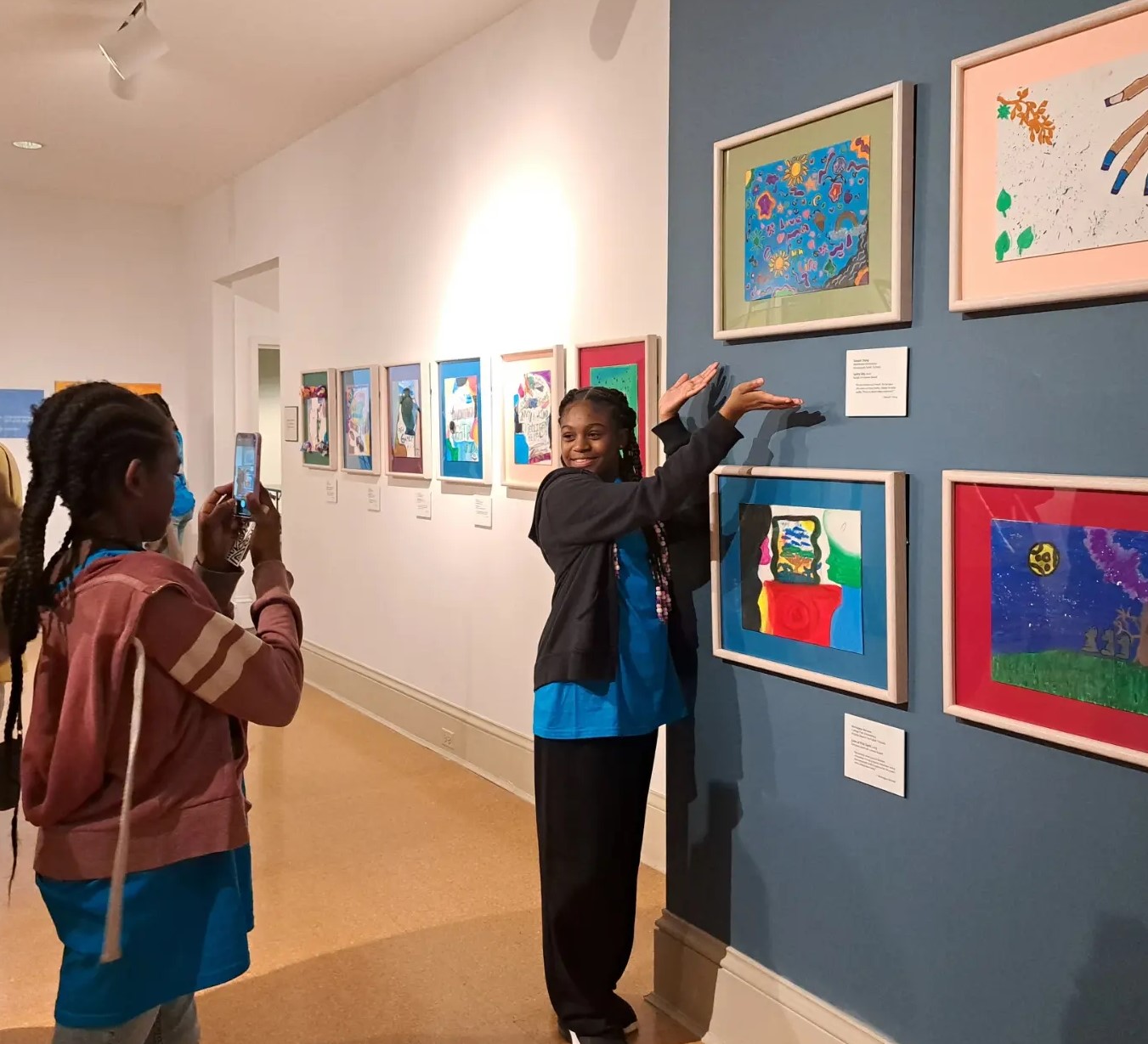
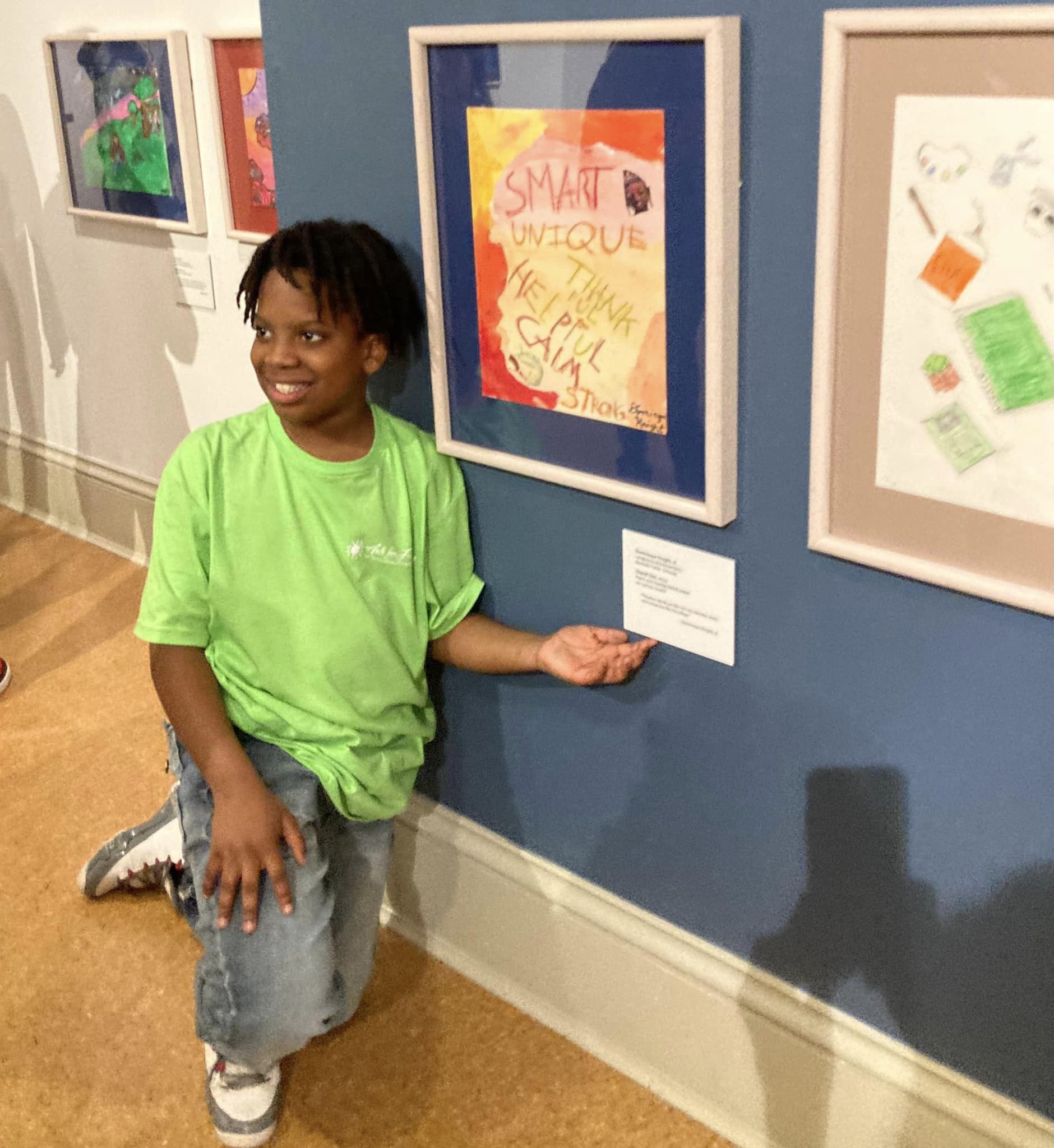
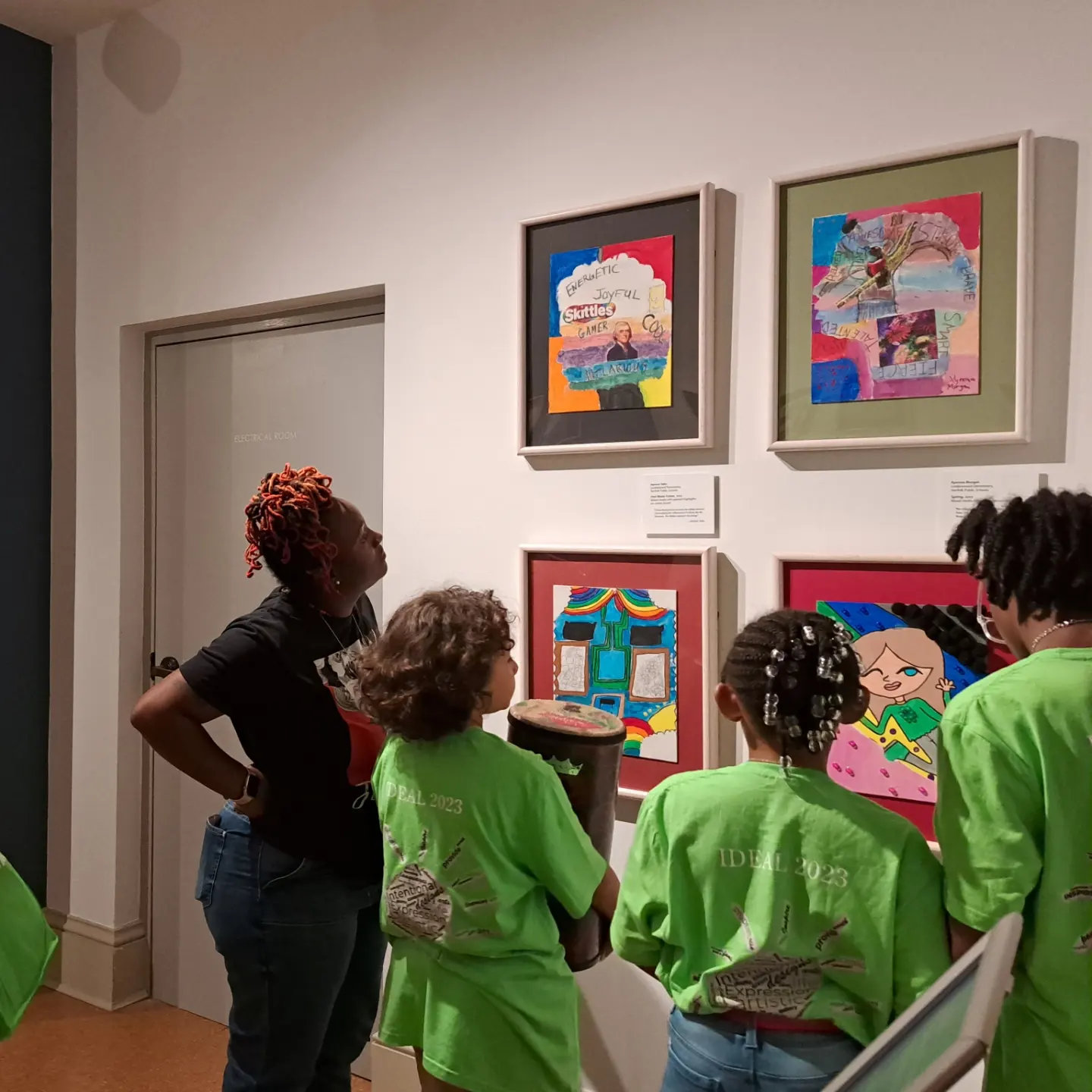
So we wanted to share comments from some of the students who participated in our IDEAL (Intentional Designs of Expression in Artistic Languages) residency this spring. Remarks from students at Virginia Beach’s College Park Elementary and Portsmouth’s Westhaven Elementary are divided into the categories that we measure before, during, and after the residency to determine gains: self-worth, community connectedness, and creative expression.

SELF-WORTH

Emma, College Park, 5th grade: “It showed me I could really be anything I want to be.”

Sadé, College Park, 5th grade: “I want to teach others how to do art. It’s very inspiring. It makes you feel like you can do other things that you thought that you couldn’t do in art. And that’s why I love Arts for Learning.”

Deniya, Westhaven, 5th grade: “I learned you can do what you want to do. You just have to keep practicing. Don’t let anybody make you come down, just keep trying and trying… And you might end up being an artist if you keep trying.”

Harmony, Westhaven, 5th grade: “I got a lot more friends in my life. They made us sit at different tables so we could get to know each other, and it really helped a lot. I’m very shy. I got put into a room full of new people I didn’t know, at least most of them. I guess I had to branch out… I feel like Arts for Learning made me into a better person.”

COMMUNITY CONNECTIVENESS

Samantha, Westhaven, 6th grade: “Arts for Learning was important because it helped you connect with who you are and your identity.” (Samantha had noted that she was Filipino on her mother’s side and used to visit cousins in the Philippines prior to Covid. She said she had done research about the Philippines as part of IDEAL.)

CREATIVE EXPRESSION

Sadé, College Park, 5th grade: “I’m more excited when I do art. It makes my heart burst.”

Mark, Westhaven, 6th grade: “I created a phoenix, and it was really inspiring because it shows my personality, like the power of the phoenix. It’s a sock puppet so it’s silly and goofy but on the inside it’s powerful and meaningful. The project changed how I saw myself because I expressed my inner personality.”

Kerrington, College Park, 5th grade: “Before I joined [the IDEAL residency], I wasn’t really artistic because I didn’t think I could do the things I wanted to do. When I joined Arts for Learning, it was really fun because I got to paint, do watercolors, and sculptures…. Anytime I go home, I have paint and canvases in my room, and I just paint nonstop. And my mom tells me to go to bed and I’m like, ‘No, I’ve got to paint.’”

Mary, Westhaven, 5th grade: “I realized that I could express myself in different ways instead of just talking about it. I can express myself through singing or dancing or painting or drawing. Arts for Learning has helped me a lot because I learned I can express myself in different ways.”

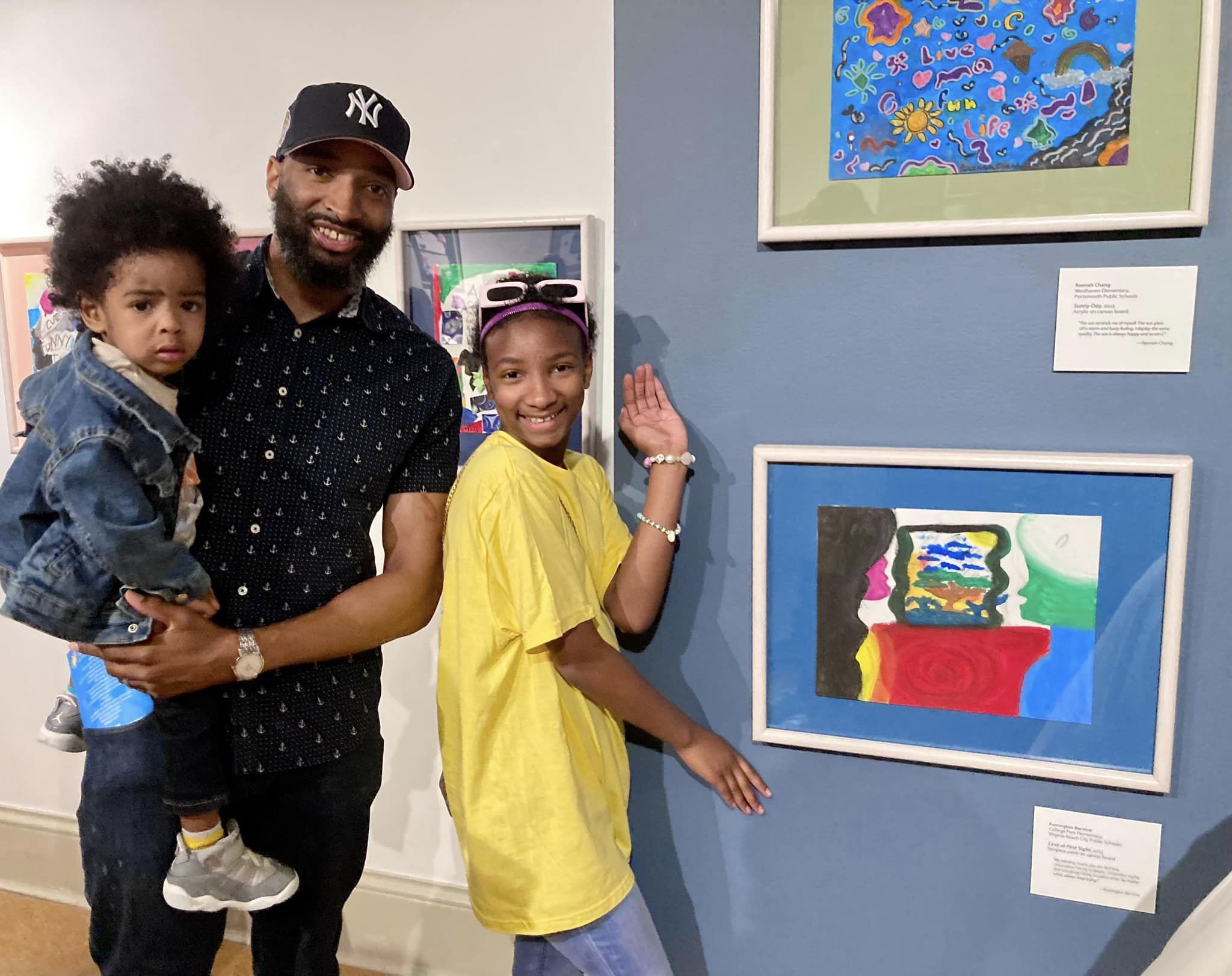
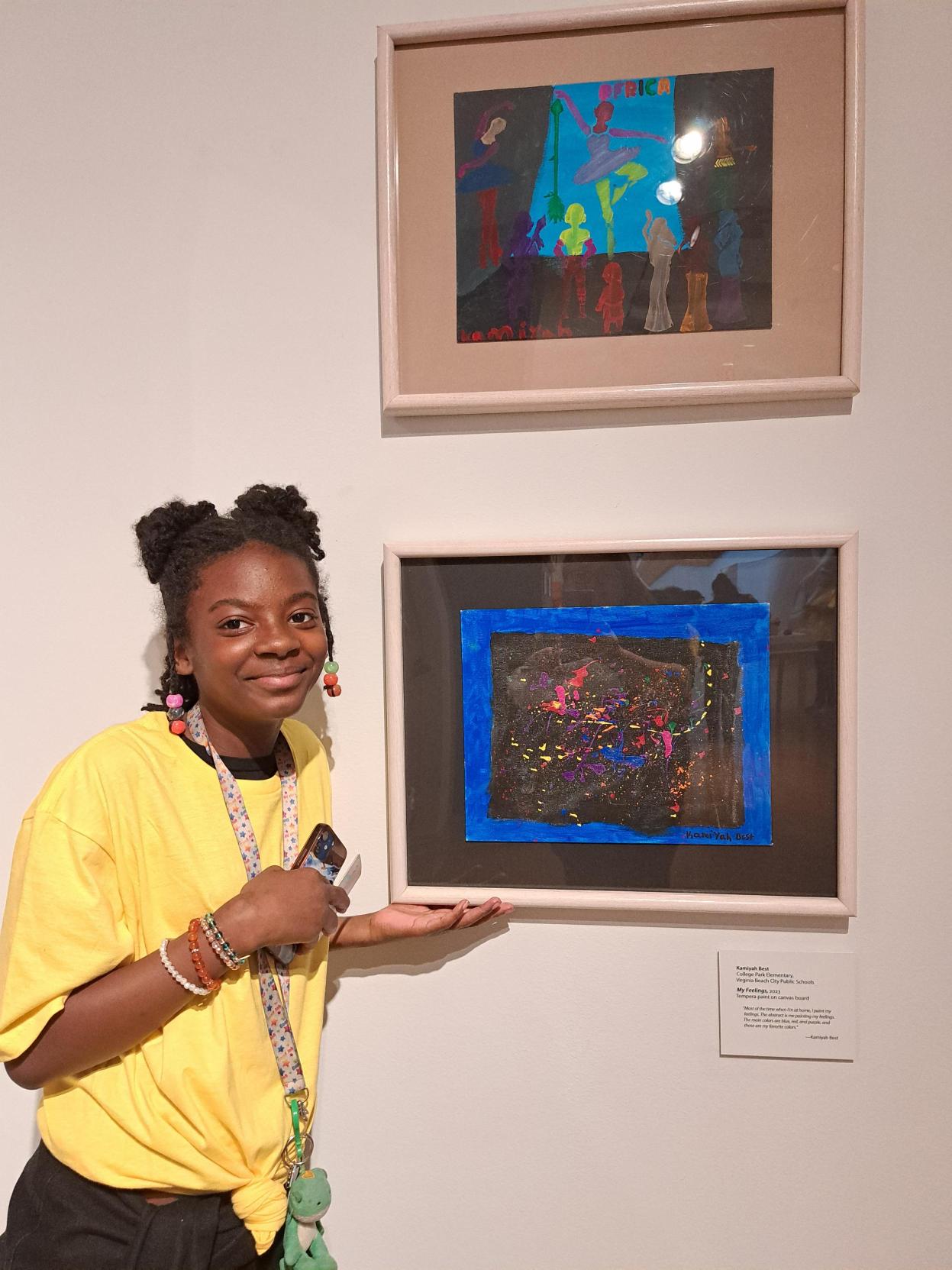
Raenah, Westhaven, 5th grade: “I’ve changed the way I express myself going to [the IDEAL residency] because I learned that I don’t have to just speak the way I feel, I can draw it out, dance it out, sing it out, or do it all types of ways. My favorite way of showing my feelings is  painting. I can show it if I’m mad, happy, sad, or any other emotion. The painting I did for the Chrysler Museum I basically just put lots of fun and colorful things because I feel like it describes how I am most of the time because I’m mostly happy.”
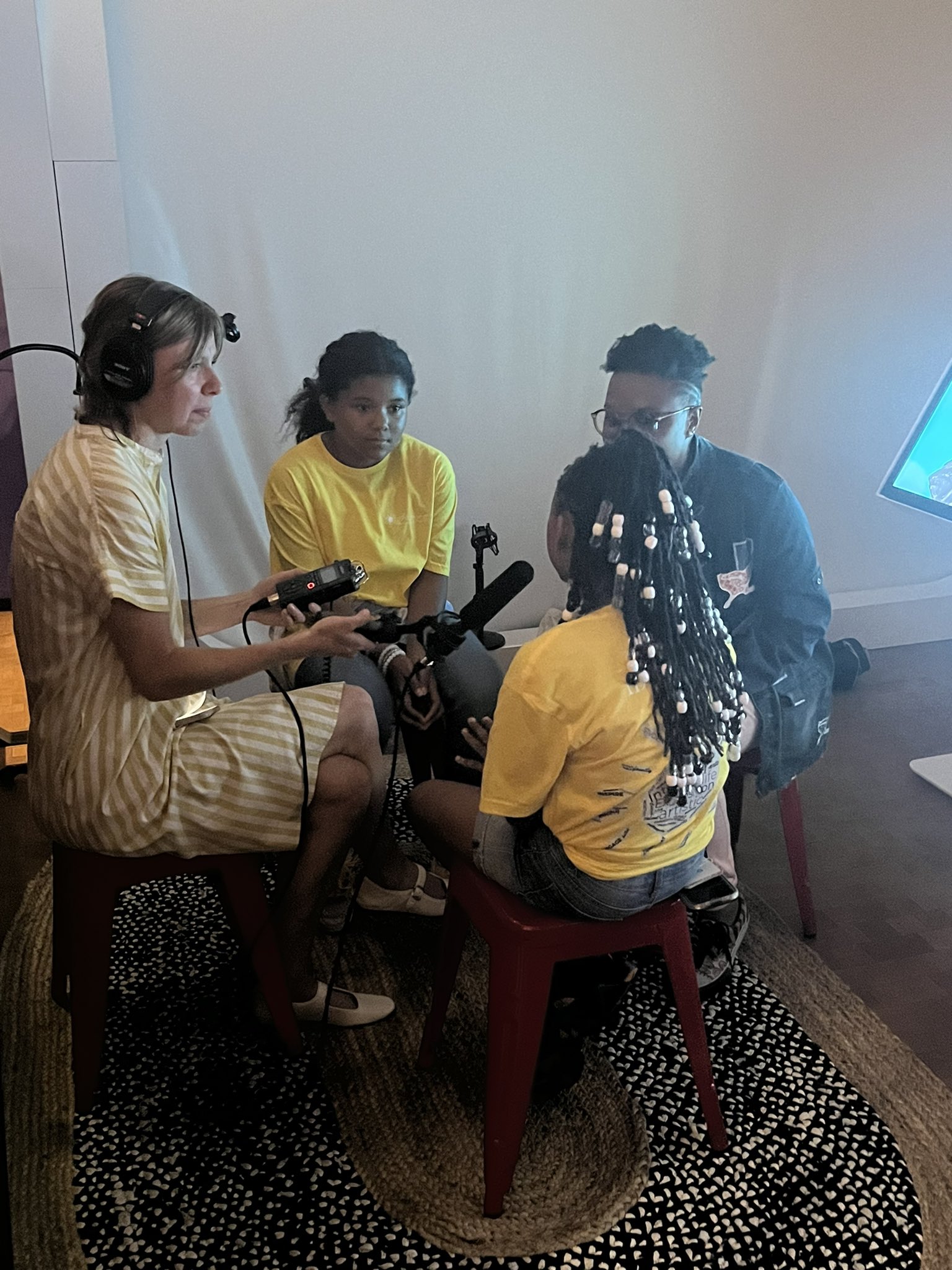
Many thanks to Hannah Sobol and Jackie Glass of Heard Productions for conducting  interviews with students at the Chrysler Museum.

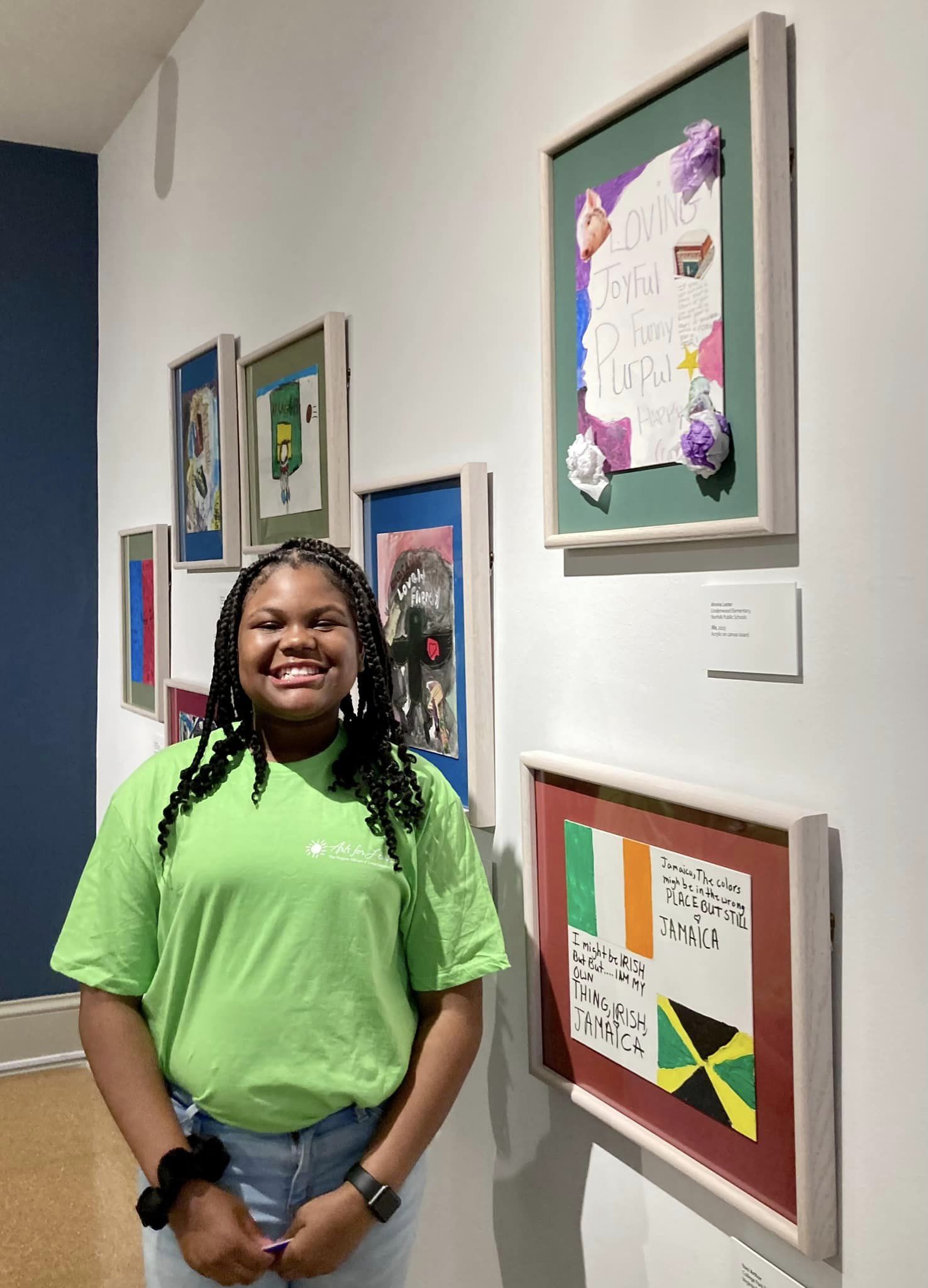
The IDEAL student art exhibit is still on display and available for the public to view through Sunday, June 11. Admission to the Chrysler Museum is free. The artwork can be viewed at the Margaret Shepherd Ray Family and Student Gallery.
Filed Under: Art Exhibit, Arts Integration, ArtsEd, Program Spotlight Tagged With: creative expressionls, IDEAL, Portsmouth Public Schools, residency, success stories, Virginia Beach City Public Schools

The Arts, Education, and Society: An Interview with Drew Lusher, A4L’s New Artist and Programming Manager

November 2, 2022 By Cindy Sherwood

You have a music background, right? When did your engagement with music begin?

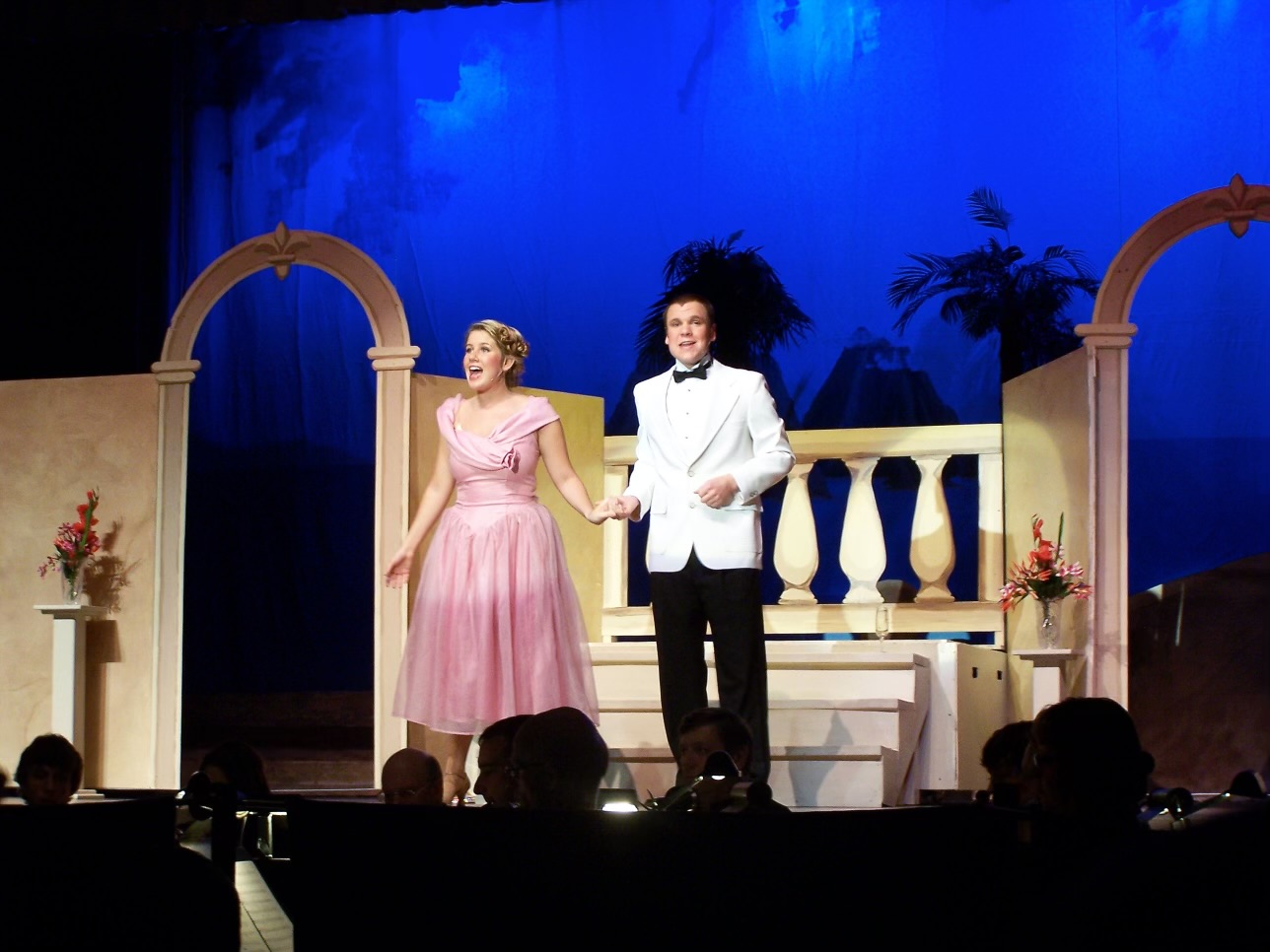
In high school, Drew played the lead in the school’s production of South Pacific.

I was fortunate to grow up in an environment surrounded by music. My mother had a vast record collection, my favorite of which was an album of Bach’s Brandenburg Concertos – I loved the blasting of the baroque horns through the stereo.

But in terms of making music, that really began in the fourth grade – the year I started playing trombone and singing in the school chorus and the year my grandparents first brought me to a concert by our local symphony orchestra (The Syracuse Symphony). I was immediately enamored with the soundscape of the live orchestra and the energy of the conductor. From then I was asking for CDs of Beethoven and Mahler (while my friends wanted CDs of Eminem and Britney Spears).

Of course, I was also fortunate to have amazing music educators who fostered my relationship with the arts.

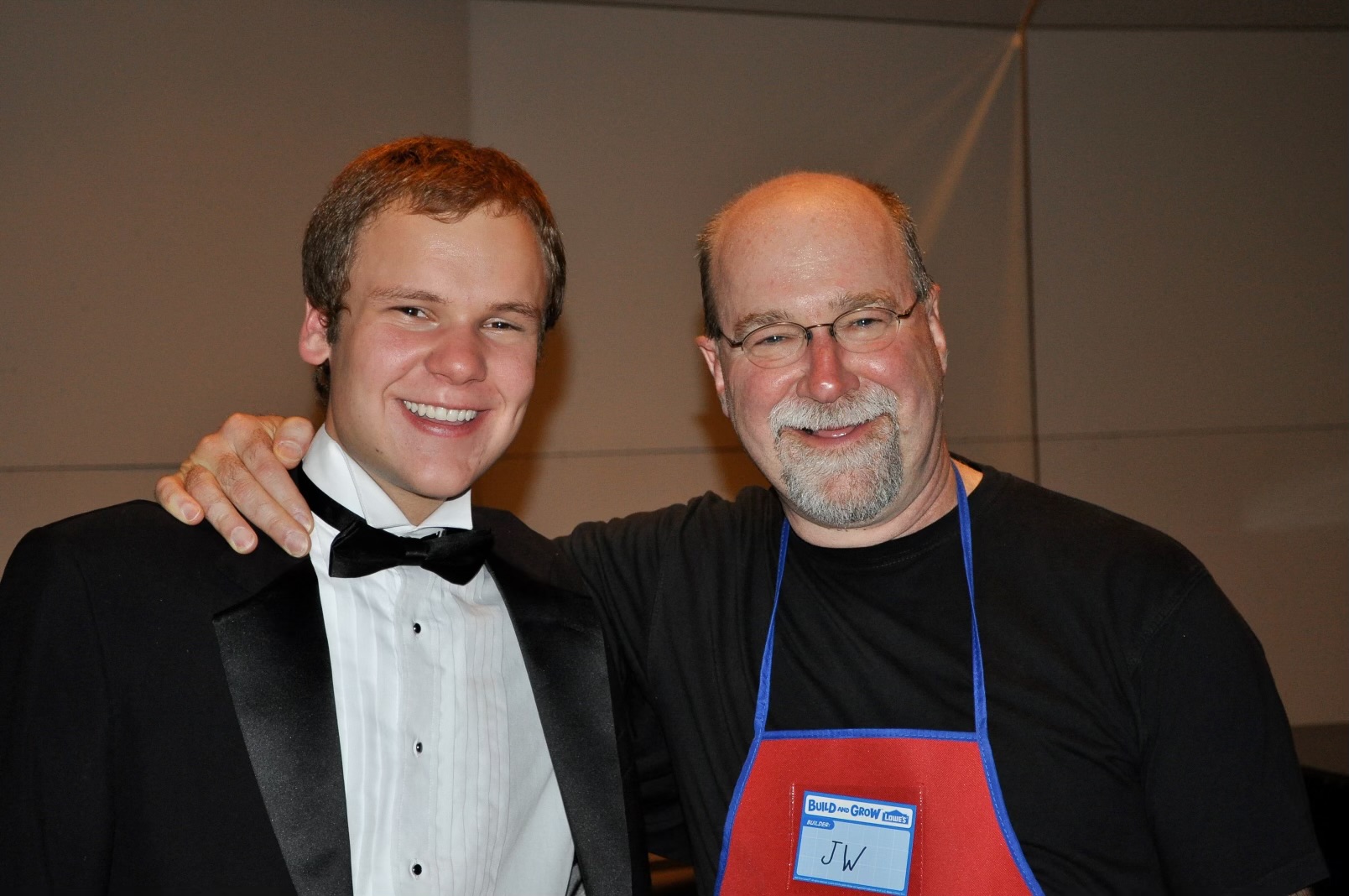
Drew with his high school chorus teacher, who remains an important mentor.

So there really wasn’t a singular experience that sparked my relationship with music, I was blessed with an environment that fostered those early experiences.

You grew up surrounded by opportunities to study and perform. How did that connect to your later experiences?

By the time I graduated high school, I understood that participation in the arts was a collective activity. I was fully aware of the ability for these opportunities to bring people together. I realized that shared experiences build community. That was powerful for a young person, shifting my understanding of that cliché on how music transforms the world.  Well, the pitches and rhythm don’t actually change the world, it’s the ability of music and musical experiences to bring people together, unifying diverse individuals and perspectives into a single experience that helps change the world. That’s powerful and that’s what’s driven me since.

Singing with the Westminster Choir at the Spoleto Festival in Charleston, South Carolina.

After high school you then went to college – how did those experiences change your understanding of the ability of music to bring people together?

My time at Westminster Choir College provided me with the framework for better understanding the ways that music brings people together. While there I had amazing opportunities – recording Grammy nominated albums, performing in the Spoleto Festival every May, singing with Celine Dion and Andrea Bocelli in Central Park, and performing with the world’s greatest orchestras and conductors at Carnegie Hall, Lincoln Center, and Philadelphia’s Kimmel Center.

But it was the work with my education professors – one, in particular – that gave me the language and a critical understanding of society, economic and symbolic capital, and education. I specifically remember sitting on stage at Carnegie Hall during a performance with Gustavo Dudamel and I stared out at the audience, who were all dressed in tuxedos and had probably gone to fancy dinners before paying several hundred dollars per ticket. It occurred to me that there’s more to music than this elite, gilded hall. That’s when I really became animated about teaching.

After graduating from college, you taught for two years as the choir director at Grafton High School in York County. How was that experience for you?

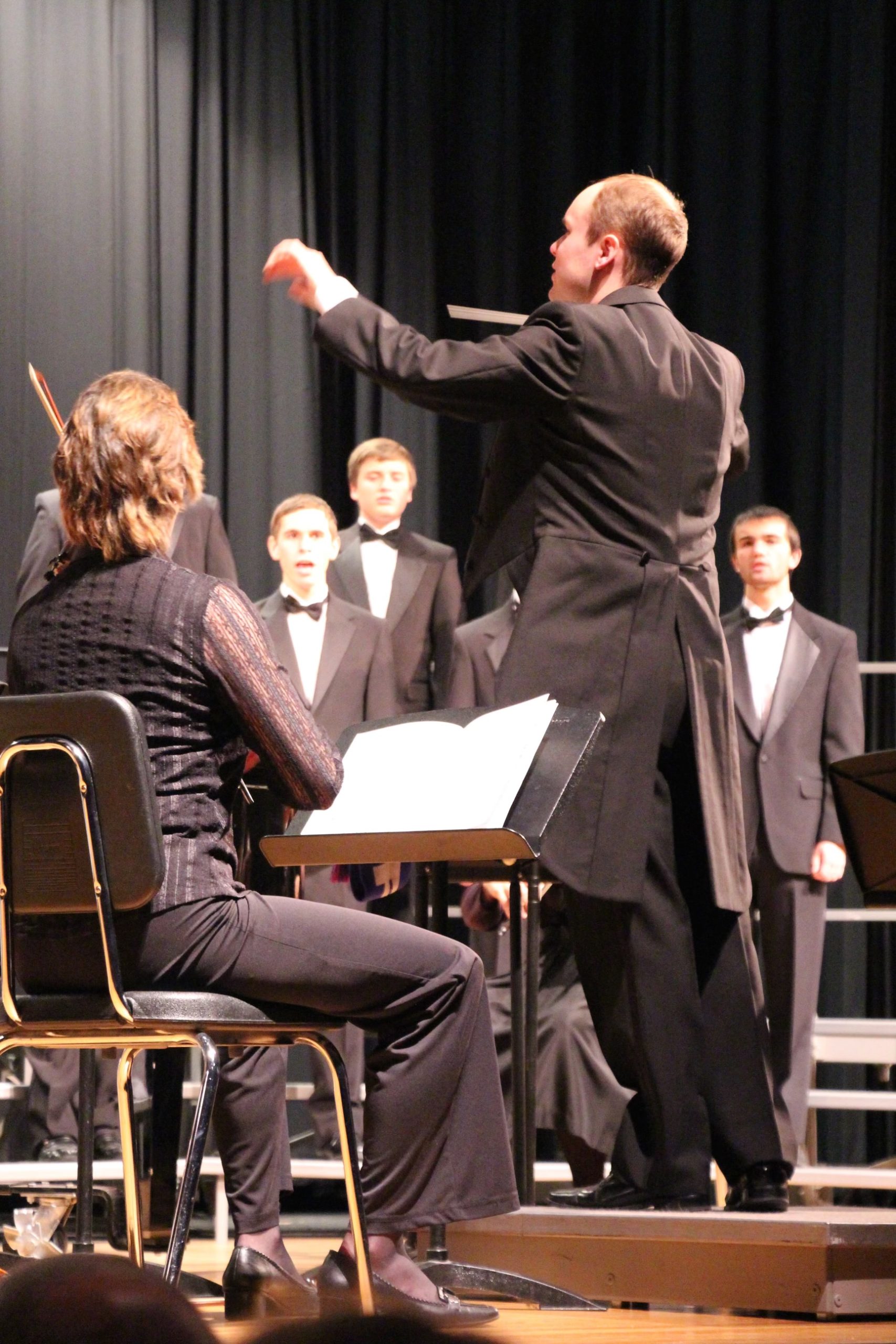
Conducting his advanced choir class at Grafton High School.

When I began teaching it was important to me to not only emphasize the technical aspects of music-making, but also the emotional, the ways in which making music together could transform perspectives and inform experiences. That transformation goes both ways – for the teacher, as well. I was fortunate to have a group of African American male students who transformed my views of the social role of education.

They’re the ones who really got me looking at the connection between education and society. They were the ones who opened my eyes about the systemic disadvantages that come with being a member of a marginalized community.

I’m forever grateful to them for being open and honest with me about their experiences because it really solidified the importance of education in society. So, it’s kind of been like a triangle for me, trying to incorporate the arts, education, society and how those pieces fit together and the power therein of when they do fit together.

You say that your “whole focus changed” after you left York County and went to Germany to further your studies and see more of the world. Why is that? (Drew received a master’s degree in conducting from the Hanns Eisler Hochschule für Musik in Berlin.)

In Germany, they emphasize music as something very sacred; it’s quasi-religious. So, the expectation is that we are there to serve the music as though it were a deity itself, and I fundamentally disagree with that. I think that music and the arts are there to serve us and they’re a means of connecting with real living human beings today, and so my time in Germany was a transitional period. I came back to the United States with this renewed purpose but also wanting to ask more questions and deeper questions.

Conducting for a German Radio national broadcast in 2018.

I can pinpoint the exact weekend when I decided to give up any dream of being a conductor or a fully devoted professional musician. I was invited to conduct in the south of Germany, in a town called Marktoberdorf – famous for its choir competition. I was staying in this old monastery that has been converted to a music center and there was this choir from Argentina that I was conducting. It was a great experience, but I brought with me a book by the philosopher Isaiah Berlin, and I was just so enraptured by his ideas on knowledge and society that I realized, as I was sitting in this modernized monastic cell, that my heart was in a different place.

I just wanted to sit and read and enjoy the sunshine coming into my window. It was springtime and I could smell the freshness of the earth outside and I was more focused on that and the ideas of the book than on actually conducting the ensemble.

I just knew that I was closing a door and I was doing that intentionally, shifting to something else.

Is that when you returned to Virginia?

Yes, I finished my master’s degree and the work that I was involved with in Germany before returning to Virginia. I became the vocal music teacher at Old Donation School in Virginia Beach and enrolled in a master’s degree program at UVA, studying Educational Psychology. The work I was doing in the classroom reflected the themes I was exploring in my studies.

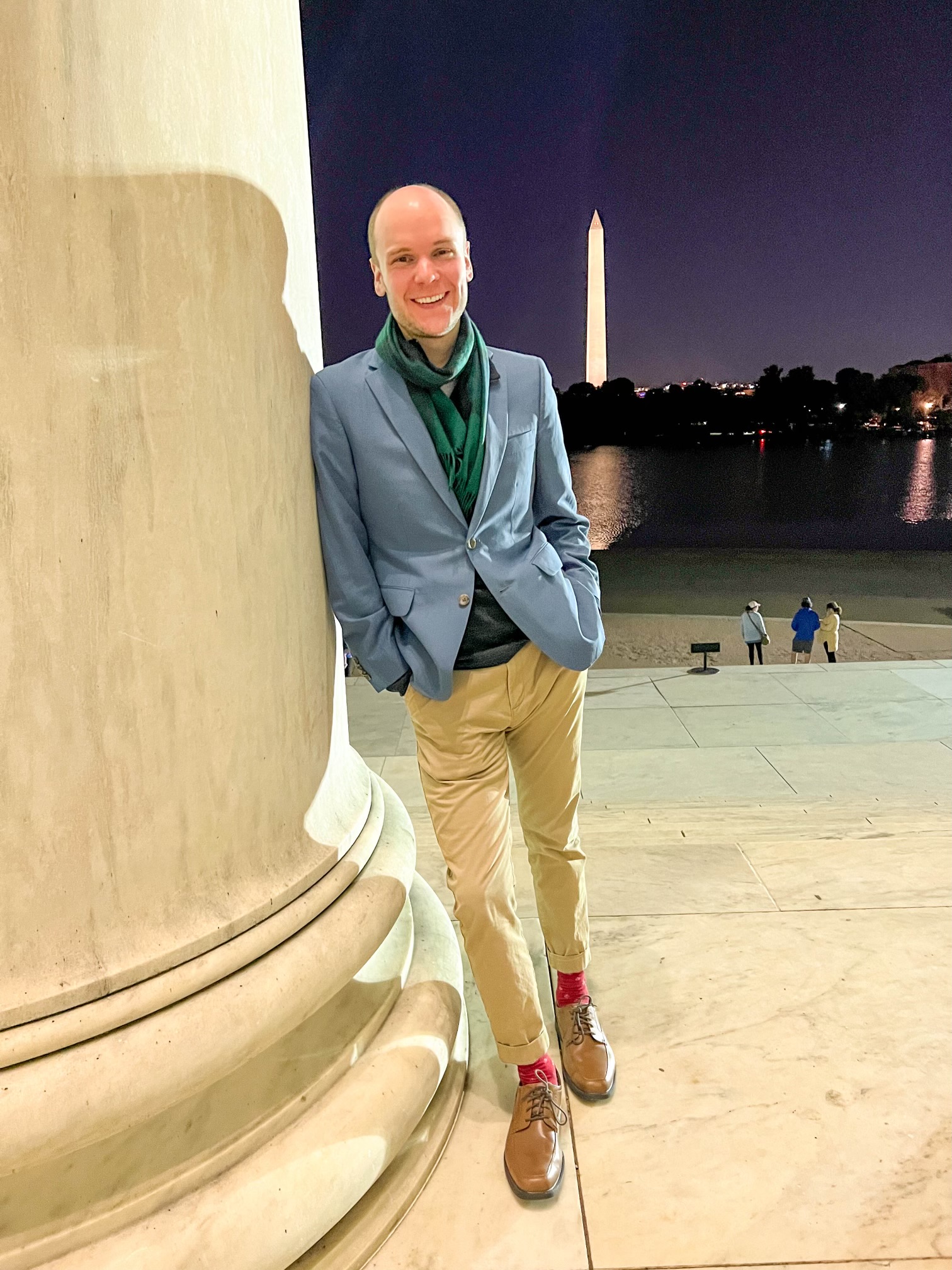
At the Jefferson Memorial.

At this time I also became a researcher for the university’s Institute of Democracy, tasked with compiling data on the national landscape of democracy centers at institutions of higher education. I began to reflect on the idea of democracy, particularly what democracy means for different people and how communities of different experiences and perspectives engage with democracy. This matched exactly what I did every day as a chorus teacher – it was my responsibility to facilitate dialogue and engagement among all of the students, ensuring that each student contributed their voice to our collective mission.

When conducting an ensemble, there are layers of interpretation – there’s the interpretation I create myself, the interpretation the collective ensemble creates, and the interpretation that individuals bring based on their own life. The beauty of the music experience comes from negotiating those interpretations so that our performance represents what we want to communicate both as individuals and as a collective. That is what democracy is, the negotiating between individual and collective identities to ensure authentic representation.

So what prompted you to leave teaching and join Arts for Learning?

I’ve begun to think more broadly about arts engagement. While I loved teaching and loved the students, I would like to utilize my ideas and my experiences to help foster collaboration between organizations and communities to ensure that everyone has an opportunity to contribute their voice and reflect on their perspectives and the perspectives of others through high-quality arts engagement.

As I’ve been investigating the social sphere and the social role of the arts, it’s clear that students are sometimes not presented opportunities in an equal way. And so, it’s up to organizations – like Arts for Learning – to fill those gaps for disadvantaged and marginalized communities where the arts are a powerful means of helping students achieve but also to feel represented and to represent themselves.

What are your goals with Arts for Learning?

In working with the existing artists on our roster, in recruiting new artists, and in developing programming, I want to make sure Arts for Learning is engaging students in ways that are appropriate for 21st century learners. The experiences we offer students should be 21st century experiences—so thinking about what is relevant to our students today, what is relevant about technology in terms of the way we consume the arts, and what are the relevant values we-as-a-society want to promote.

If you’re thinking about only using music and musical experiences to prepare kids to sit quietly at the symphony, that’s doing a disservice to the power of the arts today and the ways that the arts can connect, educate, and inspire today’s young students. Students are willing to be engaged and willing to create, but they want experiences that authentically engage and authentically reflect them.

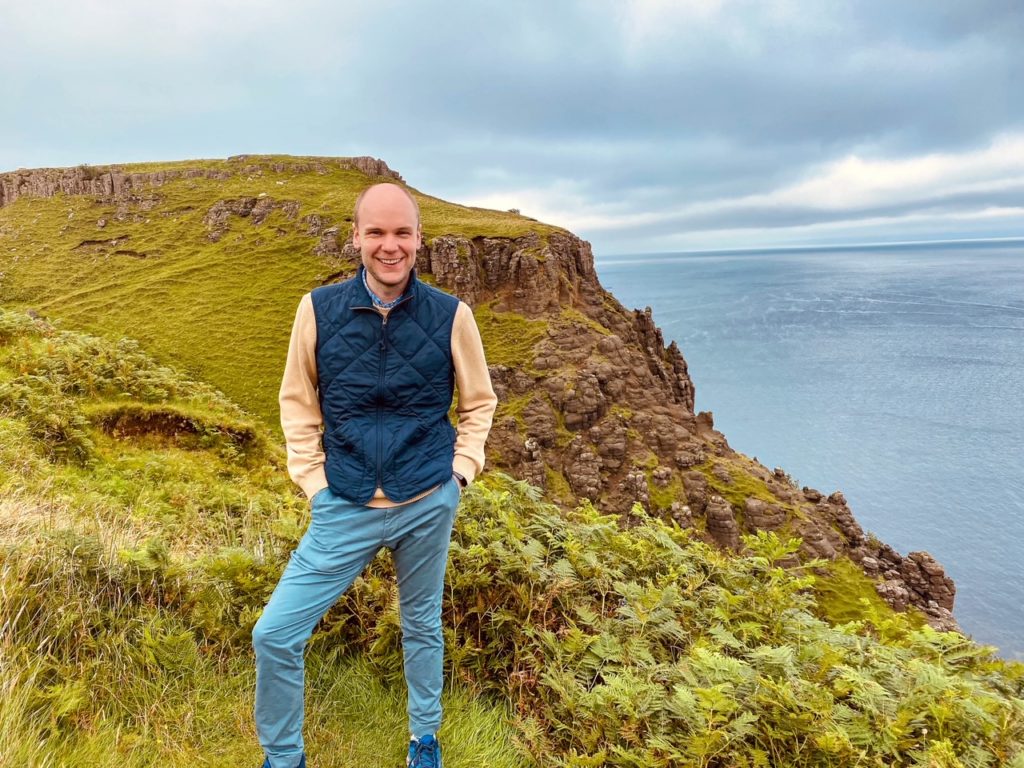
Visiting Scotland this summer.
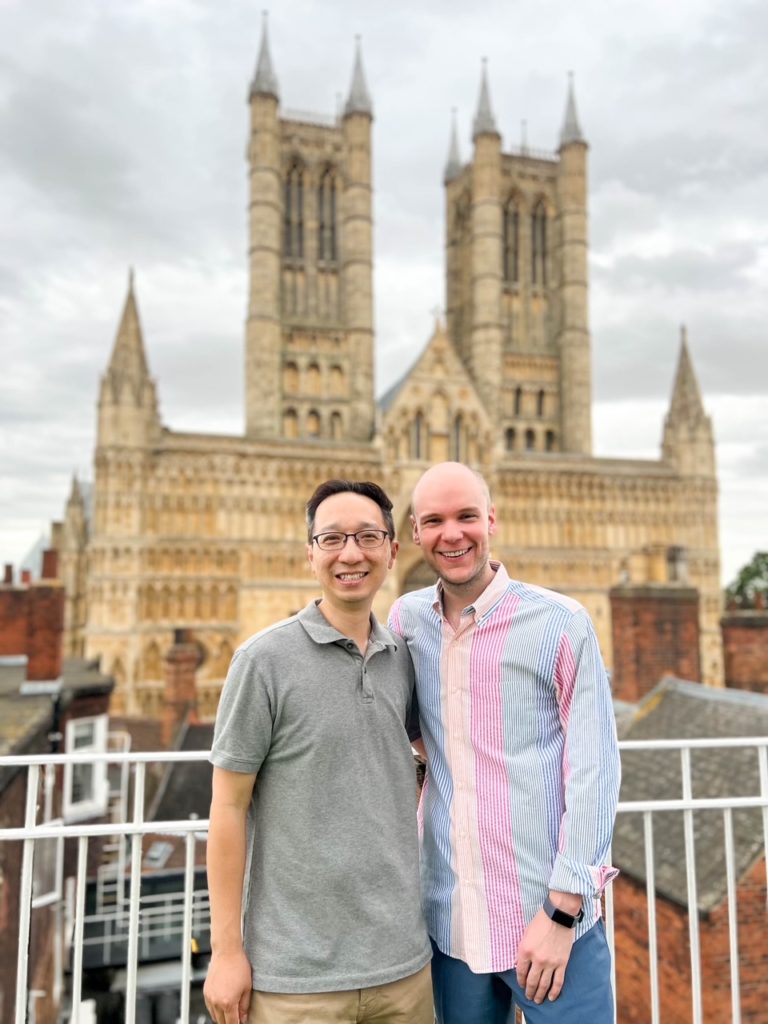
Drew and his partner, Kevin, in England this summer.
Singing at York Cathedral.

(An active member of the community, Drew sings in the Virginia Chorale and works as the staff bass at St. Paul’s Episcopal Church and at Ohef Sholom Temple. Drew lives with his partner, Kevin, in Norfolk.)

Discussing music with the conductor of the Virginia Chorale, Chuck Woodward.

I’ve got to ask – you grew up in Syracuse, went to college in New Jersey, and then lived in Germany – why settle in Virginia?

Well, in the fifth grade I had to do a presentation on Thomas Jefferson. Through my research for that project, I developed this idyllic, picturesque idea of Virginia, this view of rolling hills and Colonial Williamsburg and Monticello, and so I’ve just had this fascination since then. I feel a lot of pride when I tell people I live in Virginia. It feels like an accomplishment of mine, which seems kind of silly, but I love it. In three hours, I can be in D.C., in two hours I can be at Jefferson’s Monticello, in twenty minutes I can be at the beach, and every day I hear the fighter jets and see the aircraft carriers – what’s not love? I feel like I’ve come home.

A hobby of Drew’s is collecting and reading biographies of complex historical characters. Last year he started reading a biography of every U.S. president chronologically and is currently up to Jimmy Carter. Sourcing books is part of the fun–Drew had to look all over stores in Washington, D.C. just to find a biography of Rutherford B. Hayes!

Filed Under: Arts Integration, ArtsEd, News, Staff Spotlight Tagged With: Arts Ed, arts education, Drew Lusher, music education

When I grow up I want to be a… Teaching Artist!

July 29, 2022 By Cindy Sherwood

When you think of career paths for artists, you may think of an actor or dancer who performs on the stage, or a visual artist who sells artwork at a gallery. At Arts for Learning, we’re helping create new opportunities in the workforce by highlighting a different career path that’s not as well known—working as a teaching artist.
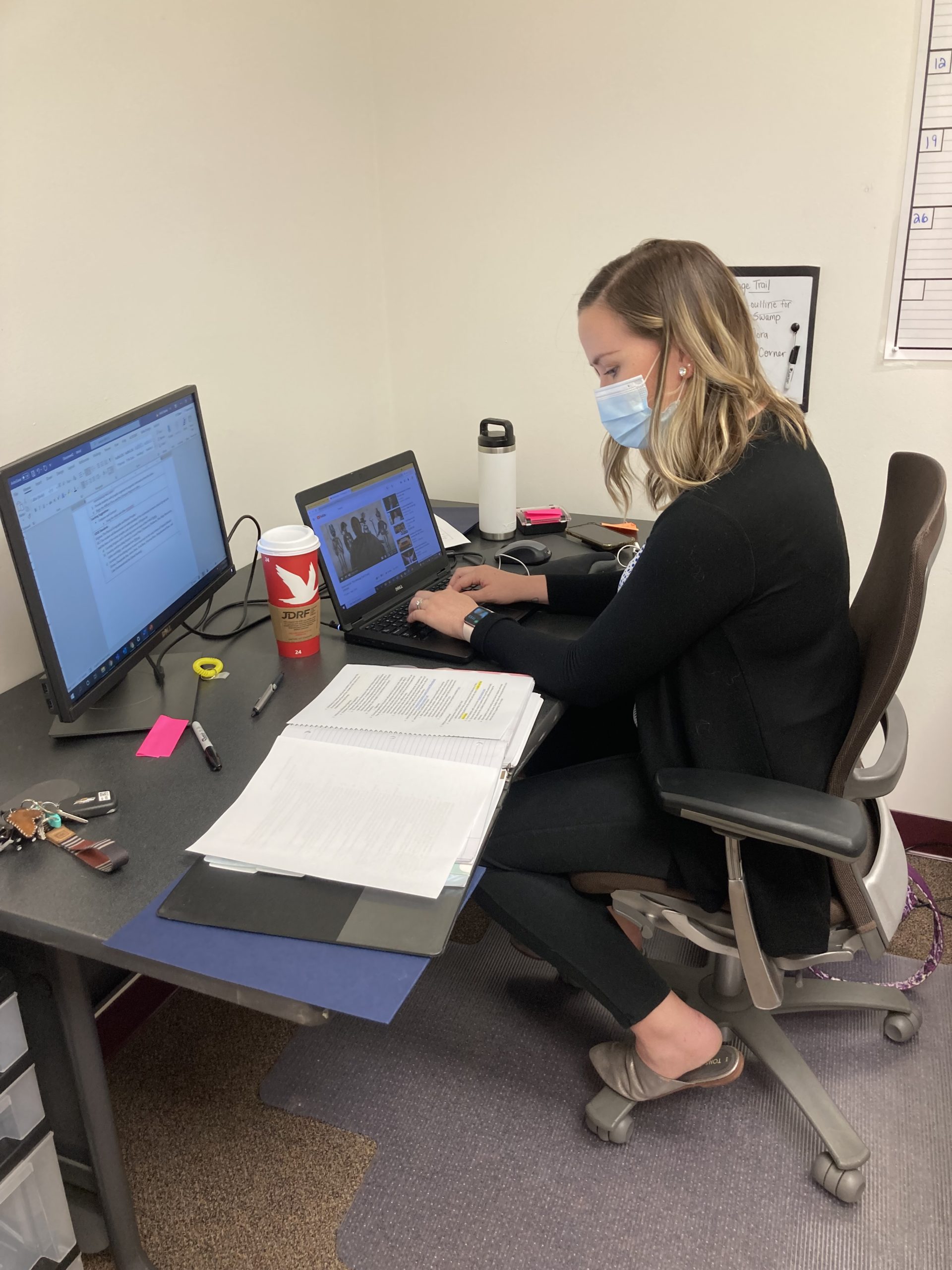
Just this month we launched a new program where we’re partnering with Hampton Roads’ colleges to recruit, train, and mentor students in the arts. The Emerging Artist program creates a pipeline of new opportunities for student artists who may be unaware of the potential career path of becoming a teaching artist for an arts-in-education organization.

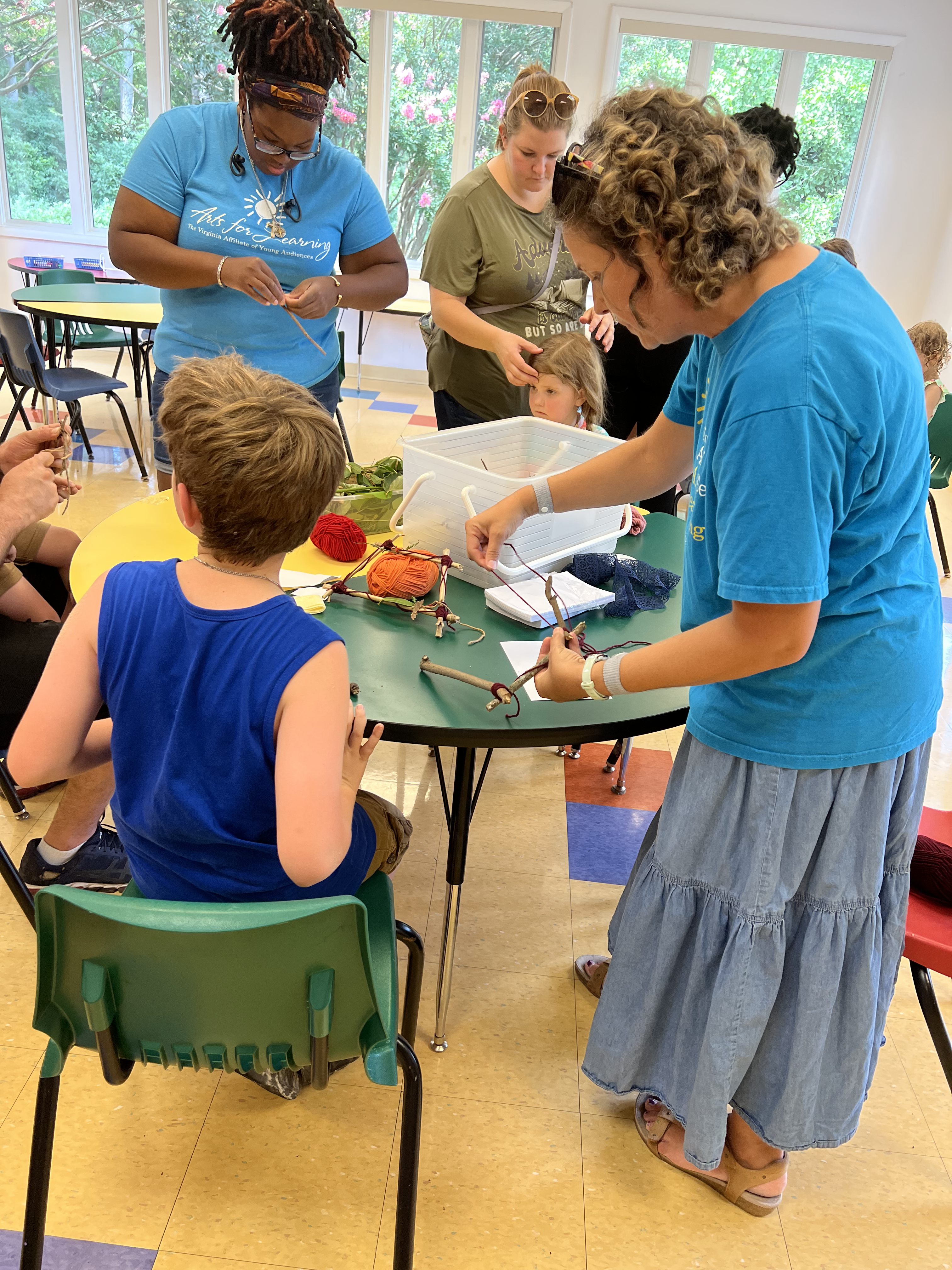
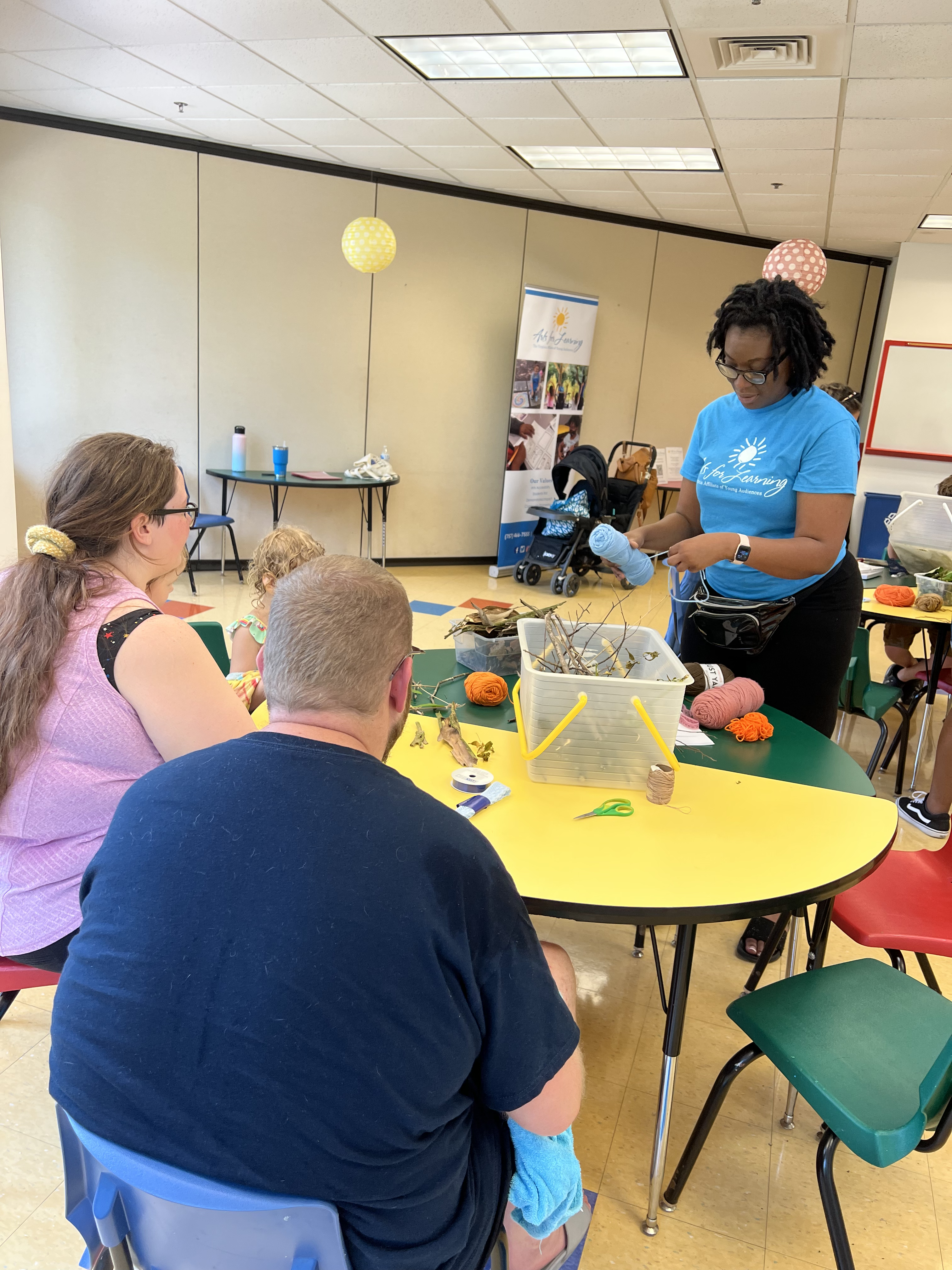
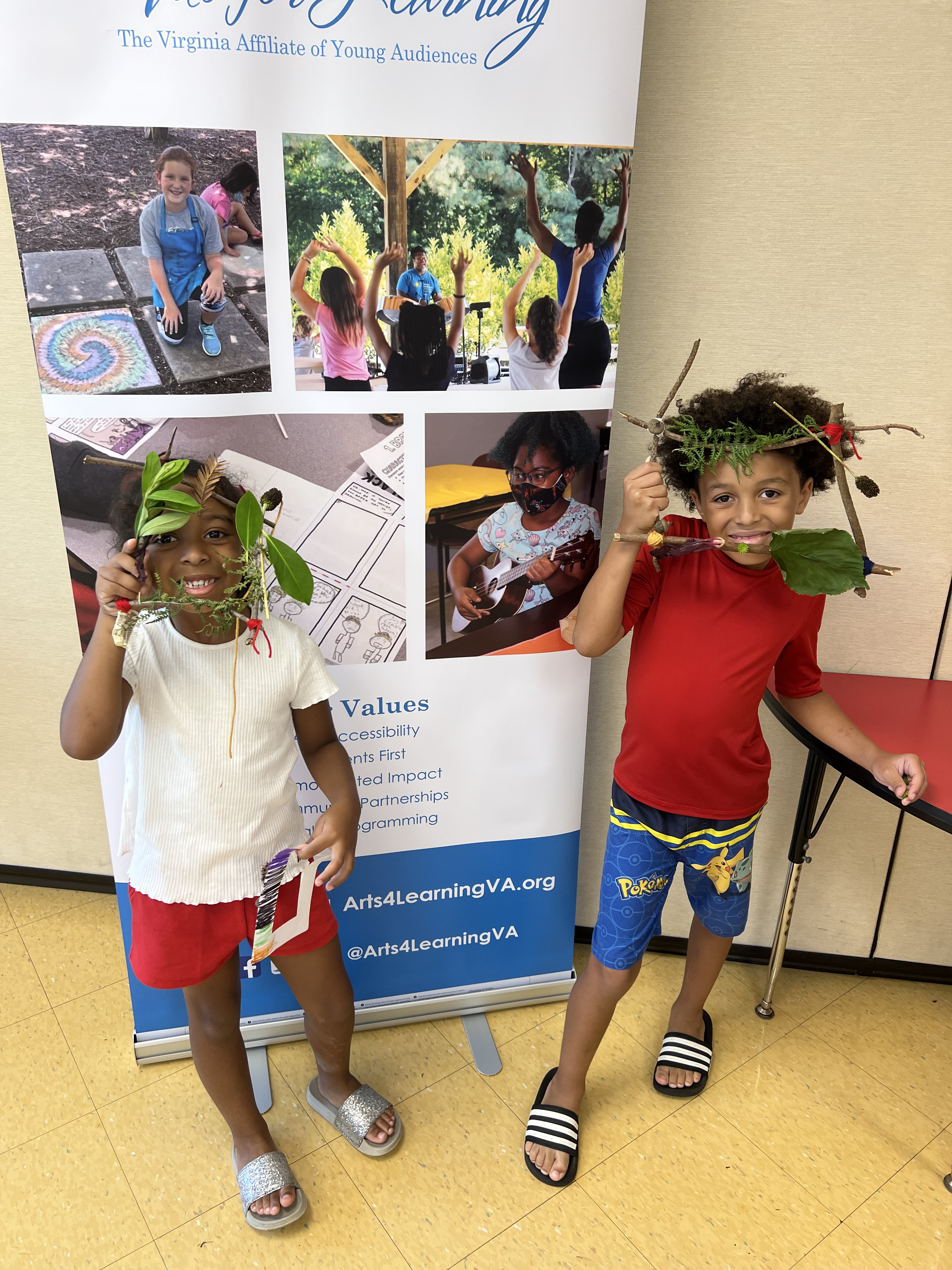
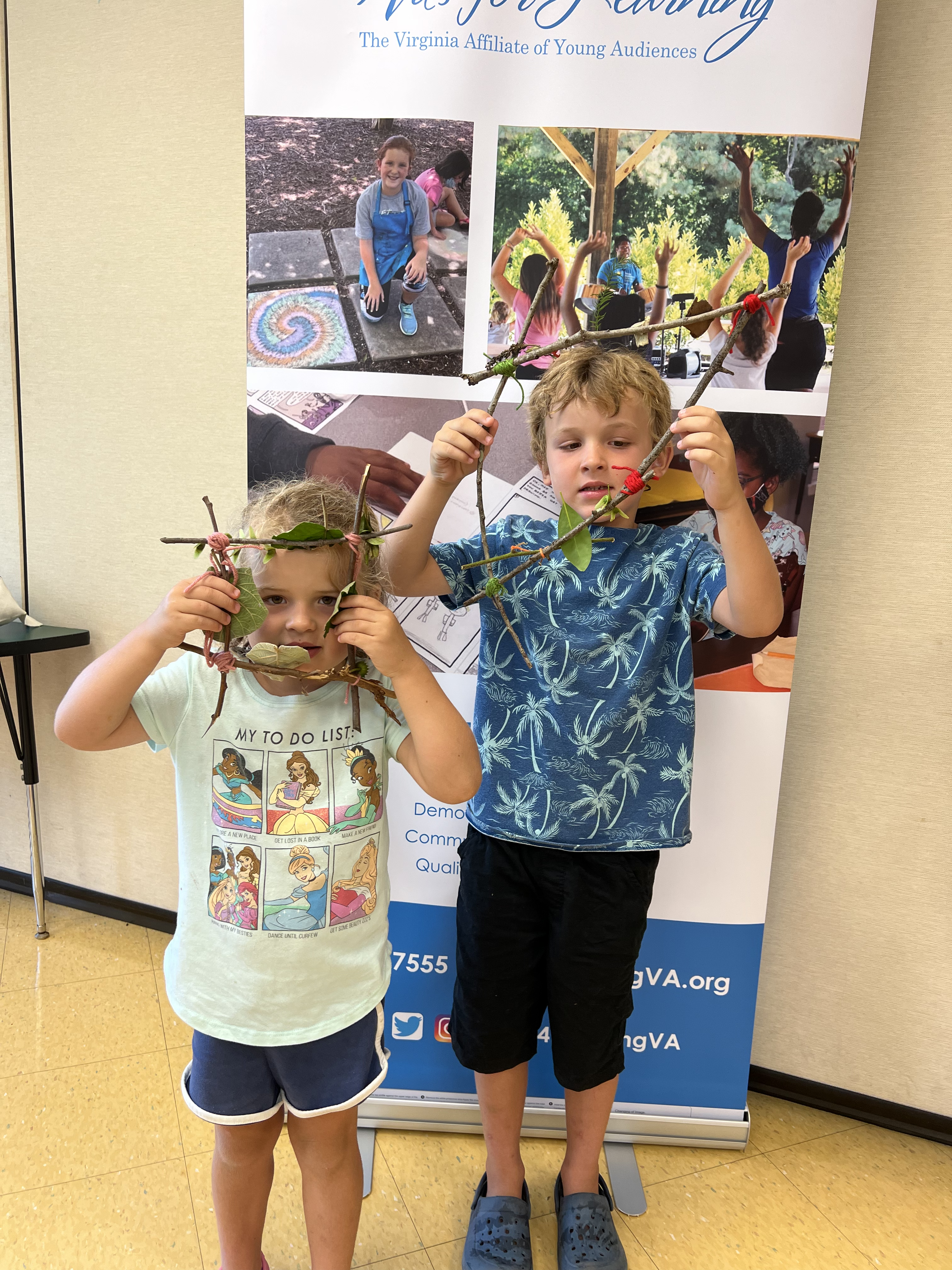
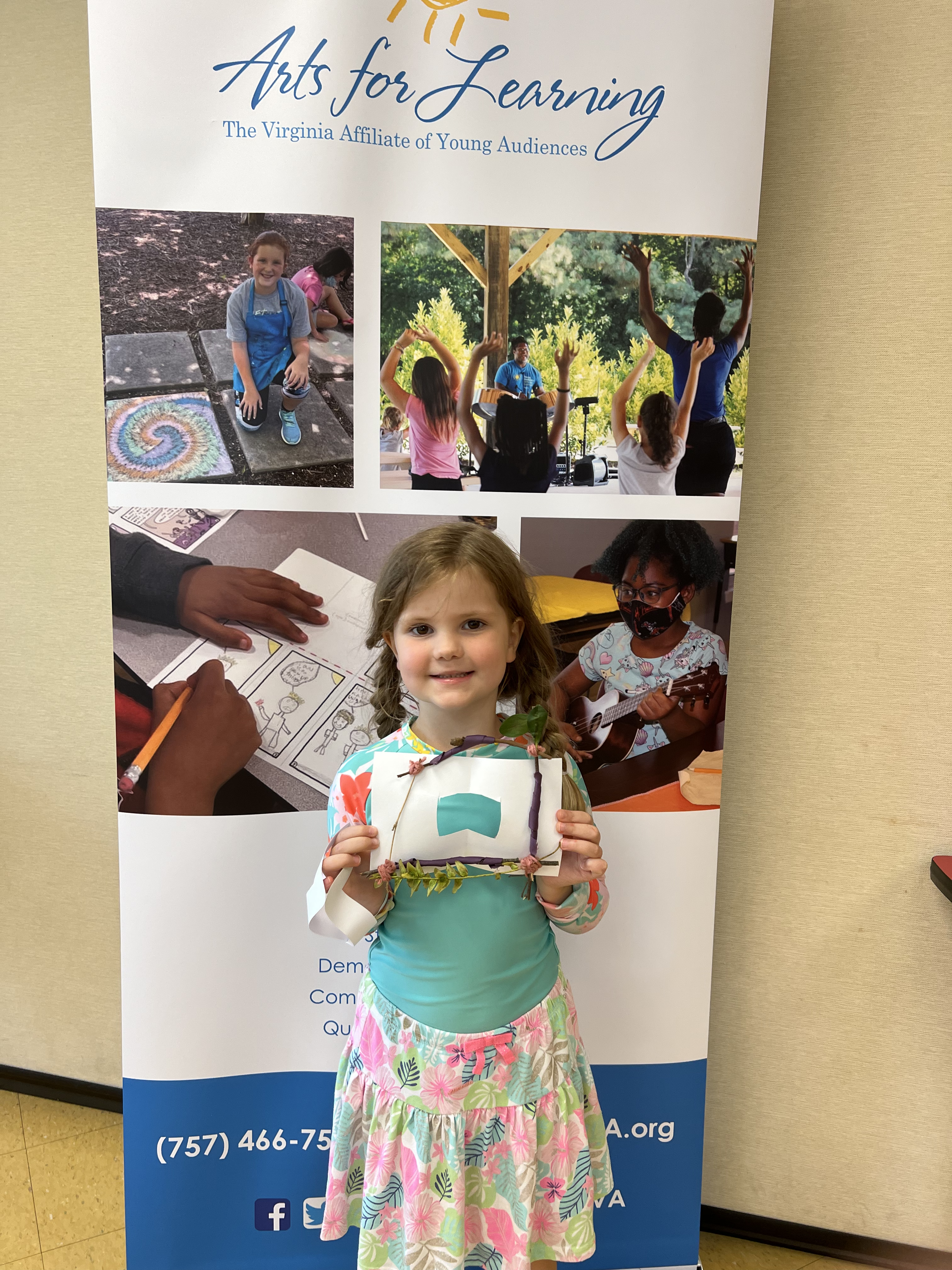
Two Norfolk State students are the first to be selected for the program, which features paid opportunities for emerging artists to work one-on-one with students in various settings. Anjenette Britton and Asiko-oluwa Aderin joined A4L teaching artist Cindy Aitken last Saturday in the first of four workshops at the Norfolk Botanical Garden, helping children make nature-inspired picture frames. Asiko-oluwa is also leading a graphic novel workshop for teens Monday, August 1 at the Portsmouth Public Library.

The emerging artists will be mentored by Cindy Aitken and Katherine Willet as teaching artists themselves and by members of the A4L Education and Program Team. Molly Stanley, a former teacher who serves as Learning and Community Engagement Manager, will work with the emerging artists on classroom management and how to develop arts-integrated curriculum for students. Chief Operations Officer Anna Green will guide the pair on some of the essential business aspects of being independent teaching artists, such as knowing how to read a contract.

You can meet Anjenette and Asiko-oluwa at our final Saturday workshops at the Norfolk Botanical Garden: September 10 at 10 a.m. and 2 p.m.


The Emerging Artists Program wouldn’t be possible without the sponsorship of #BankofAmerica. Thank you for underwriting this program that will help create new opportunities in the workforce!

#BofAGrants

Filed Under: Artist Spotlight, Arts Integration, News, Program Spotlight Tagged With: Bank of America, BofA grants, emerging artists, teaching artists

A Chat with Molly Stanley, A4L’s new Learning & Community Engagement Manager

October 28, 2021 By Cindy Sherwood

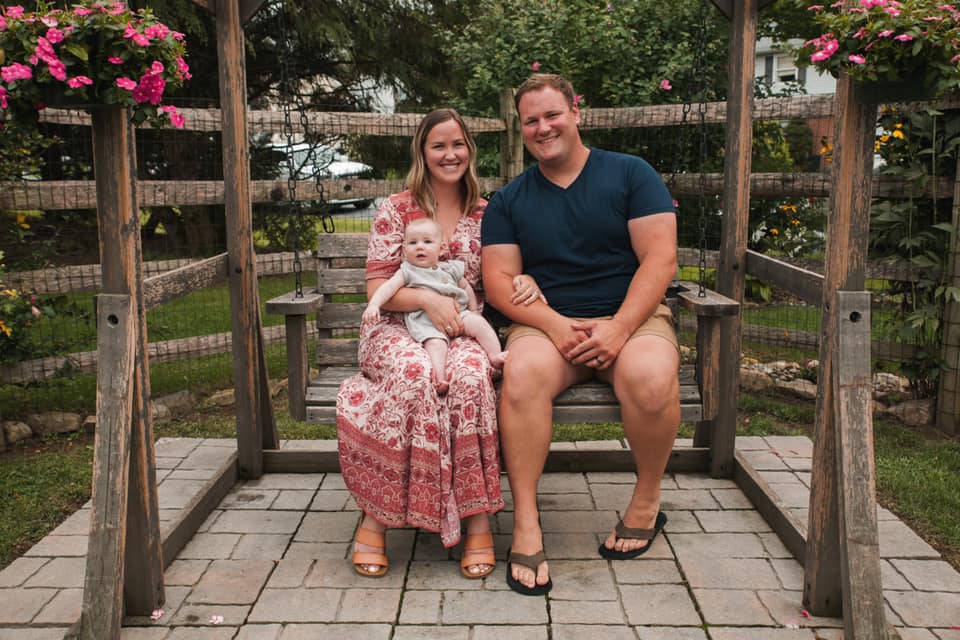
When Molly Stanley first saw the job listing for this new role at Arts for Learning, she grew excited. She and her husband Ethan, a lieutenant in the Navy, along with their newborn baby, were in the process of being transferred from California to Hampton Roads. As someone who had worked as an arts teacher and who had a master’s degree in arts administration, Molly found the opportunity intriguing. Plus, as a new mom, she was searching for a career with greater flexibility.

“If I wasn’t going to be teaching, I still wanted to work in education because that’s what I’m most passionate about, along with arts administration.

This position was like marrying the two things—arts administration and teaching art.”

Molly began her teaching career several years ago when she worked as an art teacher at a Title 1-designated elementary school in North Philadelphia. Although she grew up less than an hour away, it was a different world from her rural home in Blandon, Pennsylvania.

“I gained a lot of perspective and learned a ton while I was there [teaching]. It was a really hard year. I thought because I knew my craft and knew how to teach art that I could do anything, but I wasn’t aware of what trauma responses looked like in the classroom and so my classroom management definitely wasn’t good.”

From Philadelphia, Molly became an art teacher at a middle school in Maryland.

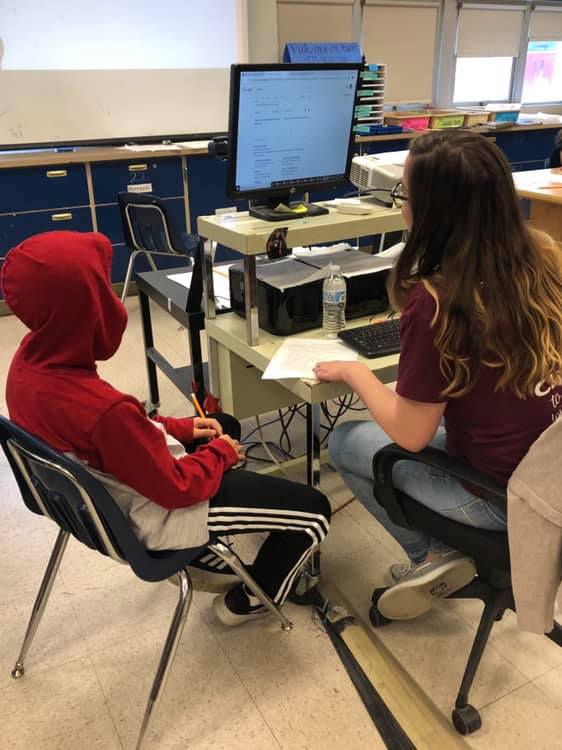
Molly helps a student at her middle schoolin Maryland
Molly helps a Vietnamese-American student translate a passage at the middle school where she worked in Maryland.

The school also was in a high poverty area, but she says she had many more “tools in her toolbox” and learned how to be a successful educator while forming close relationships with her students and her partner teacher.

During her second year of teaching, she and Ethan married.

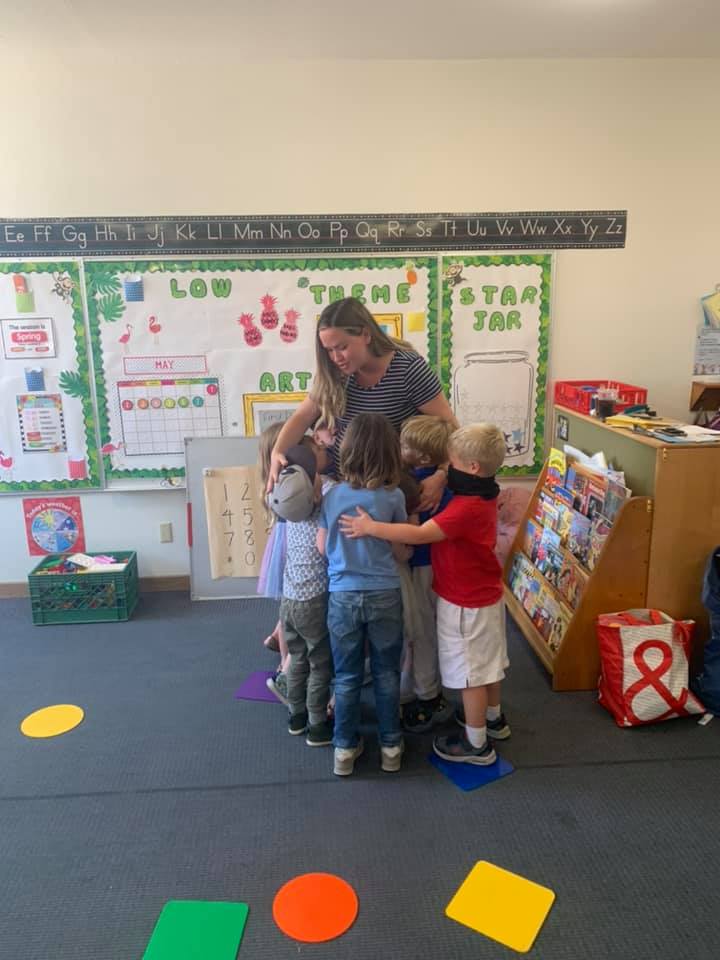
Molly says goodbye to the preschoolers she taught in California.

As a military family, the two first moved for a few months to Washington state and then to southern California, where Molly taught preschool and worked on her master’s degree on-line, earning it a week before she gave birth in May to baby William. That coincided with Ethan receiving orders to come back to the east coast for what is expected to be a long-time assignment.

Molly started at Arts for Learning in September, where she’s been putting her curricular knowledge to good use, writing classroom guides for our Spread Kindness (Not Germs) video project and more programs. She has big goals for her time here.

I’m hoping to be able to put out quality content and curriculum that aligns with what teachers need, as well as what the art form is, whether it’s a music program, a dance program, a visual arts program, or some other art form.”

“I want to be able to provide a smooth transition into either a teacher being able to take that content and teach it themselves or assisting teaching artists in making that content as relevant as possible to what the kids are going to need,” she says. “Specifically, like with Spread Kindness (Not Germs), the first project I was given, I made it my goal to try and make sure it’s as user friendly as possible and that anyone could teach it.”

So far one of the most satisfying parts of Molly’s new role has been pitching the Spread Kindness project to fine arts supervisors from different school divisions and discovering how enthusiastic they are about implementing the music videos in their classrooms.

As for the hardest part?

“I’ve never not been a teacher. I’ve always been a teacher, and I know what to expect as a teacher. But it’s also been the best part because I’m learning how to function in an organization that isn’t a school. So it’s been interesting getting acclimated to the job and also at the same time it’s super exciting because there hasn’t been one part yet that I haven’t enjoyed.”

Fun Facts About Molly:

#1 Though she doesn’t have much time these days between the new baby and new job, Molly is a visual artist who typically draws using colored pencil. Architectural portraits and landscapes are favorite subjects.

#2 She’s primarily of Irish descent, and even though she comes from a “big, proud Irish family,” she’s never had the chance to visit Ireland. Her maiden name was Molly McKenna Flannery.
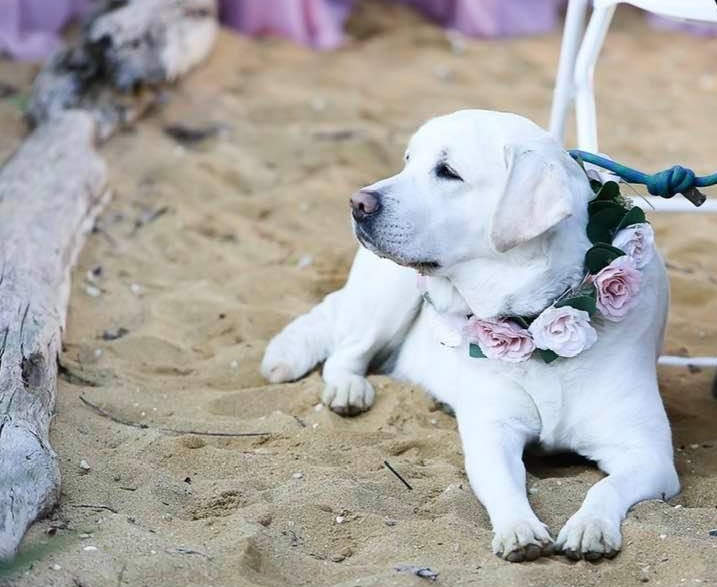
#3 William is her first human baby, but she and Ethan first had a fur baby named Dixie, a Labrador Retriever, who now adores baby Will and wants to be by his side constantly. Dixie looked especially pretty decked out in flowers for the couple’s wedding ceremony.


Filed Under: Arts Integration, ArtsEd, Staff Spotlight Tagged With: 757 arts, art teachers, arts curriculum, Arts Ed, arts education, arts programs, curriculum, military families, new staff member, Spread Kindness (Not Germs), Teachers

Talking with Dañetta Evans, our New Artist and Programming Manager

October 15, 2021 By Cindy Sherwood

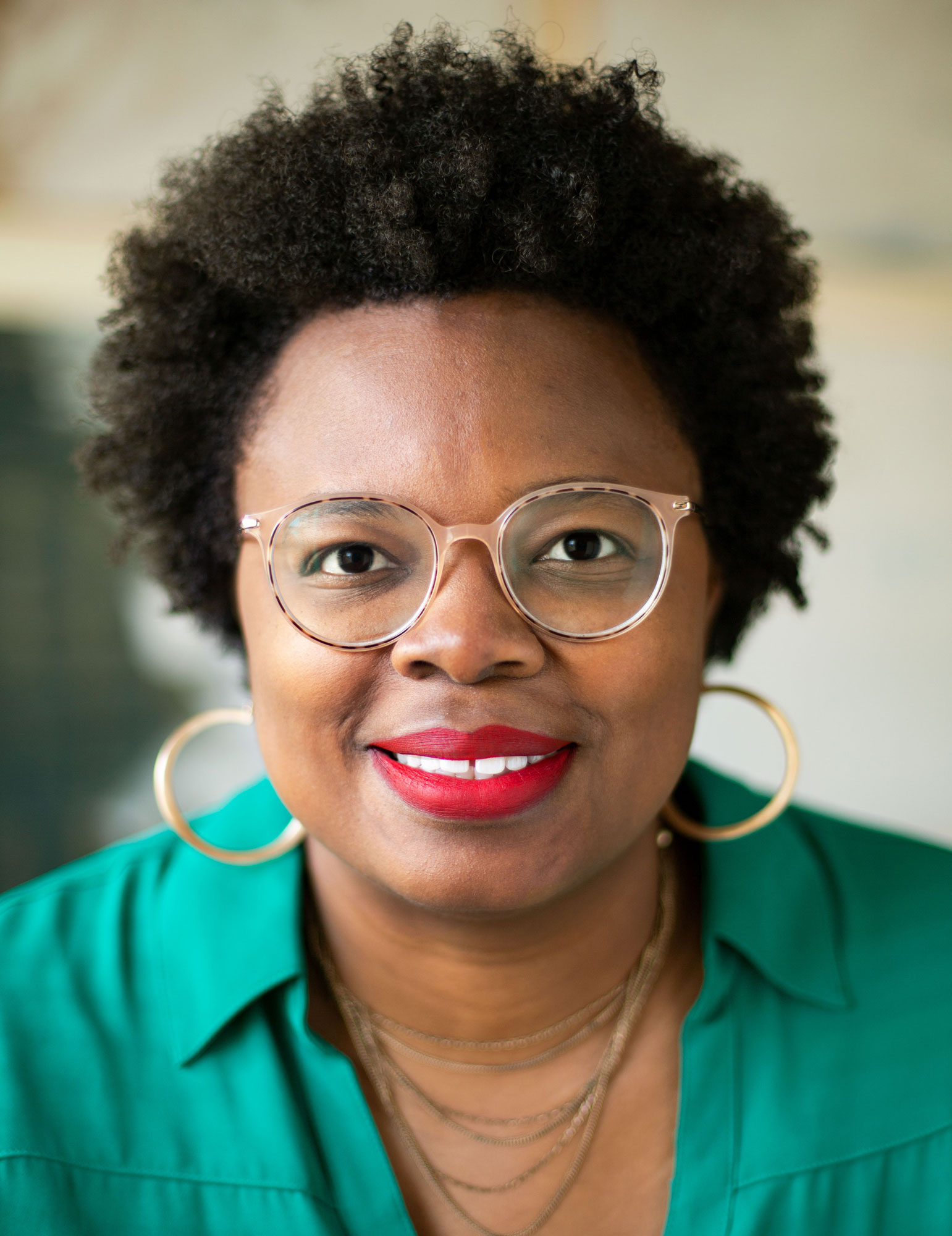
When Dañetta Evans decided to pursue the arts as a career, she says there was no “plan B”; she was committed to pursuing her passion, no matter what. She may not have been able to predict exactly where that determination would land her, but we’re happy to say it’s brought her to Arts for Learning as our new Artist and Programming Manager.

Dañetta is originally from Alabama where she earned her bachelor’s degree in public relations/marketing at Alabama State University and later received her associate of arts degree in graphic design from the Art Institute of Tennessee. She moved to Hampton Roads to attend graduate school at Norfolk State, where she first earned a Master of Art in Visual Studies and later her Master of Fine Arts in Visual Studies.

While at NSU, she became interested in participatory art and how data collection can aid in community development and engagement. Then, she says, she wanted to learn more about the effectiveness of STEAM (Science Tech Engineering Arts Math) education. “I created some classes to see how effective it was and did the research in how STEAM and STEM worked and how I could add something to it.”

She also was the liaison between her classmates and the Boys and Girls Club of Southeast Virginia when the club wanted NSU art graduate students to create various art classes for different clubs. She loved it—“Not only did I get to do my own artwork, but I got to see the change in the students and the change in my classmates too.”

The art education part of it—it just took my heart. I saw firsthand the character development that took place in the students from the beginning of class to the end of class. I decided then—while I’ll always be a practicing visual artist, the education part was super important.”

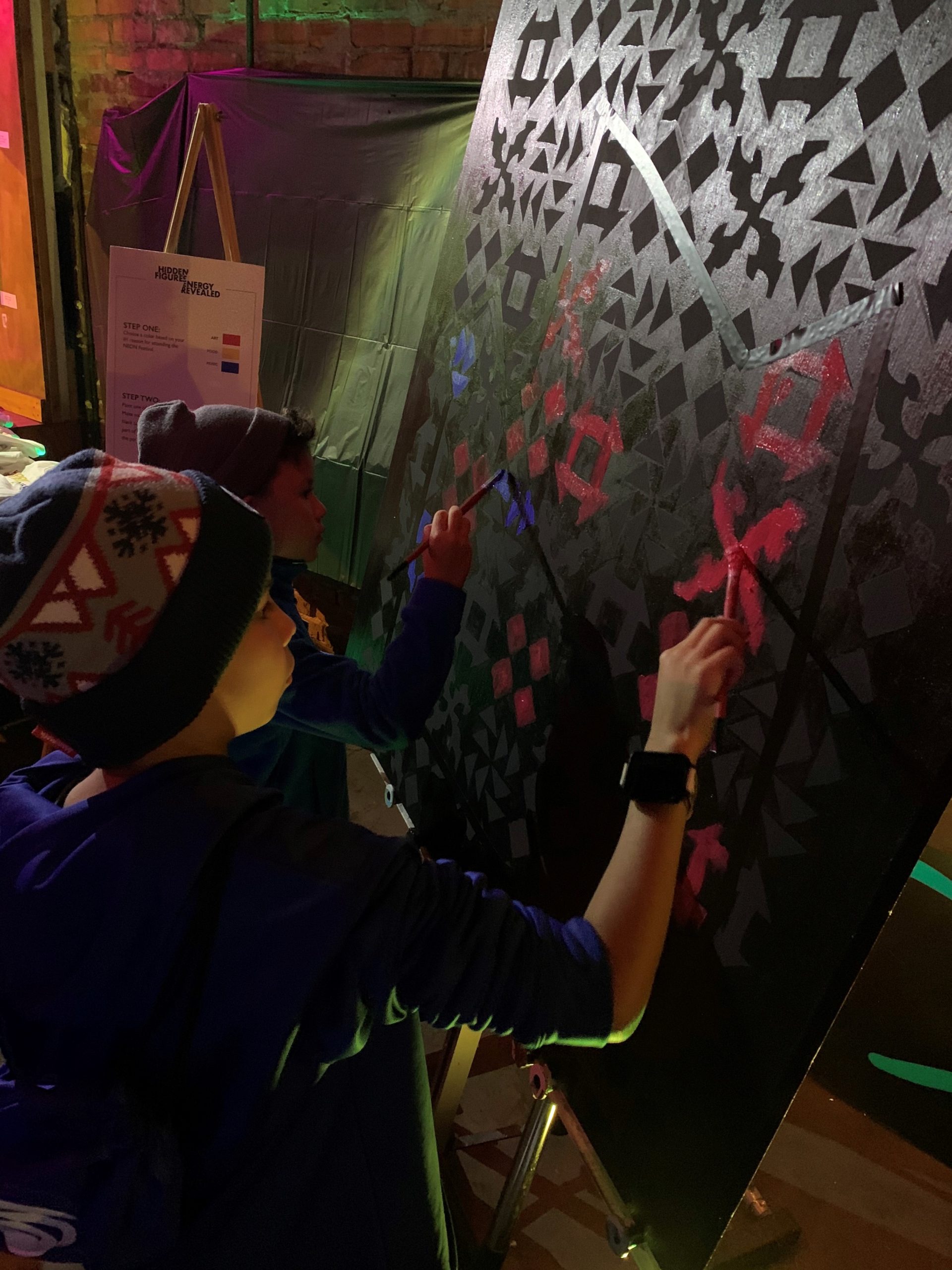
Organizing community art events was a major part of NSU’s program. Among other projects, Dañetta helped organize pop-up shops at the NEON Festival in Norfolk, participatory art at the Hermitage Museum, and a 93-foot-long mural inspired by African American history that’s located inside Calvary Baptist Church in Virginia Beach.

At Arts for Learning, Dañetta’s role is to work with the artists on our roster to help develop innovative arts education. Creating community—as she worked to do at Norfolk State—is a major priority.

“I love to create community with our artists, when we come together, share resources, and if I can offer any sort of professional development. And also add to the roster—where do we need some extra artists to help step in?”

Those are the big goals: create community and grow the roster.”

If you’re an artist who’s interested in joining our roster, please click here for details on how to apply.

Fun Facts about Dañetta: She loves trains, especially the sounds they make. And she collect sounds. “Most of the time they’re stored on my phone so if I’m walking around and I hear something, I’ll record it. I think it started when I lived in Nashville. I walked out of a museum and the church bells were going and I thought, ‘Man, I really like that sound.’ So I just started recording it and continued to record the sounds.” And as an artist, who knows? She says “someday I’ll do something bigger with it.”

Filed Under: Arts Integration, ArtsEd, Staff Spotlight Tagged With: art education, Arts for Learning, Arts for Learning Virginia, arts-in-education, Boys and Girls Club of Southeast Virginia, Calvary Baptist Church, community, community art, Norfolk State University, participatory art, public art, visual artist

  • « Previous Page
  • 1
  • 2
  • 3
  • Next Page »
Phone: 757-466-7555
Follow Us on FacebookFollow Us on InstagramFollow Us on YouTubeFollow Us on LinkedIn

Join the Mailing List

Want to stay inspired? Join our mailing list and get the latest updates on Arts for Learning Virginia’s programs, performances, community partnerships, and arts‑in‑education opportunities. Connect with our mission, celebrate our artists, and never miss an event!

Select list(s) to subscribe to


By submitting this form, you are consenting to receive marketing emails from: Arts for Learning Virginia, 420 N. Center Dr., Ste 239, Norfolk, VA, 23502, http://www.Arts4LearningVA.org. You can revoke your consent to receive emails at any time by using the SafeUnsubscribe® link, found at the bottom of every email. Emails are serviced by Constant Contact

Main Office
Arts for Learning
420 North Center Drive
Suite 239
Norfolk, Virginia 23502

Phone: 757-466-7555

Main Office

Arts for Learning Virginia
420 North Center Drive
Suite 239
Norfolk, Virginia 23502
Phone:
757-466-7555

A Journey of Presence, Creativity, and Heart-Centered Teaching

“Every young learner I work with walks away knowing they have personal power to choose and be the editor in chief of their own life story.”

At Arts for Learning Virginia, we’re proud to be part of the Virginia Commission for the Arts’ Passport Program. While Passport holders typically receive free admission and 50% off classes at participating organizations, all our programming is always free—no discount needed. To learn more about our public events, check out our calendar of events page here.

Copyright © 2026 · Young Audiences | Arts For Learning | Virginia

Website Maintained By TechArk

×